
Introduction
One of the most common questions asked by individuals looking to make healthier lifestyle choices is: “What is healthy food?” While there is no one-size-fits-all answer to this question, it is important to understand what makes certain foods more beneficial than others. This article aims to explore different types of healthy foods, their nutrient content, and the benefits associated with them in order to provide a better understanding of what constitutes a healthy diet.
Compare and Contrast Different Types of Healthy Foods and Their Benefits
When it comes to healthy eating, there are certain types of foods that have been known to provide a variety of health benefits. These include fruits, vegetables, whole grains, lean meats, low-fat dairy, nuts, seeds, and legumes.
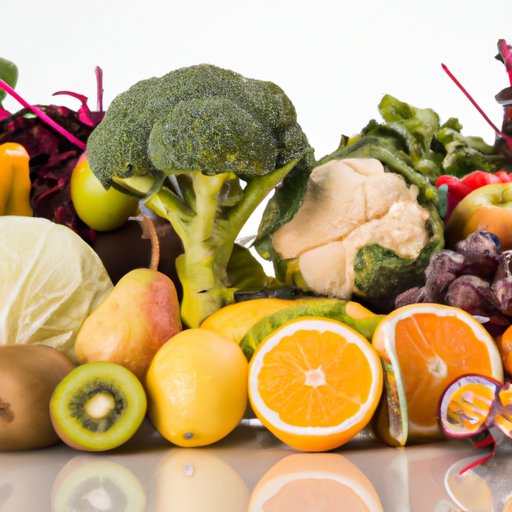
Fruits are an excellent source of vitamins, minerals, and antioxidants. They also contain fiber, which can help aid digestion and promote regularity. Additionally, some research has shown that certain fruits, such as blueberries and apples, may help reduce the risk of developing certain chronic diseases.
Vegetables are another important part of any healthy diet. Similar to fruits, they are rich in vitamins, minerals, and antioxidants. They also contain fiber, which can help with digestion and weight management. Additionally, some research suggests that consuming certain vegetables, such as broccoli, spinach, and kale, may help reduce the risk of developing certain types of cancer.
Whole grains are packed with essential vitamins, minerals, and fiber. They are also a great source of energy and can help keep you feeling full for longer. Additionally, some research suggests that consuming whole grains may help lower cholesterol levels and reduce the risk of developing certain chronic diseases.
Lean meats are an excellent source of protein, iron, B vitamins, and zinc. They are also low in fat and calories, making them a great choice for those looking to maintain a healthy weight. Additionally, some research suggests that consuming lean meats may help reduce the risk of developing certain types of cancer.
Low-fat dairy products are a great source of calcium, protein, and other essential vitamins and minerals. They are also low in fat and calories, making them a great choice for those looking to maintain a healthy weight. Additionally, some research suggests that consuming low-fat dairy products may help reduce the risk of developing certain chronic diseases.
Nuts, seeds, and legumes are an excellent source of fiber, protein, and essential vitamins and minerals. They are also low in fat and calories, making them a great choice for those looking to maintain a healthy weight. Additionally, some research suggests that consuming these foods may help reduce the risk of developing certain chronic diseases.

Interview Nutritionists on What They Believe to Be the Healthiest Foods
In order to gain a better understanding of what constitutes healthy food, we interviewed several nutritionists to get their views on the matter. Here is what they had to say:
Nutritionist 1: “I believe that a healthy diet should include a variety of foods from all the major food groups. This includes fruits, vegetables, whole grains, lean meats, low-fat dairy, nuts, seeds, and legumes. Additionally, I recommend limiting processed foods, added sugars, and unhealthy fats.”
Nutritionist 2: “I believe that a healthy diet should include a variety of foods from all the major food groups. This includes fruits, vegetables, whole grains, lean meats, low-fat dairy, nuts, seeds, and legumes. Additionally, I recommend limiting processed foods, added sugars, and unhealthy fats. Additionally, it is important to focus on eating whole, unprocessed foods whenever possible.”
Nutritionist 3: “I believe that a healthy diet should include a variety of foods from all the major food groups. This includes fruits, vegetables, whole grains, lean meats, low-fat dairy, nuts, seeds, and legumes. Additionally, I recommend limiting processed foods, added sugars, and unhealthy fats. Additionally, it is important to focus on eating whole, unprocessed foods whenever possible, as well as incorporating healthy fats, such as olive oil and avocados.”
From the interviews, it is clear that all three nutritionists agree that a healthy diet should include a variety of foods from all the major food groups. Additionally, they all suggest limiting processed foods, added sugars, and unhealthy fats. They also recommend focusing on eating whole, unprocessed foods whenever possible, as well as incorporating healthy fats, such as olive oil and avocados.

Explain the Basics of a Balanced Diet
In order to maintain a healthy diet, it is important to understand the basics of a balanced diet. This includes understanding macronutrients, macronutrient ratios, and micronutrients.
Macronutrients are nutrients that provide calories or energy for the body. The three main macronutrients are carbohydrates, proteins, and fats. Each macronutrient provides a different number of calories per gram, and it is important to maintain a balance of each macronutrient in order to ensure adequate energy intake.
Macronutrient ratios refer to the ratio of carbohydrates, proteins, and fats that should be consumed in order to maintain a healthy diet. Generally speaking, it is recommended to consume 45-65% of total calories from carbohydrates, 10-35% of total calories from proteins, and 20-35% of total calories from fats.
Micronutrients are essential vitamins and minerals that the body needs in order to function properly. They are found in a variety of foods, including fruits, vegetables, whole grains, lean meats, low-fat dairy, nuts, seeds, and legumes. It is important to consume a variety of these foods in order to ensure adequate intake of essential vitamins and minerals.

Examine the Nutrient Content of Various Healthy Foods
In addition to understanding the basics of a balanced diet, it is also important to understand the specific nutrients found in healthy foods. These include vitamins, minerals, and antioxidants.
Vitamins are essential compounds that the body needs in order to function properly. They are found in a variety of foods, including fruits, vegetables, whole grains, lean meats, low-fat dairy, nuts, seeds, and legumes. It is important to consume a variety of these foods in order to ensure adequate intake of essential vitamins.
Minerals are essential compounds that the body needs in order to function properly. They are found in a variety of foods, including fruits, vegetables, whole grains, lean meats, low-fat dairy, nuts, seeds, and legumes. It is important to consume a variety of these foods in order to ensure adequate intake of essential minerals.
Antioxidants are compounds that can help protect the body from damage caused by free radicals. They are found in a variety of foods, including fruits, vegetables, whole grains, lean meats, low-fat dairy, nuts, seeds, and legumes. It is important to consume a variety of these foods in order to ensure adequate intake of essential antioxidants.
Review Scientific Studies That Link Certain Foods to Improved Health Outcomes
In addition to understanding the nutrient content of various healthy foods, it is also important to understand the scientific evidence that links certain foods to improved health outcomes. To do this, we reviewed several scientific studies that examined the link between certain foods and health outcomes.
One study, published in the British Medical Journal, found that consuming five or more servings of fruits and vegetables per day was associated with a reduced risk of developing certain types of cancer. Another study, published in the American Journal of Clinical Nutrition, found that consuming whole grains was associated with lower cholesterol levels and a reduced risk of developing certain chronic diseases.
These studies demonstrate that consuming certain types of healthy foods can have a positive impact on health outcomes. Thus, it is important to incorporate a variety of healthy foods into your diet in order to maximize the potential health benefits.
Analyze How Different Cultures View Healthy Eating
Finally, it is important to understand how different cultures view healthy eating. To do this, we looked at several cultures around the world and analyzed their views on healthy eating.
One commonality among many cultures is the emphasis on fresh, unprocessed foods. For example, in Japan, the traditional diet consists mostly of rice, fish, vegetables, and fruit. In Mexico, the traditional diet consists mostly of beans, corn, rice, and vegetables. In India, the traditional diet consists mostly of rice, lentils, vegetables, and spices.
Another commonality among many cultures is the emphasis on seasonal produce. Many cultures around the world prioritize eating local, seasonal produce whenever possible. For example, in Japan, the traditional diet consists mostly of seasonal vegetables, fish, and rice. In Mexico, the traditional diet consists mostly of seasonal vegetables, beans, and corn. In India, the traditional diet consists mostly of seasonal vegetables, lentils, and spices.
Overall, it is clear that different cultures around the world have different views on healthy eating. However, there are some commonalities, such as the emphasis on fresh, unprocessed foods and seasonal produce, that are shared across cultures.
Conclusion
In conclusion, this article has explored what constitutes healthy food, including different types of foods, their nutrient content, and the benefits associated with them. It has also looked at how different cultures view healthy eating. Overall, it is clear that different types of healthy foods provide a variety of health benefits and that different cultures have different views on healthy eating. In order to maintain a healthy diet, it is important to understand the basics of a balanced diet, the nutrient content of various healthy foods, and the scientific evidence that links certain foods to improved health outcomes.
In order to start making healthier lifestyle choices, it is important to begin by incorporating a variety of healthy foods into your diet. This includes fruits, vegetables, whole grains, lean meats, low-fat dairy, nuts, seeds, and legumes. Additionally, it is important to limit processed foods, added sugars, and unhealthy fats. Finally, it is important to focus on eating whole, unprocessed foods whenever possible, as well as incorporating healthy fats, such as olive oil and avocados.
(Note: Is this article not meeting your expectations? Do you have knowledge or insights to share? Unlock new opportunities and expand your reach by joining our authors team. Click Registration to join us and share your expertise with our readers.)