
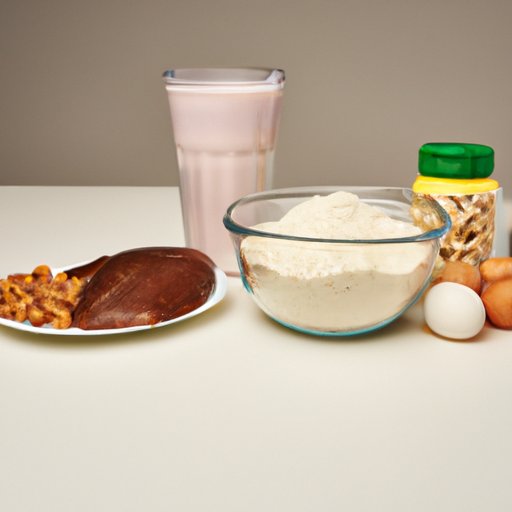
Introduction
Protein is an essential nutrient found in a variety of foods. It plays an important role in building and maintaining muscle, as well as providing energy and supporting a healthy metabolism. But how much protein do you need? This article will provide an overview of how to determine your daily protein requirements and explore different sources of dietary protein.

Analyzing Macronutrient Needs to Determine Protein Intake
The first step in understanding how much protein to eat is to analyze your macronutrient needs. Macronutrients are the three main components of food: carbohydrates, proteins, and fats. Each of these macronutrients provides calories that fuel the body. Understanding macronutrient ratios can help you determine the right balance of protein, carbohydrates, and fats for your needs.
Calculating Macronutrient Ratios
The Institute of Medicine recommends a macronutrient ratio of 45-65% carbohydrates, 10-35% protein, and 20-35% fat. For example, if you consume 2000 calories per day, 900-1300 of those calories should come from carbohydrates, 200-700 from protein, and 400-700 from fat. This macronutrient ratio can be adjusted based on individual preferences and health goals.
Calculating Daily Protein Requirements
Once you have determined your macronutrient ratio, you can calculate your daily protein requirement. According to the Centers for Disease Control and Prevention (CDC), the general recommendation for protein intake is 0.8 grams of protein per kilogram of body weight. However, this recommendation may vary depending on physical activity level.
Assessing Physical Activity Level
For those who are physically active, the American College of Sports Medicine recommends 1.2-1.7 grams of protein per kilogram of body weight. For example, a person who weighs 70 kilograms would need 84-119 grams of protein per day. This recommendation is based on the increased demand for protein during periods of increased physical activity.
Estimating Protein Requirement
It is also important to consider other factors when estimating protein requirements. Age, gender, and lifestyle can all impact an individual’s protein needs. For example, pregnant women and athletes may require more protein than the general population. Additionally, those with certain medical conditions such as kidney disease may need to adjust their protein intake.
Exploring Sources of Dietary Protein
Once you have determined your daily protein requirement, it is important to consider the sources of dietary protein. Animal-based proteins such as eggs, dairy, meat, and fish are complete proteins, meaning they contain all nine essential amino acids. Plant-based proteins such as legumes, nuts, seeds, and grains are incomplete proteins, meaning they lack some essential amino acids. Combining plant-based proteins can provide all the essential amino acids.
Food Sources
Animal-based proteins are typically higher in protein than plant-based proteins. For example, one large egg contains approximately 6 grams of protein, while one cup of cooked lentils contains 18 grams of protein. Other good sources of animal protein include lean meats, poultry, seafood, dairy, and eggs.
Plant-Based Proteins
Good sources of plant-based proteins include beans, peas, nuts, seeds, and whole grains. Legumes such as chickpeas, lentils, and black beans are particularly high in protein. Quinoa is another excellent source of plant-based protein, containing 8 grams of protein per cup. Plant-based proteins are also high in fiber, vitamins, minerals, and antioxidants.

Considering Supplements for Additional Protein Intake
In addition to dietary sources of protein, there are also several types of protein supplements available. Protein powder is a popular supplement for those looking to increase their protein intake. Whey and casein protein powders are derived from dairy, while plant-based protein powders are made from sources such as pea, hemp, and brown rice. Protein bars are another convenient option for on-the-go snacking.
Types of Protein Supplements
Protein supplements are available in a variety of forms, including shakes, bars, and powders. Whey and casein protein powders are derived from dairy and offer a quick and easy way to increase protein intake. Plant-based protein powders are made from sources such as pea, hemp, and brown rice and are suitable for vegans or those looking to avoid dairy.
Benefits and Risks
Protein supplements can be a convenient way to increase protein intake, but it is important to understand the potential benefits and risks. Protein supplements can help build and maintain muscle mass, but it is important to consult with a healthcare professional before using any supplements. Additionally, protein supplements should not replace a balanced diet.

Consulting with a Nutritionist or Dietician for Customized Advice
Finally, it is important to seek professional guidance to ensure you are getting the right amount of protein for your individual needs. Consulting with a nutritionist or dietician can help you customize your diet to meet your health and lifestyle goals. They can also provide guidance on dietary supplements and provide personalized meal plans and recipes.
Conclusion
In conclusion, determining the optimal amount of protein for your individual needs requires an understanding of macronutrients, physical activity level, and sources of dietary protein. Consulting with a qualified nutritionist or dietician can help you customize your diet and maximize the benefits of protein. By following these guidelines, you can ensure you are getting the right amount of protein for your health and lifestyle goals.
(Note: Is this article not meeting your expectations? Do you have knowledge or insights to share? Unlock new opportunities and expand your reach by joining our authors team. Click Registration to join us and share your expertise with our readers.)