
Introduction
The rise of automation and robotics has been one of the most significant developments of the 21st century. From self-driving cars to automated checkout lines, many aspects of our lives are now being impacted by technology. This has led to increasing concerns about the potential for robots to replace human workers, leading to job losses and economic instability. In this article, we will explore the potential impact of automation on job loss, examining the pros and cons of replacing human workers with robots and assessing the implications for the future of work.
Defining Automation and Robotics
Automation is a process that uses technology to automate repetitive tasks, such as data entry or customer service. Robotics refers to machines that are designed to carry out specific tasks, such as manufacturing or surgery. Automation and robotics can be used together to increase efficiency and reduce costs, as well as to improve safety in hazardous environments.
Examining the Impact of Automation on Job Loss
Automation and robotics have had a significant impact on job loss in recent years. According to a study by the Organization for Economic Co-operation and Development (OECD), automation could lead to a net loss of up to 7 percent of jobs in some countries by 2030. The study also found that lower-skilled workers are more likely to be affected by automation than higher-skilled workers, as tasks such as data entry and customer service are increasingly being taken over by machines.
“The risk of automation is real and growing, and it is felt disproportionately by low-skilled workers,” said OECD Secretary-General Angel Gurría. “Governments need to act urgently to ensure that all workers have the skills they need to adjust to new technologies and take advantage of the opportunities they offer.”

Analyzing the Potential for Robots to Replace Human Workers
Robots have the potential to replace human workers in many sectors, including manufacturing, transportation, and health care. In the manufacturing sector, robots are already being used to assemble cars and other products, while in the transportation sector autonomous vehicles are beginning to take over from traditional drivers. In health care, robots are being used to perform surgeries and assist doctors with diagnostics.

Evaluating the Benefits and Risks of AI in the Workplace
The use of AI in the workplace has both benefits and risks. On the one hand, AI can improve efficiency and productivity, allowing companies to produce more with less. On the other hand, AI can lead to job losses as humans are replaced by machines. In addition, there are concerns about the ethical implications of using AI in the workplace, such as whether it should be used to make decisions that could potentially harm people.

Assessing the Impact of Automation on Labor Markets
The impact of automation on labor markets is complex and far-reaching. While automation can lead to job losses, it can also create new jobs in areas such as software engineering and data science. In addition, automation can help to reduce inequality by freeing up time for people to pursue other activities and providing access to goods and services that may otherwise be too expensive.
“Automation has the potential to provide enormous economic benefits and increase living standards,” said Erik Brynjolfsson, director of MIT’s Initiative on the Digital Economy. “But it can also lead to disruptions in the labor market and cause distress for those who lose their jobs. We need to find ways to manage the transition to ensure everyone can benefit from the gains from automation.”
Investigating the Pros and Cons of Replacing Humans with Robots
Replacing humans with robots has both advantages and disadvantages. On the one hand, robots can be more efficient and accurate than humans, and they can operate 24/7 without needing breaks or rest. On the other hand, robots lack the creativity and problem-solving abilities of humans, and they can be expensive to maintain and repair.
Discussing the Future of Human-Robot Collaboration in the Workplace
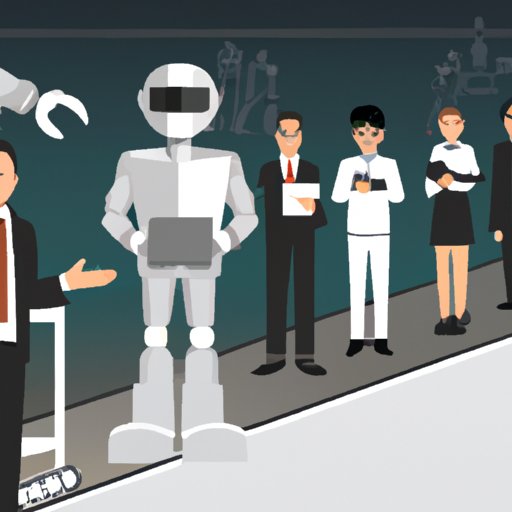
As automation becomes more widespread, human-robot collaboration is becoming increasingly important. Rather than replacing humans with robots, companies are beginning to explore ways to use automation to supplement human labor. For example, robots can be used to do the tedious, repetitive tasks that humans don’t want to do, freeing up humans to focus on more creative and fulfilling work.
“We’re seeing a shift away from the idea of robots replacing humans to robots working alongside humans,” said Shane Wall, HP Inc.’s chief technology officer. “This will require new ways of thinking about how to integrate technology into the workplace.”
Comparing the Cost Benefits of Automation vs. Human Labor
The cost benefits of automation versus human labor vary depending on the context. In some cases, automation can be more cost-effective than human labor, while in other cases it can be more expensive. Companies must carefully weigh the costs and benefits of automating certain tasks before making a decision.
Conclusion
In conclusion, automation and robotics have the potential to transform the way we work and live. While automation can lead to job losses, it can also create new jobs in areas such as software engineering and data science. Companies must carefully consider the pros and cons of automation versus human labor before deciding whether to invest in robots. Ultimately, the future of work will depend on how well humans and robots can collaborate in the workplace.
(Note: Is this article not meeting your expectations? Do you have knowledge or insights to share? Unlock new opportunities and expand your reach by joining our authors team. Click Registration to join us and share your expertise with our readers.)