
Introduction
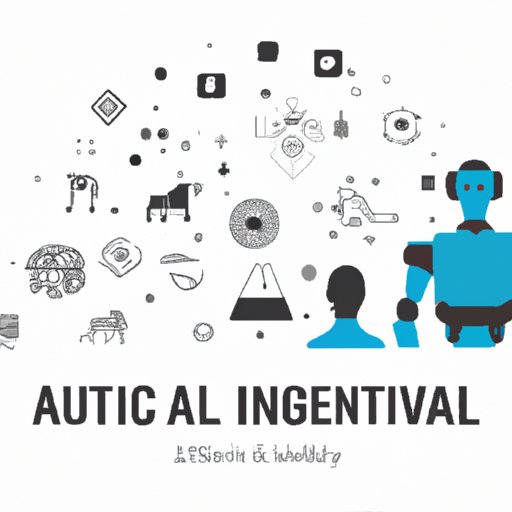
Artificial intelligence (AI) is a sophisticated technology that enables machines to simulate human behavior and perform tasks in a smart and efficient manner. At its core, AI is designed to automate processes, analyze data, and make decisions that would otherwise require human input. AI has become an integral part of modern society, and its applications can be seen in many aspects of our lives. This article explores the reasons why AI was created, looking at the history and development of AI, its current uses, potential benefits and challenges, and the impact it has had on society. The article will also examine the possibilities of autonomous machines and the ethical considerations of AI.
Exploring the History of AI and its Development
The concept of AI has been around for centuries, with the earliest references dating back to ancient Greece. However, it wasn’t until the 1950s that AI began to take shape as a field of study. In 1956, scientists John McCarthy and Marvin Minsky held the first conference on AI, which marked the beginning of the modern AI movement. Since then, AI has undergone rapid development, with numerous breakthroughs in technology, algorithms, and applications.
One of the most significant breakthroughs in AI was the creation of the “expert system” in the 1970s. An expert system is a computer program that can mimic the decision-making process of a human expert. This allowed computers to make decisions based on data and experience, rather than relying solely on pre-programmed instructions. Since then, AI has evolved to include machine learning, natural language processing, and other advanced technologies.
Notable achievements in AI include IBM’s Deep Blue supercomputer, which defeated world chess champion Garry Kasparov in 1997, and Google’s AlphaGo, which beat professional Go player Lee Sedol in 2016. These events demonstrated the potential for AI to outperform humans in complex tasks.
Looking at How AI is Used Today
Today, AI is used in a variety of industries and applications. Businesses use AI to automate mundane tasks, analyze customer data, and optimize operations. AI is also being used in healthcare to diagnose diseases, monitor patient health, and recommend treatments. Automation is another area where AI is being applied, with robots being used to perform repetitive tasks in manufacturing and other industries.

Examining the Benefits of AI
The use of AI offers many potential benefits. One of the primary advantages of AI is improved efficiency. By automating manual processes and analyzing large amounts of data, AI can help businesses save time and resources. AI can also reduce costs by streamlining operations and eliminating the need for manual labor. Additionally, AI can increase safety by monitoring hazardous environments and detecting potential risks.
“AI technology has the potential to revolutionize the way we do business,” says Dr. Alan Winfield, professor of robotics at the University of the West of England. “It can help us improve efficiency, reduce costs, and increase safety.”

Understanding the Potential Challenges of AI
Despite the many potential benefits of AI, there are some potential challenges that must be taken into consideration. Privacy concerns are a major issue, as AI systems can collect and store large amounts of personal data. Additionally, there is a risk of job losses as AI begins to replace manual labor. Finally, AI algorithms can be biased if they are not properly tested and monitored.
“We must be mindful of the potential risks associated with AI,” says Dr. Winfield. “Privacy concerns, job losses, and algorithmic bias are all issues that must be addressed in order to ensure the safe and responsible use of AI technology.”
Analyzing the Impact of AI on Society
AI has had a profound impact on society. In education, AI is being used to personalize learning experiences and improve student outcomes. In the workplace, AI is being used to automate mundane tasks and create new job opportunities. AI is also changing the way we interact with each other, as more and more people rely on digital assistants and chatbots for communication.
“AI is transforming the way we live and work,” says Dr. Winfield. “It is opening up new possibilities in education, employment, and social interaction.”
Discussing the Future of AI
The future of AI is uncertain, but there are some possibilities that are worth considering. Autonomous machines, such as self-driving cars and drones, could become commonplace in the near future. Additionally, ethical considerations must be taken into account when developing AI systems, as their decisions and actions could have serious implications for society.
Finally, government regulation will play an important role in the development of AI. Governments must ensure that AI systems are developed responsibly, and that they are used in a way that benefits society as a whole.
Conclusion
In conclusion, AI has come a long way since its early beginnings. It has been used in a variety of industries, from business to healthcare, and has had a profound impact on society. While AI offers many potential benefits, there are also some potential challenges that must be addressed. Looking to the future, autonomous machines and ethical considerations will be important factors in the development of AI. Ultimately, the success of AI will depend on the responsible use of the technology.
(Note: Is this article not meeting your expectations? Do you have knowledge or insights to share? Unlock new opportunities and expand your reach by joining our authors team. Click Registration to join us and share your expertise with our readers.)