

Introduction
Have you ever experienced a shiver running down your spine while listening to a particular song? Have you ever felt an overwhelming sense of emotion when listening to a certain piece of music? If so, you’ve likely experienced what is known as “musical chills.” Musical chills are a physical response to music that can cause goosebumps, shivers, or even tears. In this article, we’ll explore the science behind why people get chills when they listen to music, and how our brains react to the tunes that give us these unique experiences.
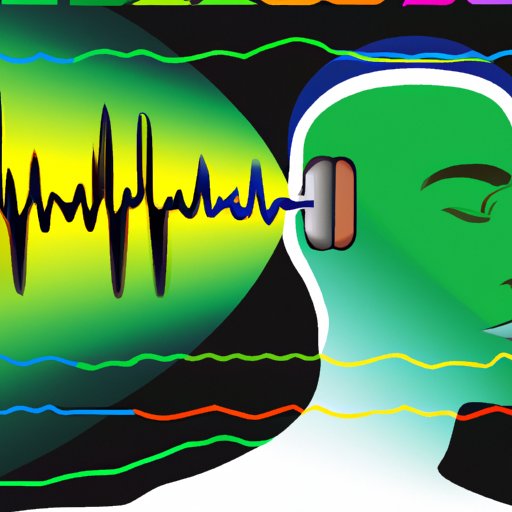
Investigating the Psychological and Physiological Effects of Music on the Human Body
It’s no secret that music has a profound effect on the human body. How exactly does music affect us? To understand why we get chills when listening to music, it’s important to take a look at the ways in which music affects both our brains and our bodies.
How Music Affects Our Brains
Our brains are incredibly complex organs, and they’re capable of producing a variety of responses to musical stimuli. According to a study by the National Institutes of Health (NIH), music activates a number of different areas of the brain. These areas include the auditory cortex, which processes sound, the hippocampus, which is responsible for memory and emotion, and the frontal lobe, which is associated with decision-making and pleasure. This means that when we listen to music, it not only stimulates our hearing, but also our emotions and memories.
How Music Affects Our Bodies
In addition to affecting our brains, music also influences our bodies. Studies have shown that listening to music can reduce stress and anxiety levels, increase endorphin production, and even improve overall physical health. Music can also influence our heart rate and breathing patterns, making us more relaxed or energized depending on the type of music we’re listening to.

Examining the Science Behind Why We Get Chills When Listening to Music
So, what causes us to experience chills when we listen to music? To answer this question, let’s take a closer look at the scientific evidence behind musical chills.
Neurochemical and Hormonal Responses to Music
When we listen to music, our brains release a variety of neurochemicals and hormones, such as dopamine and oxytocin. According to a study published in Nature Neuroscience, dopamine is released when we experience pleasure or excitement, while oxytocin is released when we feel connected to something or someone. This suggests that the chills we feel when listening to music may be due to the release of these chemicals in our brains.
Role of Emotions in Experiencing Chills from Music
In addition to neurochemical and hormonal responses, our emotions also play an important role in why we get chills when listening to music. A study conducted by the University of Groningen in the Netherlands found that people who were able to identify and describe their emotional reactions to music were more likely to experience chills than those who were unable to do so. This suggests that our emotional connection to music is an important factor in why we get chills when we listen to it.
Understanding How Our Brain Reacts to Music That Causes Us to Get Chills
Now that we know what causes us to experience chills when listening to music, let’s take a look at how our brains react to the tunes that give us these unique experiences.
Different Genres of Music That Evoke Chills
Not all music is created equal when it comes to evoking chills. A study conducted by the University of London found that classical music was the most effective genre in eliciting chills, followed by jazz, pop, and rock. This suggests that certain genres of music are more likely to evoke chills than others.
Role of Memory in Chills from Music
In addition to genre, our memories can also play an important role in why we get chills when listening to music. A study conducted by the University of Vienna found that participants who had strong emotional memories associated with a particular song were more likely to experience chills than those who did not. This suggests that our memories can influence our emotional connection to music, which can in turn lead to chills.
Conclusion
As we’ve seen, there are a variety of factors that can contribute to why we get chills when we listen to music. From neurochemical and hormonal responses to our emotional connection to the tunes, there is a complex relationship between music and our bodies. Moreover, different genres of music and our memories can also play an important role in why we experience chills when listening to music. Ultimately, understanding the science behind why we get chills when listening to music can help us to appreciate the power of music even more.
(Note: Is this article not meeting your expectations? Do you have knowledge or insights to share? Unlock new opportunities and expand your reach by joining our authors team. Click Registration to join us and share your expertise with our readers.)