
Introduction
The concept of Bitcoin mining has been around since the inception of the cryptocurrency back in 2009. But what exactly is Bitcoin mining, and why do bitcoins have to be mined? This article seeks to explore these questions by examining the necessity of mining Bitcoin, the technical requirements for mining, the benefits and risks associated with it, and its environmental impact. We will also investigate potential developments and regulations in the future of Bitcoin mining.
Exploring the Necessity of Mining Bitcoin
In order to understand why Bitcoin has to be mined, it is important to first define what Bitcoin mining is and why it is necessary. Bitcoin mining is the process of verifying and adding transactions to the public ledger (known as the blockchain). Miners are rewarded with newly created bitcoins for their efforts in verifying these transactions. Without miners, the Bitcoin network would not be able to function as intended; they are essential for the security and efficiency of the system.
Understanding How Bitcoin Mining Works
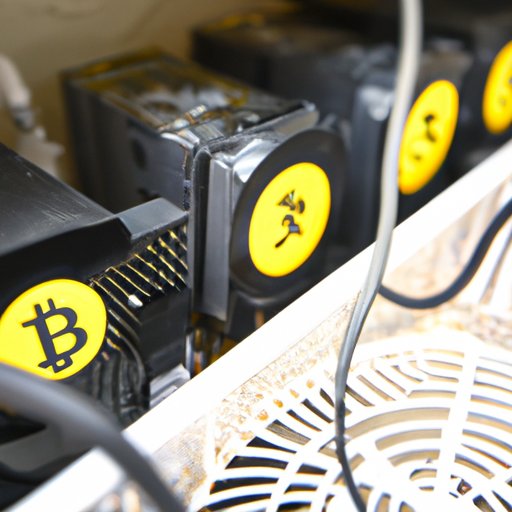
In order to begin mining Bitcoin, there are certain technical requirements that must be met. The most important of these is a computer with a specialized graphics processing unit (GPU) or application-specific integrated circuit (ASIC). GPUs are used to calculate the mathematical problems which miners must solve in order to add transactions to the blockchain and earn rewards. ASICs are even more powerful than GPUs, but they are more expensive and require more energy.
Once the miner has the necessary hardware, they can begin the mining process. Miners use their computers to solve complex mathematical problems, which are designed to verify Bitcoin transactions. When a miner successfully solves one of these problems, they are rewarded with a certain amount of Bitcoin. This process is known as “proof of work” and is essential for maintaining the integrity of the Bitcoin network.

Examining the Benefits of Bitcoin Mining
One of the main benefits of Bitcoin mining is increased security. As more miners join the network, the difficulty of solving the mathematical problems increases. This means that it is harder for malicious actors to successfully attack the network, as they would need an immense amount of computing power to do so. In addition, miners are incentivized to act honestly and not attempt any malicious activity, as they will be punished if they do.
Another benefit of Bitcoin mining is greater efficiency. By using their computing power to verify transactions, miners help ensure that transactions are processed quickly and securely. Furthermore, miners are rewarded for their efforts, which helps to increase the overall efficiency of the network.
Finally, miners are rewarded with newly created bitcoins for their efforts. This is one of the main reasons why people choose to mine Bitcoin; the potential for financial gain is too great to ignore. However, it should be noted that mining is becoming increasingly competitive, so miners need to be prepared to invest time and money into their operations.
Analyzing the Risks Involved in Bitcoin Mining
Although there are many benefits to mining Bitcoin, there are also risks involved. One of the main risks is the high energy consumption associated with mining. Miners need to invest in powerful hardware, which consumes a lot of electricity. This can lead to higher electricity bills and an increased carbon footprint.
Another risk is the cost of equipment. ASICs can be extremely expensive and may not be worth the investment for some miners. Additionally, miners need to take into account the cost of electricity and other expenses associated with running a mining operation.
Finally, there is the risk of regulatory uncertainty. Governments and regulatory bodies around the world are still trying to come to terms with cryptocurrencies, and this could lead to changes in laws and regulations that affect miners. For example, some countries have imposed taxes on mining profits, while others have banned certain types of mining hardware.
Assessing the Impact of Bitcoin Mining on the Environment
The high energy consumption associated with Bitcoin mining can have a negative impact on the environment. Mining operations often rely on fossil fuels, which release pollutants into the air. Additionally, the large amounts of electricity used by miners can lead to an increase in carbon dioxide emissions.
Furthermore, the environmental impact of Bitcoin mining goes beyond just pollution. Miners use powerful computers that generate a lot of heat, which can contribute to global warming. Additionally, the large-scale production of mining hardware requires a lot of resources, which can strain the environment.
Investigating the Future of Bitcoin Mining
The future of Bitcoin mining is uncertain. On the one hand, there is the possibility of new technologies being developed that could make mining more efficient and profitable. For example, some companies are developing ASICs that use less energy and are more affordable than current models. On the other hand, governments and regulatory bodies may impose stricter regulations on mining operations, which could lead to fewer miners and less profitability.
It is also possible that Bitcoin mining could become more decentralized in the future. Currently, most miners are located in China, which makes the network vulnerable to manipulation. However, if more miners were to join the network from other parts of the world, it could become more secure and resilient.
Conclusion
In conclusion, this article has explored why Bitcoin mining is necessary, the benefits and risks associated with it, and its environmental impact. We have also investigated potential developments and regulations in the future of Bitcoin mining. While mining can be a lucrative venture, it is important to consider the risks involved and the environmental impact before deciding to become a miner. Ultimately, it is up to each individual miner to weigh the pros and cons and decide if mining is right for them.
As the world of cryptocurrency continues to evolve, it is likely that miners will continue to play an important role in maintaining the integrity of the Bitcoin network. With new technologies and regulations on the horizon, only time will tell what the future holds for Bitcoin mining.
(Note: Is this article not meeting your expectations? Do you have knowledge or insights to share? Unlock new opportunities and expand your reach by joining our authors team. Click Registration to join us and share your expertise with our readers.)