
Introduction
Thanksgiving is an annual holiday that has been celebrated in the United States since the 1600s. It is a time for families to come together, give thanks for their blessings, and enjoy a meal with traditional foods. But who invented Thanksgiving? This article will explore the history behind the holiday, from its European roots to its establishment as a national holiday in the United States.
A Timeline of the History of Thanksgiving: Who Invented It and When?
The history of Thanksgiving dates back centuries to the early days of European colonization. The first recorded celebration of Thanksgiving was held in 1578 by English explorer Martin Frobisher. He and his crew were celebrating their safe return from a journey to the North Atlantic. This event was not an annual holiday, however; it was simply a one-time celebration.
In 1621, the Pilgrims and Wampanoags gathered in Plymouth, Massachusetts to celebrate a harvest feast. This event is now known as the “First Thanksgiving,” and is often credited with being the first annual celebration of the holiday. While this event was likely not the first time that Europeans had celebrated a harvest feast in the New World, it was the first documented instance of a multi-day feast between Europeans and Native Americans.
The Thanksgiving Story: How the Tradition Began
The story of the First Thanksgiving begins with the Pilgrims, a group of English settlers who arrived in the New World in 1620. After suffering through a harsh winter, the Pilgrims were saved by a local Native American tribe called the Wampanoags. The Wampanoags taught the Pilgrims how to survive in their new environment, and the two groups formed a strong alliance.
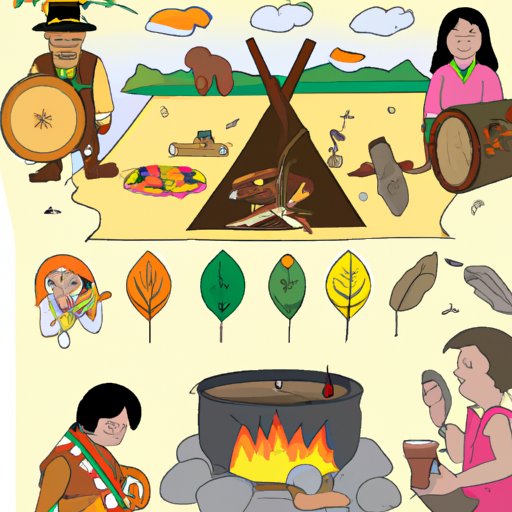
The following year, the Pilgrims had a successful harvest and decided to celebrate with a three-day feast. They invited the Wampanoags to join them, and the two groups shared a meal of roasted turkey, cornbread, and other traditional foods. This event became known as the “First Thanksgiving,” and it marked the beginning of a long tradition of celebrating the harvest.
Exploring the Origin of Thanksgiving: What Inspired Its Creation?
Though the exact origin of Thanksgiving is unknown, it is believed to have been inspired by both religious and political motivations. The Pilgrims, who were members of a Protestant sect known as the Separatists, celebrated the holiday as a way to thank God for their blessings. It was also seen as a way to demonstrate solidarity between the Pilgrims and the Wampanoags, who had formed an alliance based on mutual respect and understanding.
At the same time, the celebration of Thanksgiving was also used as a form of propaganda by the British government. By emphasizing the importance of the holiday, the British hoped to promote a sense of unity among the colonies and encourage loyalty to the Crown.
The Pilgrims and the Wampanoags: Who First Celebrated Thanksgiving?
The First Thanksgiving was attended by the Pilgrims and the Wampanoags. The Pilgrims were a group of English settlers who had arrived in the New World in 1620. Led by William Bradford and Edward Winslow, the Pilgrims were seeking a new life free from religious persecution. The Wampanoags were a local Native American tribe who had helped the Pilgrims survive their first winter in the New World.
The two groups gathered together to celebrate a three-day feast in honor of their successful harvest. It is believed that the Pilgrims and Wampanoags shared a meal of roasted turkey, cornbread, pumpkin pie, and other traditional foods. This event became known as the “First Thanksgiving” and is still celebrated today.
Examining the Invention of Thanksgiving: What Led to Its Establishment?
In 1621, the Pilgrims and Wampanoags celebrated the First Thanksgiving. Though this event was not officially declared a holiday, it did mark the beginning of a long tradition. In 1623, Governor William Bradford declared a day of thanksgiving for the successful harvest. This event was not an annual holiday, but it was the first time that the celebration of Thanksgiving was officially recognized by the colonial government.
In 1789, President George Washington issued the first national proclamation of Thanksgiving. He declared that November 26th would be a day of “public thanksgiving and prayer” to honor the adoption of the Constitution. This event marked the beginning of a national tradition, and Thanksgiving has been celebrated in the United States ever since.
Tracing the Roots of Thanksgiving: Who Was Responsible for Its Invention?
It is impossible to pinpoint one person as the inventor of Thanksgiving. However, two men are often credited with playing an important role in the establishment of the holiday. Edward Winslow and William Bradford were both leaders of the Plymouth colony, and they were instrumental in organizing the First Thanksgiving in 1621. Their actions helped to establish the holiday as an annual tradition, and their influence can still be felt today.
Conclusion
Thanksgiving is an American holiday with a long and complex history. Though it is unclear who first invented the holiday, it is believed to have originated in Europe and was brought to the New World by the Pilgrims and Wampanoags. Over time, the celebration of Thanksgiving has evolved from a harvest feast to a day of national unity and gratitude. Today, Thanksgiving remains a beloved holiday that brings friends and family together to give thanks for their blessings.
(Note: Is this article not meeting your expectations? Do you have knowledge or insights to share? Unlock new opportunities and expand your reach by joining our authors team. Click Registration to join us and share your expertise with our readers.)