
Introduction
Silk is a luxurious fabric that has been coveted for centuries for its beauty and elegance. While the modern world may be familiar with the properties of silk, the exact origins of this remarkable material remain a mystery. In this article, we explore the history of silk and examine who invented it.

A Historical Look at Who Invented Silk
The invention of silk has been shrouded in mystery for centuries. Ancient Chinese legends tell stories of how silk was discovered by the Empress Leizu, who found a cocoon in her cup of tea. Artifacts from the Shang Dynasty (1600-1046 BCE) include silk fabrics and tools used to produce the fabric. There is also evidence of silk production in India, leading some to believe that the country could have played a role in the invention of silk.

Unraveling the Mystery of Who Invented Silk
Early archaeological findings suggest that the invention of silk was likely first developed in China. The earliest known samples of silk fabric were found in tombs dating back to 3500 BCE. These artifacts indicate that the Chinese had already mastered the art of sericulture- the practice of raising silkworms for the purpose of harvesting their cocoons.
The spread of silk production was made possible by the Silk Road, an ancient network of trade routes connecting the East and West. Merchants would transport silk fabrics and other goods along these routes, allowing cultures to exchange ideas and goods.
Recent research has shed new light on the mystery of who invented silk. Studies have suggested that the art of sericulture was practiced in China as early as 5500 BCE. This indicates that the Chinese were likely the first to develop the technique of silk production.
Tracing the Origins of Silk Production
The ancient art of silk making required skill and patience. To create silk, workers would raise silkworms in warm, humid conditions. The worms would then spin cocoons of raw silk thread, which could be harvested and woven into fabric. Workers would use a variety of tools and techniques to create intricate patterns and designs.
As the popularity of silk grew, the art of silk production began to spread to other regions. Craftsmen in the Middle East, Europe, and India began to adopt the techniques of sericulture and refine them to suit their own needs.
The Ancient Art of Silk Making
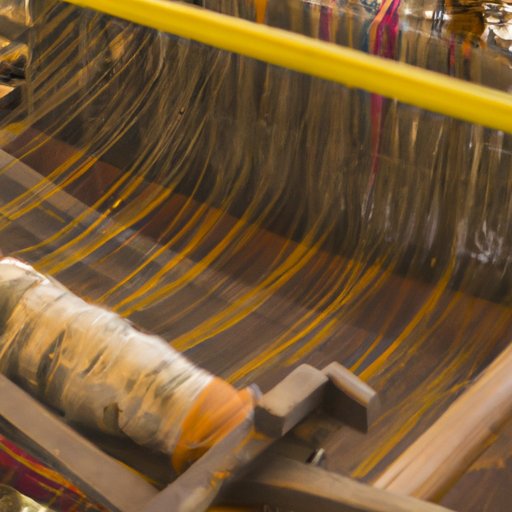
Traditional methods of silk production have remained largely unchanged for centuries. Workers would raise silkworms in specially designed gardens, where they would feed on mulberry leaves. Once the cocoons were ready to be harvested, they would be boiled in hot water to loosen the threads. The threads were then spun and woven into fabric using simple tools such as spindles and looms.
Over time, craftsmen began to innovate and adapt the techniques of silk production. This allowed them to create more complex designs and textures. In addition, the use of chemical dyes and printing processes enabled them to create vibrant colors and patterns.
Exploring the History Behind the Invention of Silk
The invention of silk had a profound impact on culture and politics. In ancient China, silk was seen as a symbol of wealth and power, and it was often used to decorate royal palaces and court garments. Silk fabrics were also used as currency in some parts of the world, and they were even used as diplomatic gifts between rulers.
The invention of silk had a major impact on fashion and luxury goods. For centuries, silk fabrics have been used to make clothing, accessories, and other items. Even today, silk remains one of the most sought-after fabrics in the world.

How the Invention of Silk Changed Textiles Forever
The invention of silk revolutionized the textile industry. Thanks to its strength and durability, silk can be used to create a wide range of products, from clothing to furniture upholstery. In addition, its lightweight and breathable qualities make it ideal for summer clothing.
Silk has also influenced technology and industry. In recent years, scientists have developed new materials based on silk proteins, which can be used for medical applications such as tissue engineering and drug delivery.
Conclusion
The invention of silk has had a lasting impact on culture and society. While the exact origins of this remarkable material remain a mystery, it is clear that the Chinese were the first to develop the techniques of silk production. From ancient times to the present day, silk has been a symbol of wealth, luxury, and sophistication.
The invention of silk has changed the face of textiles forever. Its strength, durability, and elegant look make it a timeless material that will continue to be appreciated for generations to come.
(Note: Is this article not meeting your expectations? Do you have knowledge or insights to share? Unlock new opportunities and expand your reach by joining our authors team. Click Registration to join us and share your expertise with our readers.)