
Introduction
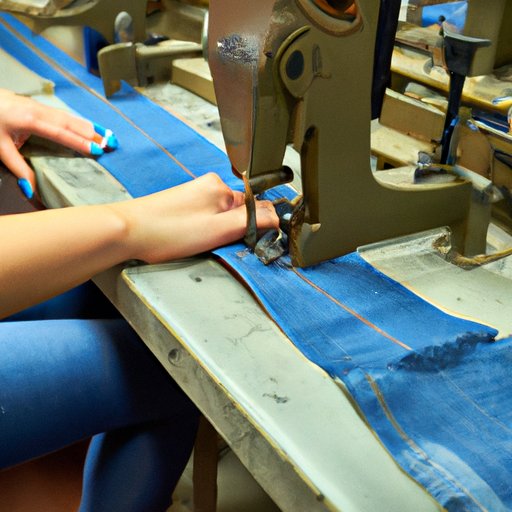
Jeans are an iconic piece of clothing that has become a staple in wardrobes around the world. But where were jeans invented? The answer is complex and involves the evolution of denim fabric and its use in clothing over centuries. This article will explore the origins and history of jeans, from their beginnings as workwear in Europe to their current status as a fashion statement around the globe.
Historical Perspective: Tracing the Evolution of Jeans from Their Origins to Modern Day
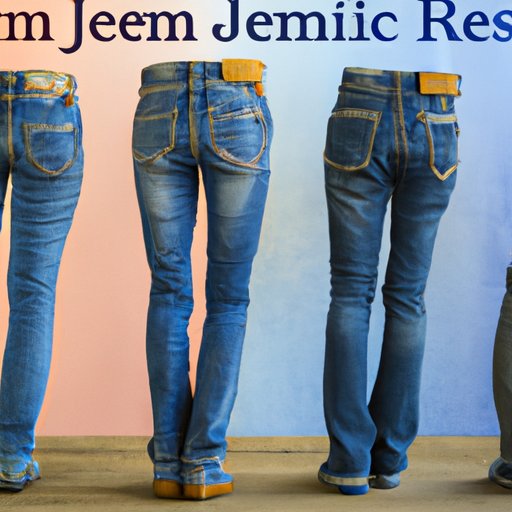
The story of jeans begins in 16th century Italy, where a sturdy fabric called serge was produced in the city of Genoa. This fabric, which was made from wool, was used to make workwear for sailors and other laborers. By the 18th century, this fabric had spread to France, where it was given the name “denim” after the French phrase de Nimes, meaning “from Nimes.”
The development of jeans in the United States began in the late 19th century, when Levi Strauss and Jacob Davis patented a process for making trousers out of denim fabric. The resulting product was called “waist overalls” or “Levi’s” and quickly became popular with miners, cowboys, and other laborers. Over time, the term “jeans” came to refer to pants made from denim fabric, regardless of brand.
In the 20th century, jeans began to be adopted by teenagers and young adults as a fashion statement. As demand for jeans increased, so did production. Soon, jeans were being manufactured all over the world, from the United States to Japan and beyond. Today, jeans can be found in nearly every country on earth, and they remain one of the most popular pieces of clothing worldwide.
In-Depth Look at Denim: The Story Behind the Fabric Used to Make Jeans
To understand the origins of jeans, it’s important to look at the fabric they’re made of: denim. Denim is a sturdy cotton twill fabric that is usually dyed blue or black. It was first produced in France in the 18th century, and it was initially used to make workwear for laborers. Over time, denim spread to the United States, where it was used to make the first pair of jeans in 1873.
The denim production process begins with the spinning of yarn from raw cotton fibers. The yarn is then woven into fabric and dyed, typically with indigo dye. After dyeing, the fabric is finished with treatments such as stonewashing or sandblasting to give it a worn-in look. Finally, the fabric is cut and sewn together to create jeans.
There are various types of denim available today, ranging from lightweight chambray to heavyweight Japanese selvedge denim. Each type of denim has its own unique characteristics, from texture and weight to color and washability.
Jeans Around the World: How Different Cultures Have Adopted and Adapted the Iconic Garment
As jeans have spread around the world, different cultures have adopted and adapted the classic design to suit their own tastes. For example, in Europe, jeans are often slim-fitting and dark-colored, while in Asia they tend to be baggier and brighter. There are also regional preferences, such as bootcut jeans in the United States, drainpipe jeans in the UK, and flared jeans in Brazil.
Culture has also had an influence on jeans styles. For instance, hip-hop culture has popularized baggy jeans with low waistlines, while punk culture has popularized ripped and patched jeans. There are also gender-specific styles, such as skinny jeans for women and loose-fitting jeans for men.
From Workwear to Fashion Statement: Examining the Rise of Jeans in Popular Culture
The rise of jeans in popular culture can be traced back to the 1950s, when Hollywood stars such as James Dean and Marlon Brando began wearing them in films. This trend continued in the 1960s, when hippies embraced jeans as part of their free-spirited lifestyle. Since then, jeans have become increasingly popular, with celebrities and influencers helping to promote them in magazines, movies, and television shows.
The increasing demand for designer jeans has also had an impact on the jeans industry. Brands like Levi’s and Diesel have released new lines of jeans that feature more sophisticated designs and higher-quality materials. These designer jeans are typically more expensive than traditional jeans, but many consumers are willing to pay the premium price for the added style and quality.

Exploring the Role of Women in the Development of Jeans
Throughout the history of jeans, women have played an important role in popularizing the garment. In the 1950s, Marilyn Monroe was one of the first celebrities to wear jeans on screen, while in the 1960s, female activists and musicians like Joan Baez and Janis Joplin helped to make jeans a symbol of rebellion and freedom. In the 1970s, the feminist movement popularized jeans as a symbol of female empowerment.
Today, there is an increasing demand for women’s jeans. Brands like Gap, Madewell, and Levi’s have released lines of jeans specifically designed for women, featuring styles such as skinny, bootcut, and wide-leg. These jeans are available in a variety of colors and fabrics, allowing women to express their individual style.
A Comprehensive Guide to Jeans Manufacturing and Production Processes
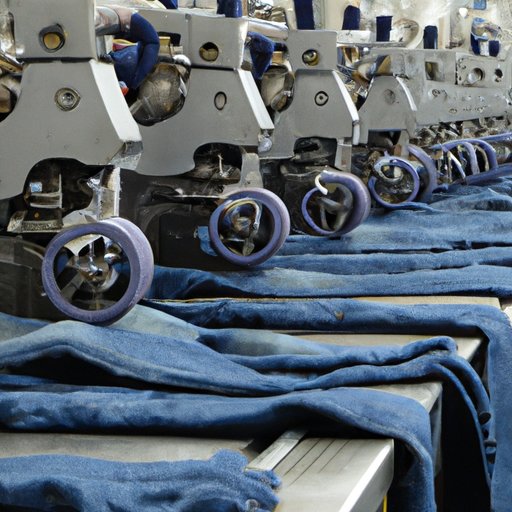
Jeans manufacturing is a complex process that involves numerous steps. The production process typically begins with the selection of denim fabric, which is then cut and sewn into panels. The panels are then assembled into garments and finished with details such as rivets, zippers, and buttons. Finally, the jeans are washed and treated to give them a worn-in look.
Different types of machines are used in the production of jeans. Sewing machines are used to stitch the panels together, while pressing machines are used to press and shape the fabric. Specialized machines are also used to add details such as rivets and zippers.
Conclusion
Jeans are a global phenomenon that have evolved over centuries from workwear to fashion statement. From their origins in 16th century Italy to their present-day status as a wardrobe staple, jeans have been embraced by people of all ages, genders, and cultures. This article has explored the history of jeans, from their beginnings as a sturdy fabric used for workwear to their current status as a fashion icon. It has also examined the production process behind jeans, from the selection of denim fabric to the final stitching and finishing.
Ultimately, jeans are a testament to the power of fashion and how it can transcend boundaries. They have gone from being workwear to a universal symbol of style and self-expression, and they are likely to remain a fixture in wardrobes around the world for years to come.
(Note: Is this article not meeting your expectations? Do you have knowledge or insights to share? Unlock new opportunities and expand your reach by joining our authors team. Click Registration to join us and share your expertise with our readers.)