
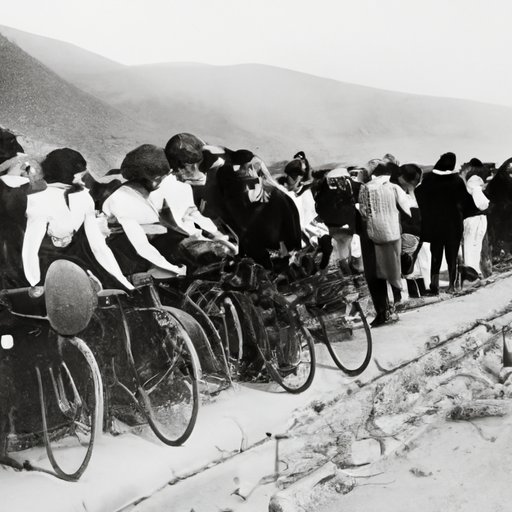
Introduction
The Tour de France is one of the world’s most renowned and beloved cycling races. Every year, millions of people around the globe tune in to watch the riders battle their way through the grueling three-week journey. But how did this incredible event come to be? In this article, we will explore the history and significance of the Tour de France, from its early cycling events in Europe to its founding in 1903.

Historical Overview of the Tour de France: Exploring the Origins of the Race
The origins of the Tour de France date back to the late 19th century, when competitive cycling was gaining popularity across Europe. At the time, there were already a number of cycling events taking place in France and other European countries. However, none of them had the scope or grandeur of the Tour de France.
In the early 1900s, French sports journalist Henri Desgrange began to develop the concept of a grand tour that would span the entire country. He envisioned a race that would test the limits of human endurance and bring together the best cyclists from around the world. With the help of his colleague Géo Lefèvre, Desgrange set out to create the Tour de France.
The Founding of the Tour de France: An In-Depth Look at its Creation
Henri Desgrange was determined to make his vision of the Tour de France a reality. He faced numerous challenges in organizing such an ambitious event, including finding sponsors and securing the support of local authorities. Despite these obstacles, Desgrange was able to pull off the first Tour de France in 1903.
The inaugural race featured 60 cyclists from all over the world, who embarked on a 3,500 km course that spanned the French countryside. The riders faced numerous dangers during the race, including bad weather, rough terrain, and even hostile spectators. Nevertheless, the event was a huge success and captured the imagination of the public.
The first Tour de France was won by Maurice Garin, a French cyclist who completed the race in just under 94 hours. The success of the event prompted Desgrange to organize a second edition the following year. Since then, the Tour de France has become an annual event that attracts millions of viewers worldwide.

A Timeline of Events Leading to the Birth of the Tour de France
To understand how the Tour de France came to be, it is important to look at the timeline of events leading up to its creation. Here is a brief overview of the key milestones in the development of the race:
- Early cycling events in Europe – Cycling events had already been taking place in Europe for some time before the Tour de France was created.
- Development of the Tour de France concept – Henri Desgrange and Géo Lefèvre developed the concept of the Tour de France in the early 1900s.
- Henri Desgrange and the first Tour de France – Desgrange organized the first Tour de France in 1903.
- Challenges faced to create the event – Desgrange faced numerous challenges in organizing the race, including finding sponsors and securing the support of local authorities.
- Initial success of the Tour de France – The first Tour de France was a huge success and captured the imagination of the public.

How the Tour de France Came to Be: A Story of Determination and Dedication
The story of the Tour de France is one of determination and dedication. Henri Desgrange had a vision for the event and was willing to do whatever it took to make it happen. He faced numerous obstacles in organizing such an ambitious event, but his determination and perseverance eventually paid off.
Today, the Tour de France is one of the most prestigious sporting events in the world. It is watched by millions of people every year and has become a symbol of strength and endurance. The legacy of the Tour de France lives on in the hearts and minds of cycling fans around the globe.
The Founding of the Tour de France: The Year It All Started
The year 1903 marked the birth of the Tour de France. On July 1st of that year, 60 cyclists embarked on the first ever Tour de France, a 3,500 km race that would span the French countryside. This date is significant as it marks the beginning of a new era in cycling, an era that continues to this day.
Conclusion
The Tour de France is a remarkable event that has captivated the world for more than a century. It is a testament to the determination and dedication of those involved in its creation. The Tour de France is a powerful reminder of what can be achieved when we work together towards a common goal.
The founding of the Tour de France in 1903 marks a turning point in the history of cycling. It is a milestone that stands as a reminder of the power of human ambition and perseverance. The Tour de France is an iconic event that will continue to inspire generations to come.
(Note: Is this article not meeting your expectations? Do you have knowledge or insights to share? Unlock new opportunities and expand your reach by joining our authors team. Click Registration to join us and share your expertise with our readers.)