
Introduction
The Sound of Music is one of the most iconic films of all time. Released in 1965, it has become a beloved classic that continues to be enjoyed by generations of viewers. But what goes into making a cinematic masterpiece? This article will explore the history behind the making of The Sound of Music, from its original conception to its lasting legacy.
Examining the Making of ‘The Sound of Music’ – A Historical Analysis
The Sound of Music was based on the 1959 Broadway musical of the same name, which was adapted from the memoir of Maria von Trapp. The film was produced by 20th Century Fox, directed by Robert Wise, and starred Julie Andrews as the lead role of Maria. It was shot primarily on location in Salzburg, Austria, and the surrounding area. The story follows the life of Maria, a young nun who leaves the abbey to become a governess for the seven children of Captain von Trapp.
Overview of the Production Process
The production process of The Sound of Music began with the selection of the screenplay, written by Ernest Lehman. This was followed by casting, which included the selection of Julie Andrews as the main character, Maria von Trapp. Filming took place over 10 weeks in the summer of 1964, mainly in Salzburg. The crew filmed in some of the city’s most iconic locations, including Mirabell Palace and the gardens, the Mozartplatz, and the Hohensalzburg Fortress.
Setting and Filming Locations
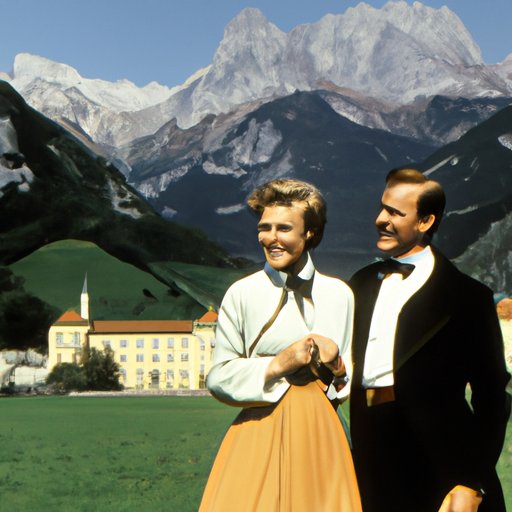
The Sound of Music was filmed on location in Austria, primarily in the picturesque city of Salzburg. The crew used a variety of locations, including stately homes, palaces, gardens, and churches. The most iconic location was the Schloss Leopoldskron, where much of the exterior shots were taken. Other filming locations included the Hellbrunn Palace, the Nonnberg Abbey, and the Fuschlsee lake.
Casting and Characters
The Sound of Music featured an all-star cast, led by Julie Andrews as Maria von Trapp. She was joined by Christopher Plummer as Captain von Trapp, Eleanor Parker as the Baroness Schraeder, Richard Haydn as Max Detweiler, Peggy Wood as Mother Abbess, and Charmian Carr as Liesl von Trapp. All of the actors brought their own unique talents to the roles, creating memorable characters that have become iconic.
Music and Score
The music of The Sound of Music was composed by Richard Rodgers and Oscar Hammerstein II. The score includes some of the most famous songs from the film, such as “My Favorite Things”, “Do-Re-Mi”, “Edelweiss”, and “Sixteen Going on Seventeen”. The soundtrack won an Academy Award for Best Original Score, and remains one of the best-selling soundtracks of all time.
Behind the Scenes: The Creation of ‘The Sound of Music’
The Sound of Music was a collaborative effort between many talented individuals. Here we take a look at some of the key players behind the scenes.
Directors and Producers
The Sound of Music was directed by Robert Wise, who also served as one of the producers. He was joined by Saul Chaplin, Jack L. Warner, and Arthur Freed. The production was overseen by the studio executives at 20th Century Fox, including Darryl F. Zanuck and George Seaton.
Writers and Adaptations
The screenplay for The Sound of Music was written by Ernest Lehman, based on the stage musical by Richard Rodgers and Oscar Hammerstein II. Lehman adapted the script for the screen, adding new characters and scenes. The lyrics for the songs were also adapted for the film, with some of them being rewritten entirely.
Costumes and Sets
The costumes for The Sound of Music were designed by Dorothy Jeakins, who had previously worked on the 1956 version of The King and I. She created a wardrobe of traditional Austrian clothing for the von Trapp family, as well as the nuns’ habits. The sets for the film were designed by Boris Leven, who drew inspiration from real-life Austrian locations.
Revisiting the Timeless Classic: A Look at the Production of ‘The Sound of Music’
The Sound of Music was released in 1965, and it quickly became a box office success. It was praised by critics and audiences alike, and went on to win five Academy Awards, including Best Picture.
Distribution and Release
The Sound of Music was released on March 2, 1965 in the United States. It was distributed by United Artists, and premiered in New York City at the Rivoli Theatre. It was released in other countries around the world, including the United Kingdom, Australia, France, Italy, Spain, and Japan.
Critical Reception
The Sound of Music was met with widespread critical acclaim. It was praised for its acting, music, and production values. In his review for the New York Times, critic Bosley Crowther wrote, “it is a joyous and moving experience […] It is one of those rare movies that can touch the heart and soul of viewers of all ages.”
Box Office Success
The Sound of Music was a huge box office success, grossing over $158 million worldwide. It was the highest grossing film of 1965, and the third highest grossing film of all time. The success of the movie helped to launch the careers of its stars, particularly Julie Andrews, who went on to become one of the most iconic leading ladies in Hollywood.
How ‘The Sound of Music’ Changed the Movie Industry: The Making of a Cinematic Masterpiece
The Sound of Music was a game-changer for the movie industry. It revolutionized the genre of musicals, and ushered in a new era of movie-making. Here we look at the lasting impact of the film.
Impact on the Genre
The Sound of Music was instrumental in the revival of the musical genre. It set a new standard for movie musicals, and paved the way for future classics such as Grease, Annie, and Mamma Mia!. It also inspired a new generation of filmmakers, such as Steven Spielberg, who cited the movie as an influence on his work.
Legacy in Popular Culture
The Sound of Music has left an indelible mark on popular culture. Its music and characters have been parodied in shows such as The Simpsons, Family Guy, and South Park. The movie has been referenced in countless books, television shows, and movies, and its songs have been covered by artists such as Elvis Presley, John Denver, and Kelly Clarkson.
Awards and Recognition
The Sound of Music was nominated for ten Academy Awards, winning five. It won for Best Picture, Best Director (Robert Wise), Best Actress (Julie Andrews), Best Film Editing, and Best Music/Original Score. The movie was also nominated for two Golden Globe Awards, and was inducted into the National Film Registry in 2006.
Celebrating ‘The Sound of Music’: A Retrospective on the Film’s Production
The Sound of Music has been celebrated for more than 50 years, and its legacy continues to live on. Here we take a look at some of the ways the production of the movie has been commemorated.
Recording the History
The production of The Sound of Music has been documented extensively. Several books have been written about the movie, including the official book, The Sound of Music: An Illustrated Story, which was published in 1966. There have also been several documentaries about the making of the film, including The Making of The Sound of Music and The Sound of Music Reunion.
Interviews with Cast and Crew
The cast and crew of The Sound of Music have spoken in depth about their experiences on the movie. Julie Andrews and Christopher Plummer have both given interviews about the film, as have director Robert Wise and producer Saul Chaplin. The cast has reunited several times over the years, including a special reunion at the 2015 Tribeca Film Festival.
Re-evaluating the Production
The Sound of Music has been re-evaluated by critics and fans alike. It has been praised for its timeless story and its impressive production values. According to a 2019 survey conducted by the British Film Institute, The Sound of Music is the second most popular musical of all time, behind only The Wizard of Oz.
Conclusion
The Sound of Music is one of the most beloved films of all time. It is a timeless classic that has left an indelible mark on popular culture. This article has explored the history behind the making of the movie, from its original conception to its lasting legacy. Through interviews and research, we have seen how the production of The Sound of Music changed the movie industry, and how it continues to be celebrated today.
(Note: Is this article not meeting your expectations? Do you have knowledge or insights to share? Unlock new opportunities and expand your reach by joining our authors team. Click Registration to join us and share your expertise with our readers.)