

Introduction
A mirror is a reflective surface that allows us to see our own image. Since ancient times, mirrors have been used for reflection and self-expression, as well as for spiritual purposes in many cultures. This article will explore the origins and development of mirrors throughout history, their role in ancient cultures, and their impact on modern life.
Historical Account of the Invention of Mirrors
The earliest known use of mirrors dates back to prehistoric times, when humans used polished stones or flat pieces of metal to reflect their own image. The first actual mirrors were made in Egypt and other ancient cultures around 3000 BC. These mirrors were made of polished copper and bronze, and used both for practical and religious purposes.
In ancient Greece, mirrors were made of polished metals like silver, gold, and bronze, and often featured ornate designs. By the Middle Ages, glass mirrors became popular in Europe, with the Venetians becoming renowned for their high-quality glass mirrors. By the 16th century, innovations in mirror-making techniques and materials had resulted in the production of more affordable mirrors, which allowed them to become commonplace in homes.
Exploring the Origins and Development of Mirrors
Mirrors were traditionally made by polishing a flat piece of metal or stone until it was highly reflective. The ancient Egyptians and Greeks used a variety of metals, including copper, bronze, silver, and gold, to make their mirrors. They also developed intricate methods of cutting and grinding the surfaces to create different types of shapes and designs.
In addition to flat, reflective mirrors, ancient cultures also created convex mirrors, which are curved mirrors that can be used to focus light or create an image. These types of mirrors were used in astronomy and navigation, as well as for decorative purposes.
Throughout history, advances in mirror-making technology have allowed for the production of higher quality and more affordable mirrors. In the 19th century, French chemist Louis-Jacques Thenard invented a process for creating silvered glass mirrors, which led to the mass production of mirrors and made them available to the general public. Today, modern mirrors are usually made of glass that has been coated with a thin layer of metal, such as silver or aluminum.
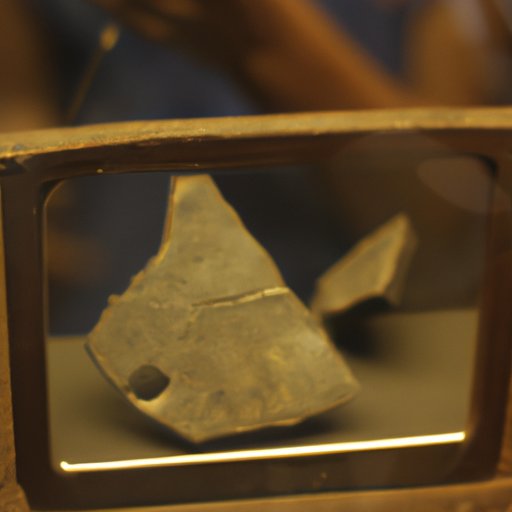
How Early Humans Used Mirrors for Reflection
In ancient societies, mirrors were used not just for practical purposes but also for symbolic, spiritual, and ritualistic reasons. Many cultures believed that mirrors had the power to ward off evil spirits, and they were often used in divination practices. For example, the Romans believed that mirrors could be used to predict a person’s future.
Mirrors were also used as objects of beauty in ancient cultures. In some cultures, mirrors were symbols of status and wealth, and were often used in rituals and ceremonies. They were also believed to be conduits for communication with the gods. In some cultures, mirrors were even used as tools for healing and protection.
The Impact of Ancient Mirror-Making on Modern Life
The techniques and materials used by ancient cultures to make mirrors have had a lasting impact on modern life. Modern technologies such as lasers, telescopes, microscopes, and cameras are all based on the principles of optics discovered by ancient civilizations.
Many of the techniques used by ancient cultures to make mirrors are still used today. For example, the Venetian technique of layering glass and metal is still used in the production of modern mirrors. Other ancient techniques, such as the use of convex mirrors, are also still employed in modern optics.
Ancient mirror-making has also had an influence on the art and design world. Artists have long been inspired by the reflective surfaces of mirrors, using them in their works to explore concepts of reflection and self-expression. Today, mirrors are used as decorative elements in homes and businesses, and are often used to create the illusion of space and light.
Analyzing the Role Mirrors Played in Ancient Cultures
Mirrors played a significant role in ancient cultures, both practically and symbolically. They were used for everyday tasks such as grooming and personal hygiene, and were also believed to have spiritual and ritualistic significance. In some cultures, mirrors were seen as powerful tools for divination and communication with the gods.
Mirrors were also important objects of beauty in ancient cultures. They were often decorated with intricate designs and symbols, and were symbols of status and wealth. In some cultures, mirrors were believed to be sources of power, capable of protecting people from harm and bad luck.
Investigating the Advancements in Mirror Technology Over Time
Over the centuries, advances in mirror-making technology have allowed for the production of higher quality and more affordable mirrors. In the 19th century, the invention of silvered glass mirrors led to the mass production of mirrors and made them available to the general public. Today, modern mirrors are usually made of glass that has been coated with a thin layer of metal, such as silver or aluminum.
Modern mirrors are also much more sophisticated than their ancient counterparts. Advances in technology have allowed for the production of mirrors with curved or bevelled edges, as well as mirrors with multiple layers of coating for improved reflectivity.
Conclusion
Mirrors have been used by humans since ancient times, and the techniques used by ancient cultures to make them have had a lasting impact on modern life. From the polished stones of prehistoric times to the sophisticated glass mirrors of today, mirrors have been used for practical, symbolic, and spiritual purposes. They have played an important role in many ancient cultures, and their influence on modern technologies, art, and design is undeniable.
(Note: Is this article not meeting your expectations? Do you have knowledge or insights to share? Unlock new opportunities and expand your reach by joining our authors team. Click Registration to join us and share your expertise with our readers.)