

Introduction
Since its inception, blockchain technology has revolutionized the way we think about data storage, trust, and transactions. But when did blockchain start? In this article, we’ll explore the origins and evolution of blockchain technology from its humble beginnings to present day.
History of Blockchain: Tracing the Origins and Evolution of the Technology
Before delving into when blockchain began, let’s take a look at what it is and how it works. Blockchain is a digital ledger system that records and stores data in a secure and immutable manner. It uses cryptography to protect users’ data and ensure that the stored information cannot be altered or tampered with. The technology is decentralized, which means there is no central authority controlling it, but rather each individual user has access to their own copy of the ledger.
The first use cases and applications for blockchain technology were related to cryptocurrencies like Bitcoin. These digital assets used blockchain technology to securely store and transfer value without the need for third-party intermediaries. This new type of money allowed users to make transactions directly between one another without relying on banks or other financial institutions.
Since then, blockchain technology has been applied to many different industries and use cases. From smart contracts to distributed ledger technologies, the potential of blockchain is far-reaching and continues to expand as more innovative applications are developed.
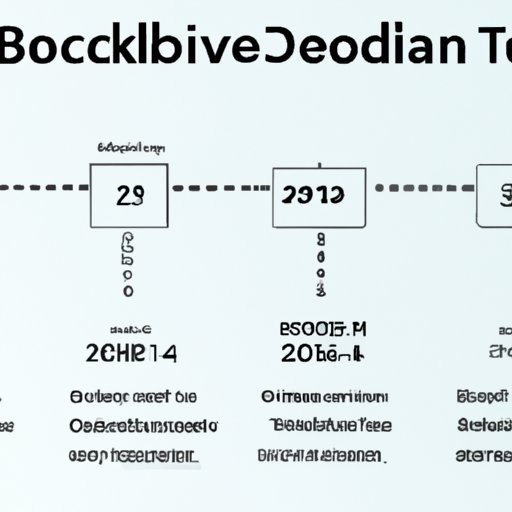
A Timeline of Blockchain Development: From Its Inception to Present Day
Now that we’ve covered the basics of blockchain technology, let’s take a look at how it has developed over time and when blockchain was first introduced to the world.
The Birth of Blockchain
The history of blockchain technology can be traced back to 2008, when an anonymous person or group of people using the pseudonym “Satoshi Nakamoto” published a paper outlining the concept of a peer-to-peer electronic cash system. This paper laid the groundwork for the development of Bitcoin, the world’s first cryptocurrency.
Early Blockchain Innovations
In 2009, the Bitcoin network went live and the first block of the blockchain was mined. This marked the beginning of a new era of digital currencies and opened the door for further blockchain innovations. In subsequent years, developers began experimenting with the technology and creating new applications such as smart contracts and distributed ledger technologies.
Recent Blockchain Developments
Since then, blockchain technology has been adopted by numerous industries and organizations across the globe. From healthcare to finance, the technology is being used to enhance efficiency and security while reducing costs. In recent years, the technology has seen a surge in popularity due to its ability to facilitate secure, transparent, and immutable transactions.
How Blockchain Began: Exploring the Roots of the Technology
Now that we’ve taken a look at the timeline of blockchain development, let’s examine the roots of the technology and explore the first use cases and applications.
Examining the First Use Cases and Applications
As mentioned earlier, the first use cases and applications for blockchain technology were related to cryptocurrencies like Bitcoin. This revolutionary form of money allowed users to send and receive payments directly between one another without relying on banks or other financial institutions. It also enabled users to store their funds securely and access them anywhere in the world.
In addition to cryptocurrencies, blockchain technology has also been applied to other areas such as smart contracts and distributed ledger technologies. Smart contracts are self-executing agreements that allow parties to exchange money, property, or any other asset without the need for a middleman. Distributed ledger technologies, on the other hand, are decentralized databases that enable secure and immutable data storage.
Understanding the Genesis of Blockchain: Where It All Started
The genesis of blockchain technology can be traced back to the early 1980s, when cryptographers and computer scientists began exploring the potential applications of cryptography. By the late 1990s, these researchers had developed a number of protocols and algorithms that formed the basis of modern blockchain technology.
The Birth of Blockchain: Examining the First Use Cases and Applications
As discussed earlier, the first use cases and applications for blockchain technology were related to cryptocurrencies like Bitcoin. Let’s take a closer look at some of the most popular applications and use cases for blockchain.
Bitcoin and Cryptocurrencies
The first application of blockchain technology was in the creation of Bitcoin, the world’s first cryptocurrency. Bitcoin is a digital currency that allows users to send and receive payments directly between one another without relying on banks or other financial institutions. Since its launch in 2009, Bitcoin has become one of the most popular cryptocurrencies and is now accepted by numerous online merchants.
Smart Contracts
Smart contracts are self-executing agreements that allow parties to exchange money, property, or any other asset without the need for a middleman. These contracts are stored on the blockchain and can be programmed to automatically execute when certain conditions are met. Smart contracts have numerous potential applications, from supply chain management to real estate transactions.
Distributed Ledger Technologies
Distributed ledger technologies (DLTs) are decentralized databases that enable secure and immutable data storage. DLTs can be used to store and share data across multiple devices in a secure and efficient manner. The technology is already being utilized in a variety of industries, including finance, healthcare, and logistics.
A Look Back at When Blockchain Was First Introduced to the World
Now that we’ve explored the first use cases and applications for blockchain technology, let’s take a look at how it has impacted the world since its inception.
The Impact of Blockchain on Financial Services
Blockchain technology has had a significant impact on the financial services industry. The technology has enabled faster and more secure transactions, as well as improved transparency and enhanced security. Additionally, blockchain-based platforms have enabled banks and other financial institutions to reduce costs and increase efficiency.
Expansion of Blockchain into Other Areas
In recent years, blockchain technology has seen a surge in popularity due to its potential to revolutionize various industries. From healthcare to logistics, the technology is being used to create more efficient and secure systems. As the technology continues to evolve, its potential applications are only limited by our imagination.
Exploring Blockchain’s Journey: How It Has Changed Over Time
Let’s now take a look at how blockchain has changed over time and what advancements have been made in terms of security and privacy.
Evolving Use Cases for Blockchain
Since its inception, blockchain technology has been applied to a variety of use cases and industries. In recent years, developers have been exploring the potential applications of blockchain in areas such as healthcare, education, and logistics. As the technology continues to evolve, we can expect to see even more innovative use cases in the future.
Advances in Security and Privacy
Security and privacy are two of the most important aspects of blockchain technology. Over the years, developers have implemented various measures to ensure the safety of users’ data. From multi-signature wallets to advanced encryption techniques, the technology has come a long way in terms of security and privacy.
Conclusion
In conclusion, blockchain technology has come a long way since its inception in 2008. From its first use cases and applications to its current state, the technology has experienced tremendous growth and is now being used in numerous industries. As the technology continues to evolve, we can expect to see even more innovative use cases and applications.
This article examined when blockchain started and how it has evolved over time. We explored the first use cases and applications, its impact on financial services, and advances in security and privacy. With its immense potential, blockchain technology is sure to revolutionize the world in the years to come.
(Note: Is this article not meeting your expectations? Do you have knowledge or insights to share? Unlock new opportunities and expand your reach by joining our authors team. Click Registration to join us and share your expertise with our readers.)