
Introduction
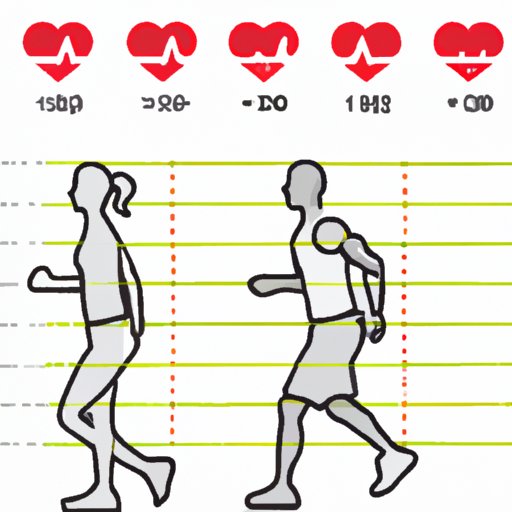
When it comes to exercising, it’s essential to understand how your heart rate affects your performance. Knowing what your heart rate should be when working out can help you optimize your workouts and get the most out of them. But what is a heart rate, and what should it be when you’re exercising?
Your heart rate is the number of times your heart beats per minute. According to the American Heart Association, a normal resting heart rate for adults ranges from 60 to 100 beats per minute. When you exercise, your heart rate increases as your body works harder and pumps more oxygen-rich blood to your muscles.
Comparing Heart Rate Zones: What Should Your Heart Rate Be During Exercise?
When it comes to exercising, there are several different heart rate zones that you should be aware of. Each zone has its own benefits, so understanding which zone is best for your goals is key to maximizing your workouts.
Identifying Different Heart Rate Zones
The first step to understanding what your heart rate should be when working out is identifying the different heart rate zones. According to the American Council on Exercise, there are five main heart rate zones:
- Zone 1: 50-60% of maximum heart rate
- Zone 2: 60-70% of maximum heart rate
- Zone 3: 70-80% of maximum heart rate
- Zone 4: 80-90% of maximum heart rate
- Zone 5: 90-100% of maximum heart rate
Understanding the Benefits of Each Zone
Each zone has its own benefits, so understanding which zone is best for your goals is key to maximizing your workouts. For example, Zone 1 is great for beginners or people who are just starting to get into shape. This zone is low intensity and helps build endurance without putting too much strain on your body. Zone 2 is also low intensity, but it helps you burn fat more efficiently than Zone 1.
Zone 3 is the ideal zone for improving cardiovascular fitness. This zone is slightly more intense than Zone 1 and 2, and it helps you improve your aerobic capacity. Zone 4 is the highest intensity zone and is great for interval training and improving speed and power. And finally, Zone 5 is the most intense zone and should only be used by experienced athletes or those training for specific events.

Target Heart Rate: How to Calculate and Monitor Your Heart Rate During Workouts
Now that you’ve identified the different heart rate zones, the next step is to calculate your target heart rate. This is the heart rate that you should aim for when working out in order to get the most out of your workouts.
Calculating Your Target Heart Rate
The American Heart Association recommends calculating your target heart rate by subtracting your age from 220. For example, if you’re 30 years old, your target heart rate would be 190 beats per minute (220 – 30 = 190). Once you’ve calculated your target heart rate, you can use this number to determine which heart rate zone you should be working out in.
Monitoring Your Heart Rate During Workouts
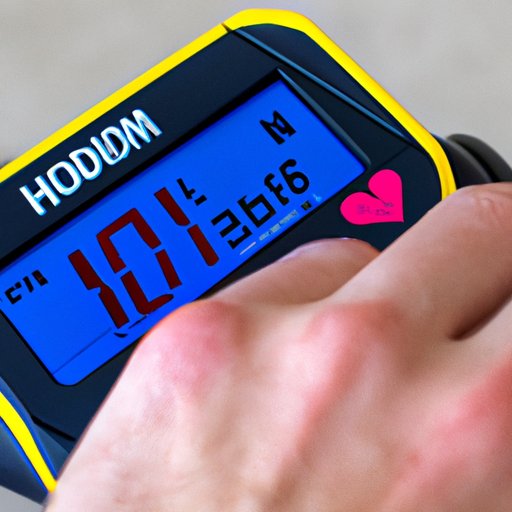
Once you’ve calculated your target heart rate, the next step is to monitor your heart rate during your workouts. This can be done with a variety of tools, such as a heart rate monitor or a fitness tracker. These devices can help you track your heart rate throughout your workout and ensure that you’re staying within your target heart rate zone.

The Benefits of Monitoring Your Heart Rate During Exercise
Monitoring your heart rate during exercise can have a number of benefits. It can help you improve your performance, maximize your results, and ensure that you’re getting the most out of your workouts.
Improved Performance
One of the main benefits of monitoring your heart rate during exercise is improved performance. By tracking your heart rate, you can make sure that you’re pushing yourself hard enough to get the most out of your workout. According to a study published in the Journal of Sports Science and Medicine, “Heart rate monitoring may be an effective tool to optimize exercise intensity and improve performance.”
Maximizing Results
Another benefit of monitoring your heart rate during exercise is that it can help you maximize your results. By staying within your target heart rate zone, you can ensure that you’re pushing yourself hard enough to reach your fitness goals. This can help you achieve faster results and more efficient workouts.
Understanding the Effects of Different Heart Rate Zones on Performance
Now that you understand the benefits of monitoring your heart rate during exercise, it’s important to understand how different heart rate zones affect your performance. Low-intensity workouts are great for building endurance, while high-intensity workouts are better for improving speed and power.
Low-Intensity Workouts
Low-intensity workouts, such as walking or jogging, are best for building endurance. These types of workouts should be done in Zone 1 or 2, as they help your body become more efficient at burning fat and using oxygen. According to a study published in the Journal of Applied Physiology, “Exercise of moderate intensity (in Zone 1 or 2) is associated with improved fat oxidation and increased mitochondrial biogenesis.”
High-Intensity Workouts
High-intensity workouts, such as sprinting or HIIT, are best for improving speed and power. These types of workouts should be done in Zone 4 or 5, as they help your body become more efficient at using energy and producing power. According to a study published in the International Journal of Sports Medicine, “High-intensity interval training (HIIT) is an effective exercise modality for improving both aerobic and anaerobic performance.”
Maximizing Results: Using Heart Rate to Optimize Your Workout
Now that you understand the effects of different heart rate zones on performance, the next step is to use your heart rate to optimize your workout. This means adjusting your intensity levels and rest periods based on your heart rate.
Adjusting Intensity Levels
Adjusting your intensity levels is key to optimizing your workouts. Start off with low-intensity exercises in Zone 1 or 2, then gradually increase the intensity as your body becomes more efficient. You can also adjust your intensity levels based on how you feel. If you’re feeling tired or sluggish, dial back the intensity until you’re feeling more energized.
Rest Periods
Rest periods are also important for optimizing your workouts. Make sure to take regular breaks between sets or exercises to allow your body to recover. This will help you avoid overtraining and prevent injuries.
Conclusion
Understanding your heart rate during exercise can help you maximize the effectiveness of your workout. To get the most out of your workouts, it’s important to understand what your heart rate should be when working out, calculate your target heart rate, and monitor your heart rate during your workouts. By doing this, you can ensure that you’re pushing yourself hard enough to reach your fitness goals and get the most out of your workouts.
Summary of Key Points: Understanding your heart rate during exercise can help you maximize the effectiveness of your workout. Calculate your target heart rate by subtracting your age from 220, and monitor your heart rate during your workouts with a heart rate monitor or fitness tracker. Different heart rate zones have different benefits, so understanding which zone is best for your goals is key to maximizing your workouts. Finally, adjust your intensity levels and rest periods based on your heart rate to optimize your workouts.
Final Words of Advice: Knowing what your heart rate should be when working out can help you optimize your workouts and get the most out of them. With the right knowledge and monitoring tools, you can ensure that you’re pushing yourself hard enough to reach your fitness goals and get the results you want.
(Note: Is this article not meeting your expectations? Do you have knowledge or insights to share? Unlock new opportunities and expand your reach by joining our authors team. Click Registration to join us and share your expertise with our readers.)