
Introduction
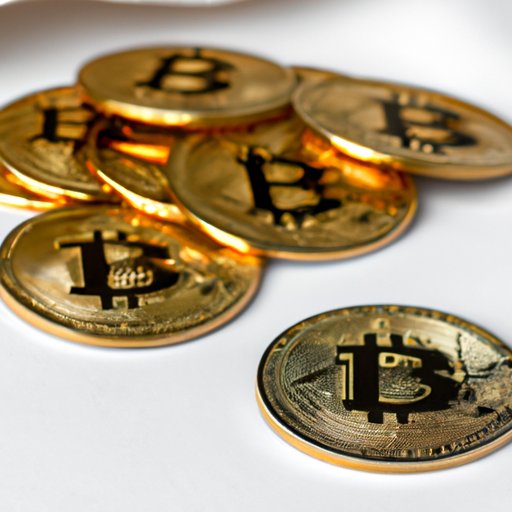
Bitcoin is an innovative digital currency that has become increasingly popular in recent years. But what exactly is it, and why is it so valuable? This article will explore the fundamentals of Bitcoin and its utility, as well as its potential impact on the global financial system.
A. Definition of Bitcoin
Bitcoin is a decentralized digital currency that was created in 2009. It is based on a peer-to-peer network and operates without a central authority or bank. Transactions are recorded on a public ledger known as the blockchain, and users can send and receive payments anonymously.

B. Overview of why it is valuable
Bitcoin has become increasingly valuable due to its fundamentals, utility, and potential impact on the global financial system. It is a scarce asset with limited supply, has a growing market cap, facilitates transactions quickly and securely, and provides investors with an alternative investment tool. Additionally, it can be used as a hedge against inflation, and may have a lasting impact on the global financial system.
Body

A. Fundamentals of Bitcoin and its Scarcity
The fundamentals of Bitcoin make it a valuable asset. Understanding these fundamentals is key to understanding why it has become so valuable.
1. How Bitcoin works
Bitcoin is based on a distributed ledger technology called the blockchain. The blockchain is a public, tamper-proof record of all Bitcoin transactions. Each transaction is verified and added to the blockchain by miners, who are rewarded with newly minted Bitcoin for their work.
2. What makes Bitcoin scarce
Bitcoin is a scarce asset with a limited supply. There will only ever be 21 million Bitcoin in circulation, and no more can be created. This limited supply means that, unlike fiat currencies, Bitcoin cannot be devalued by governments printing more money. This makes Bitcoin an attractive asset for investors looking for a store of value.

B. History of Bitcoin and Market Cap Growth
Since its launch in 2009, Bitcoin has experienced rapid growth in both price and market cap. Let’s take a look at how this growth has occurred.
1. Introduction to the history of Bitcoin
Bitcoin was created by an anonymous individual or group of individuals known as Satoshi Nakamoto. It was released as open source software in 2009, and since then has grown exponentially in popularity.
2. Market cap growth over time
The total market cap of Bitcoin has grown dramatically since its inception. In 2010, the total market cap was just $0.03 USD. By 2017, it had grown to over $50 billion USD. As of 2021, the total market cap of Bitcoin is over $900 billion USD.
C. Utility of Bitcoin
In addition to its fundamentals and scarcity, Bitcoin has gained value due to its utility. Let’s take a look at some of the ways in which Bitcoin can be used.
1. Facilitating transactions
Bitcoin can be used to facilitate transactions quickly and securely. Transactions are processed almost instantly and are immutable, meaning they cannot be reversed. Additionally, Bitcoin transactions are pseudonymous, meaning users can remain anonymous when sending and receiving payments.
2. Storing value
Bitcoin can also be used as a store of value. Its limited supply and lack of government control make it an attractive asset for investors looking to protect their wealth from inflation or other macroeconomic events. Additionally, Bitcoin can be easily stored and transferred, making it a convenient way to store and transfer wealth.
D. Bitcoin as a Hedge Against Inflation
Bitcoin can be used as a hedge against inflation. As mentioned above, its limited supply makes it less vulnerable to inflation than fiat currencies. Additionally, its decentralized nature means it is not subject to government manipulation or interference.
1. How Bitcoin can be used to hedge against inflation
Investors can use Bitcoin to hedge against inflation by buying and holding it as a store of value. This allows them to protect their wealth from the effects of inflation, such as rising prices and decreased purchasing power.
2. Potential risks associated with hedging against inflation
It is important to note that there are risks associated with using Bitcoin as a hedge against inflation. For example, the price of Bitcoin is volatile and can fluctuate significantly, which could result in losses if the investor does not adequately manage their risk.

E. Bitcoin as an Investment Tool
Bitcoin has become an attractive investment tool for many investors. Let’s take a look at some of the advantages of investing in Bitcoin.
1. Diversifying investment portfolios
Investing in Bitcoin can be a great way to diversify an investment portfolio. By adding Bitcoin to a portfolio, investors can reduce their exposure to traditional markets and protect their wealth from market volatility.
2. Advantages of investing in Bitcoin
Bitcoin offers investors several advantages, such as high liquidity, low transaction fees and fast transaction speeds. Additionally, it is a decentralized asset, meaning it is not subject to government regulation or interference.
F. Advantages of Using Bitcoin Over Traditional Payment Methods
Bitcoin offers several advantages over traditional payment methods. Let’s take a look at some of these advantages.
1. Security and privacy
Bitcoin transactions are secure and private. All transactions are cryptographically secured and stored on the blockchain, which is a public, tamper-proof ledger. Additionally, Bitcoin transactions are pseudonymous, meaning users can remain anonymous when sending and receiving payments.
2. Low transaction fees
Bitcoin transactions have much lower fees than traditional payment methods. This makes it a cost-effective way to send and receive payments.
3. Speed of transactions
Bitcoin transactions are much faster than traditional payment methods. Transactions are processed almost instantly, and can be sent and received anywhere in the world in minutes.
G. Impact of Bitcoin on the Global Financial System
The potential impact of Bitcoin on the global financial system is still unknown, but it is likely to be significant. Let’s take a look at some of the potential benefits and risks posed by Bitcoin.
1. Benefits of Bitcoin for the global financial system
Bitcoin offers several potential benefits for the global financial system. It is a secure and efficient way to send and receive payments, and its decentralized nature makes it resistant to government manipulation or interference. Additionally, it is a scarce asset with limited supply, making it a potentially attractive store of value.
2. Potential risks posed by Bitcoin
There are also potential risks posed by Bitcoin. Its price is volatile and can fluctuate significantly, making it a risky investment. Additionally, its pseudonymous nature could make it attractive to criminals, and its lack of government regulation could lead to potential problems in the future.
Conclusion
Bitcoin is an innovative digital currency that has become increasingly valuable due to its fundamentals, utility, and potential impact on the global financial system. It is a scarce asset with limited supply, has a growing market cap, facilitates transactions quickly and securely, and provides investors with an alternative investment tool. Additionally, it can be used as a hedge against inflation, and may have a lasting impact on the global financial system.
In conclusion, Bitcoin is a valuable asset that has the potential to revolutionize the global financial system. Its fundamentals, utility, and potential impact make it an attractive asset for investors looking for a store of value, a hedge against inflation, or an alternative investment tool.
(Note: Is this article not meeting your expectations? Do you have knowledge or insights to share? Unlock new opportunities and expand your reach by joining our authors team. Click Registration to join us and share your expertise with our readers.)