
I. Introduction
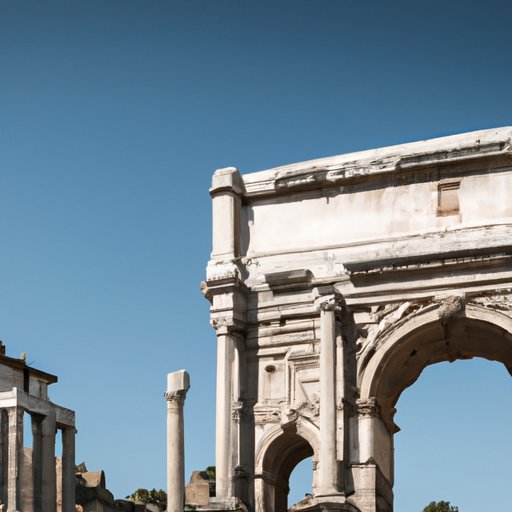
The Roman Empire was known for being a true powerhouse in the ancient world, and one of the ways that they showcased their power and influence was through their magnificent and innovative civic architecture. From the forums of Rome to the aqueducts that spanned the empire, the Romans created architectural marvels that still leave us in awe today. In this article, we will explore the different kinds of civic architecture that Romans created, their significance and influence, and how their legacy endures today. This article is for anyone with an interest in ancient history, architecture, and engineering.
II. 7 Examples of Roman Civic Architecture that Shaped the Future
The Romans created many impressive architectural structures, and seven of the most notable include:
1. Colosseum
The Colosseum was the largest amphitheater in the ancient world, capable of holding up to 50,000 spectators. It was built in 70-80 AD and was used for games and gladiatorial contests, showcasing the power and wealth of the Roman Empire. Its design, with arched entrances and tiered seating, influenced later stadium and theater designs.
2. Pantheon
The Pantheon is a masterpiece of ancient engineering. It was built in 126 AD and features a dome with an oculus, or circular opening, at the center that lets in natural light. The dome’s design is considered a marvel of engineering, and it influenced later dome constructions like St. Peter’s Basilica in Rome. The Pantheon also served as a model for many churches built during the Renaissance.
3. Aqueducts
The Romans built a vast network of aqueducts to transport water from distant sources to cities and towns. The aqueducts consisted of a series of arches, which allowed them to span valleys and rivers, delivering water to the people who needed it. Some aqueducts still exist today, and their influence can be seen in modern infrastructure, like bridges and highways.
4. Trajan’s Forum
Trajan’s Forum was built by Emperor Trajan in the early 2nd century AD and was one of the largest public spaces in Rome. It was designed to showcase Trajan’s military might and conquests and features a variety of impressive architectural details, including a triumphal arch and a massive column with a spiral relief depicting Trajan’s victories. The Forum’s design and impact can be seen in modern town squares and plazas.
5. Baths of Caracalla
The Baths of Caracalla were one of the largest public bath complexes in ancient Rome, capable of accommodating up to 1,600 bathers at once. They were built in the early 3rd century AD and featured a variety of amenities, including hot and cold baths, gymnasiums, and libraries. The complex’s size and design influenced later bath and spa constructions, especially during the Renaissance.
6. Hadrian’s Wall
Hadrian’s Wall was a defensive fortification built by the Romans in the early 2nd century AD. It stretched for 73 miles across northern England and served as a physical barrier between the Roman Empire and the barbarian tribes of Scotland. Its design and engineering influenced later fortifications and walls, and it remains a popular tourist destination today.
7. Circus Maximus
Circus Maximus was the largest entertainment venue in ancient Rome, used for chariot races and other public events. Its size and design influenced later sports stadiums and racetracks, and it remains an iconic symbol of ancient Roman culture and entertainment.

III. From Forum to Aqueduct: A Guide to Roman Civic Architecture
Roman civic architecture can be divided into several categories, including forums, amphitheaters, mausoleums, temples, aqueducts, and public works. These structures served different functions, from religious and political to entertainment and infrastructure.
Forums: Forums were central public spaces in ancient Rome and were used for political, social, and commercial purposes. They contained a variety of structures, including temples, basilicas, and law courts.
Amphitheaters: Amphitheaters were used for public spectacles, including gladiatorial contests and chariot races. They were usually oval or circular and had tiered seating to accommodate large crowds.
Mausoleums: Mausoleums were above-ground tombs used to bury important figures. They were often built with elaborate decorations and designs to showcase the owner’s wealth and status.
Temples: Temples were religious structures dedicated to specific gods or goddesses. They were usually built on high ground and featured impressive architectural details.
Aqueducts: Aqueducts were used to transport water from distant sources to cities and towns. They were built with a series of arches to span valleys and rivers, and they delivered water to fountains, baths, and other public works.
Public Works: Public works included a variety of structures designed for the public good, including baths, roads, bridges, and ports. These structures were usually built and maintained by the state and served as important infrastructure for trade, transportation, and public health.
IV. The Evolution of Roman Civic Architecture: A Historical Perspective
Roman civic architecture can be traced back to the Etruscan period, when architectural techniques like the arch and vault were first developed. The Romans built on these techniques and created a unique style characterized by monumental scale, grandeur, and engineering innovation. The Roman Empire saw many styles of architecture, from the early Republican period to the late Imperial period.
During the Republic, Roman architecture was simple and functional, with a focus on public works like roads, bridges, and aqueducts. During the Imperial period, the Romans developed more elaborate styles, with grand public buildings like the Colosseum and Pantheon showcasing their engineering and design skill.
V. The Function and Form of Roman Civic Architecture: A Comprehensive Study
The Romans were known for combining aesthetics, functionality, and practicality in their architecture. Their structures often had a clear purpose, whether for religious worship or public entertainment, and their designs reflected this purpose in elegant and innovative ways. They were also skilled at using different materials, like stone, marble, and concrete, to create enduring and impressive structures that still stand today.
The Romans were also masters of engineering, developing techniques like the arch, vault, and dome to create structures that still amaze today. Their designs often incorporated these techniques into their buildings, and they were able to create larger and more complex structures because of their engineering innovations.
VI. The Ingenious Design of Roman Civic Architecture and its Enduring Legacy
The Romans left a lasting legacy on the world of architecture and engineering. Their designs influenced later styles, including the Gothic and Renaissance periods, and their engineering innovations allowed for larger and more complex structures. The Romans were also skilled at using different materials, like concrete, to build structures that could withstand the test of time.
Some of the most impressive examples of Roman civic architecture still exist today, like the Colosseum and the Pantheon, and they continue to inspire and awe visitors. The Romans’ influence can also be seen in modern architecture, with buildings like the US Capitol and the White House incorporating classical elements into their designs.
VII. A Tour Through Time: Exploring Roman Civic Architecture Around the World
There are many examples of Roman civic architecture in countries around the world, from Europe to Africa to the Middle East. Some of the most notable include:
Roman Arena in Verona, Italy
The Roman Arena in Verona is one of the world’s oldest and best-preserved Roman amphitheaters. It was built in the 1st century AD and was used for gladiatorial contests and other public events.
Baths of Diocletian in Rome, Italy
The Baths of Diocletian were the largest public baths in ancient Rome. They were built in the 3rd century AD and could accommodate up to 3,000 bathers at once.
Leptis Magna in Libya
Leptis Magna was a prominent Roman city in ancient Libya and contains many impressive examples of civic architecture, including a theater, basilica, and baths.
Baalbek in Lebanon
Baalbek was a major Roman city in ancient Lebanon and contains many well-preserved examples of Roman architecture, including the Temple of Jupiter, the Temple of Bacchus, and the Roman Colonnade.
VIII. The Intersection of Power and Design: A Look at Roman Civic Architecture
Roman civic architecture was not only impressive in its engineering and design but also in its political and social significance. The Romans used their structures to showcase their power and authority, while also reinforcing their values and ideals.
For example, the massive triumphal arches that dotted Rome’s public spaces were used to commemorate military victories and showcase the might of the Roman Empire. Similarly, the temples and other religious structures were used to reinforce the importance of the gods and goddesses in Roman society.
Overall, Roman civic architecture played a vital role in shaping the political, social, and cultural landscape of the ancient world and continues to inspire and awe people today.
IX. Conclusion
From the Colosseum to the aqueducts, Roman civic architecture is a testament to the skill, ingenuity, and power of the ancient Roman Empire. The Romans created structures that left a lasting impact on architecture and engineering, from their use of arches and domes to their incorporation of practical, functional design elements.
If you want to explore the enduring legacy of Roman civic architecture, there are countless examples to discover around the world. From the impressive amphitheaters of Italy to the well-preserved city of Leptis Magna in Libya, the influence of the Romans can still be seen today in the structures they left behind.
Overall, Roman civic architecture is a fascinating subject with much to explore and uncover. Its impact on the world of architecture and engineering will continue to be felt for generations to come.
(Note: Is this article not meeting your expectations? Do you have knowledge or insights to share? Unlock new opportunities and expand your reach by joining our authors team. Click Registration to join us and share your expertise with our readers.)