
Introduction
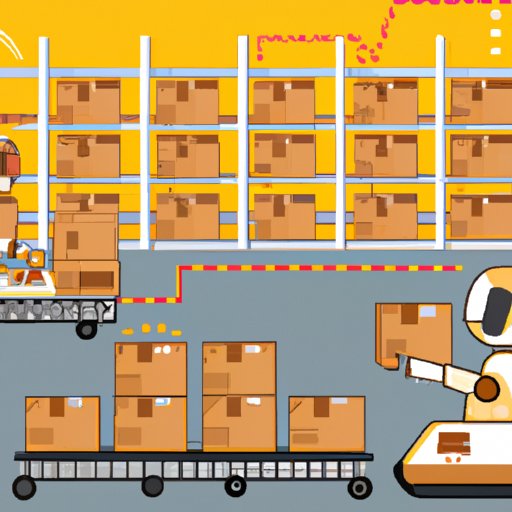
Warehouse automation is a growing trend in the logistics industry that is revolutionizing the way warehouses operate. It involves the use of automated systems, such as conveyors, robotics, and automated storage and retrieval systems (AS/RS), to streamline processes and improve efficiency. By automating certain tasks, warehouse operations can be more productive and cost-effective. This article will explore the benefits of warehouse automation and how it can improve productivity and efficiency.

Exploring the Benefits of Warehouse Automation
Warehouse automation offers numerous benefits, including improved productivity and efficiency, reduced labor costs, and increased accuracy and quality control. Let’s take a closer look at each of these advantages.
Improved Productivity and Efficiency
One of the primary benefits of warehouse automation is increased productivity and efficiency. Automated systems are designed to streamline processes, allowing warehouses to complete tasks more quickly and efficiently. According to a study conducted by the University of Central Florida, “automated warehouses can reduce time spent on manual tasks by up to 60 percent.” This means that warehouses can complete more tasks in less time, resulting in increased productivity and efficiency.
Reduced Labor Costs
Another benefit of warehouse automation is reduced labor costs. Automated systems can help reduce the need for manual labor, which can significantly lower labor costs. For example, a robotic system can pick and pack orders faster than a human worker, eliminating the need for additional staffing. Additionally, automated systems can help reduce the amount of time workers spend on mundane tasks, freeing them up to focus on more complex tasks.
Increased Accuracy and Quality Control
In addition to improved productivity and efficiency, warehouse automation also helps to increase accuracy and quality control. Automated systems are designed to eliminate errors, ensuring that orders are fulfilled accurately and on time. This helps to reduce the risk of costly mistakes, such as mislabeled orders or incorrect shipments. Additionally, automated systems can help to ensure that orders meet quality standards, as they are designed to detect defects and other issues.
Understanding the Different Types of Warehouse Automation Solutions
There are several different types of warehouse automation solutions available. These include conveyor systems, robotics, automated storage and retrieval systems (AS/RS), and automated guided vehicles (AGVs). Each type of system offers its own unique benefits, so it is important to evaluate the needs of your warehouse before selecting a solution.
Conveyor Systems
Conveyor systems are one of the most common forms of warehouse automation. These systems use belts or rollers to move items from one point to another, eliminating the need for manual labor. Conveyor systems can be used to move items between different areas of the warehouse, or to transport items to and from trucks or other vehicles.
Robotics
Robotics is another popular form of warehouse automation. Robots can be used for a variety of tasks, such as picking, packing, and sorting. They are able to quickly and accurately complete tasks that would otherwise require manual labor, helping to reduce labor costs and increase efficiency.
Automated Storage and Retrieval Systems (AS/RS)
Automated storage and retrieval systems (AS/RS) are computerized systems that are used to store and retrieve items from warehouses. These systems are designed to optimize space utilization, allowing warehouses to store more items in less space. Additionally, AS/RS systems can help to reduce the amount of time spent searching for items, as they are designed to locate items quickly and accurately.
Automated Guided Vehicles (AGVs)
Automated guided vehicles (AGVs) are self-driving vehicles that are used to transport goods within the warehouse. AGVs are programmed to follow predetermined routes, eliminating the need for manual labor. This helps to improve safety and efficiency, as AGVs can navigate around obstacles and avoid collisions.

How Warehouse Automation Can Improve Productivity and Efficiency
Warehouse automation can help to streamline order fulfillment, improve inventory management, and increase shipping speed and accuracy. Let’s take a closer look at each of these benefits.
Streamlined Order Fulfillment
Automated systems can help to streamline order fulfillment by reducing the amount of time spent on manual tasks. For example, robotic systems can pick and pack orders faster than a human worker, allowing orders to be fulfilled more quickly. Additionally, automated systems can help to reduce the risk of errors, ensuring that orders are accurate and on time.
Improved Inventory Management
Warehouse automation can also help to improve inventory management. Automated systems are designed to track inventory levels in real time, allowing warehouses to keep better tabs on their stock levels. This can help to reduce the risk of stockouts, ensuring that warehouses always have the items they need when they need them.
Increased Shipping Speed and Accuracy
Finally, warehouse automation can help to increase shipping speed and accuracy. Automated systems are designed to quickly and accurately package and label orders, eliminating the need for manual labor. This can help to reduce the amount of time spent on packing and shipping, resulting in faster delivery times and fewer mistakes.

The Impact of Warehouse Automation on Logistics and Supply Chain Management
Warehouse automation can also have a positive impact on logistics and supply chain management. Automated systems can help to improve planning and scheduling, as well as reduce transportation costs.
Improved Planning and Scheduling
Automated systems can help to improve planning and scheduling by providing real-time data about inventory levels and order statuses. This can help warehouses better anticipate customer demand, allowing them to plan ahead and adjust their operations accordingly. Additionally, automated systems can help to identify bottlenecks and other inefficiencies, allowing warehouses to make adjustments to maximize efficiency.
Reduced Transportation Costs
Warehouse automation can also help to reduce transportation costs. Automated systems can help to reduce the amount of time spent on loading and unloading trucks, resulting in fewer delays and fewer missed deadlines. Additionally, automated systems can help to reduce the amount of fuel needed to transport goods, resulting in lower fuel costs.
A Look at the Future of Warehouse Automation
As technology continues to advance, warehouse automation is expected to become even more sophisticated. In the future, warehouses may rely on autonomous robots to perform more complex tasks, such as sorting and repackaging. Additionally, advanced analytics will allow warehouses to better understand their operations and identify areas for improvement.
Analyzing the Cost-Benefit of Implementing Warehouse Automation
When considering the implementation of warehouse automation, it is important to analyze the cost-benefit of the investment. Automation technologies can be expensive to purchase and maintain, so it is important to consider the potential return on investment. Additionally, warehouses should consider any long-term costs associated with automation, such as training and maintenance.
Conclusion
In conclusion, warehouse automation can offer numerous benefits, including improved productivity and efficiency, reduced labor costs, and increased accuracy and quality control. Automated systems can help to streamline order fulfillment, improve inventory management, and reduce transportation costs. Finally, it is important to consider the cost-benefit of investing in automation before making a decision. By understanding the benefits of warehouse automation, warehouses can make informed decisions about whether or not to invest in automated solutions.
(Note: Is this article not meeting your expectations? Do you have knowledge or insights to share? Unlock new opportunities and expand your reach by joining our authors team. Click Registration to join us and share your expertise with our readers.)