

Introduction
Volume is an important concept in finance, but it is often misunderstood or overlooked by investors. Volume represents the total amount of a security traded during a given period of time, such as a day, week, or month. It is typically measured in terms of shares traded, contracts traded, or currency units exchanged. In this article, we will explore the meaning of volume in finance, its different types, and how it can be used to identify trends, forecast market movements, and measure the impact of price movements.
Defining Volume in Finance: What Does it Mean?
Volume is a measure of the total amount of a security that has been traded over a given period of time. It is one of the most important indicators used by traders and investors to gauge the level of activity in a particular market. Volume can also be used to identify potential opportunities or areas of caution in the market.
Overview
Volume is usually expressed as the number of shares, contracts, or currency units traded over a specified period of time. For example, if 1 million shares of Company XYZ were traded on the New York Stock Exchange (NYSE) over the course of one day, that would be considered 1 million in volume for the day.
Types of Volume
There are several different types of volume that can be tracked in financial markets. These include trading volume, market volume, and open interest.
Trading Volume
Trading volume is simply the total amount of a security that has been traded over a given period of time. This includes both buy and sell orders for the security. Trading volume is often used as an indicator of market liquidity and investor sentiment.
Market Volume
Market volume is the total amount of a security that has been traded on a specific exchange over a given period of time. This can be useful for comparing the relative levels of activity between different exchanges. For example, if the NYSE had 1 million shares of Company XYZ traded over the course of one day, while the Nasdaq had 500,000 shares of the same company traded over the same period, then the NYSE would have twice the market volume of the Nasdaq.
Open Interest
Open interest is the total number of outstanding contracts for a particular security or futures contract. This is often used as an indication of the level of activity in the market for that security or futures contract. Open interest is especially important in the futures market, as it indicates the amount of money that is currently tied up in those contracts.
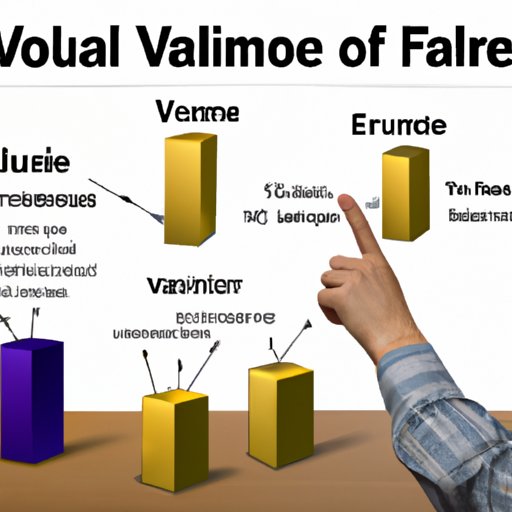
Explaining the Different Types of Volume in Finance
Trading Volume
Trading volume is the total amount of a security that has been bought and sold over a given period of time. This can be used to measure the level of investor interest in a particular stock or other security. If a stock has a high trading volume, it means that there is a lot of interest in the stock and that it is likely to be volatile. High trading volumes can also indicate that the stock is being actively traded by institutional investors.
Market Volume
Market volume is the total amount of a security that has been traded on a specific exchange over a given period of time. This can be useful for comparing the activity levels between different exchanges. For example, if the NYSE had 1 million shares of Company XYZ traded over the course of one day, while the Nasdaq had 500,000 shares of the same company traded over the same period, then the NYSE would have twice the market volume of the Nasdaq.
Open Interest
Open interest is the total number of outstanding contracts for a particular security or futures contract. This is often used as an indication of the level of activity in the market for that security or futures contract. Open interest is especially important in the futures market, as it indicates the amount of money that is currently tied up in those contracts.
Analyzing the Role of Volume in Financial Markets
Volume is an important tool for analyzing the health of a financial market. By tracking the volume of a particular security, traders and investors can get an idea of how active the market is, as well as the overall level of demand for the security. Volume can also be used to identify potential opportunities or areas of caution in the market.
Price Discovery
Volume is an important factor in price discovery. When there is high trading volume, it indicates that the market is actively pricing the security. This can help traders and investors identify potential entry and exit points for their trades. Additionally, high trading volume can indicate that a security is liquid, which makes it easier for traders and investors to enter and exit trades quickly.
Liquidity
High trading volume can also indicate that a security is liquid. Liquidity refers to the ease with which a security can be bought and sold without significantly affecting its price. If a security has high trading volume, it means that there are plenty of buyers and sellers in the market, making it easier for traders and investors to enter and exit trades quickly.
Volatility
The higher the trading volume, the more volatile a security may be. Volatility is the degree to which a security’s price moves up and down over time. If a security has high trading volume, it means that there is a lot of activity in the market and the price is likely to move significantly over short periods of time. This can be beneficial for traders looking to capitalize on short-term price movements.

Using Volume as a Tool for Forecasting Market Movements
Volume can be used as a tool to identify potential trends and forecast market movements. By tracking the volume of a particular security, traders and investors can get an idea of how active the market is and anticipate potential price movements.
Identifying Trend Reversals
By tracking the volume of a security, traders can identify potential trend reversals. If the volume of a security begins to decrease after an extended period of increasing volume, it could indicate that the current trend is beginning to reverse. This can be used as an indication to enter or exit a trade.
Examining Support and Resistance Levels
By tracking the volume of a security, traders can also identify potential support and resistance levels. If the volume of a security increases significantly when it reaches a certain price level, it could indicate that the security is encountering significant resistance at that price level. Conversely, if the volume of a security decreases significantly when it reaches a certain price level, it could indicate that the security is encountering significant support at that price level.
Spotting Breakouts
Finally, traders can use volume to spot potential breakouts. If the volume of a security increases significantly when it breaks out of a range or pattern, it could indicate that the breakout is likely to be sustained. This can be used as an indication to enter or exit a trade.
Examining Volume-Based Trading Strategies
Volume-based trading strategies are based on the analysis of trading volume to identify potential trading opportunities. There are several different types of volume-based trading strategies, including momentum trading, contrarian trading, and range trading.
Momentum Trading
Momentum trading is a type of trading strategy that attempts to capitalize on price movements that are occurring in a given direction. Momentum traders look for stocks or other securities with high trading volume, as this indicates that the security is likely to experience further price movement in the same direction.
Contrarian Trading
Contrarian trading is a type of trading strategy that seeks to capitalize on price movements that are occurring against the prevailing trend. Contrarian traders look for stocks or other securities with low trading volume, as this indicates that the security is likely to experience a reversal in the near future.
Range Trading
Range trading is a type of trading strategy that attempts to capitalize on price movements within a given range. Range traders look for stocks or other securities with low to moderate trading volume, as this indicates that the security is likely to remain within the established range.
Measuring Volume in Different Asset Classes
Volume can be used to measure the activity levels of different asset classes. Volume is closely watched in the equity, futures, and forex markets, as these asset classes are typically the most liquid and volatile.
Equities
In the equities market, volume is typically measured in terms of the number of shares traded over a given period of time. This can be used to gauge the level of activity in the stock market and identify potential trading opportunities.
Futures
In the futures market, volume is typically measured in terms of the number of contracts traded over a given period of time. This can be used to gauge the level of activity in the futures market and identify potential trading opportunities.
Forex
In the forex market, volume is typically measured in terms of the number of currency units exchanged over a given period of time. This can be used to gauge the level of activity in the forex market and identify potential trading opportunities.
Investigating the Impact of Volume on Price Movements
Volume can also be used to measure the impact of price movements on a security. By tracking the volume of a security, traders and investors can get an idea of how much buying and selling pressure is being exerted on the security and how it is impacting the price.
Volume-Price Relationship
The relationship between volume and price is an important one to understand. Generally speaking, if the volume of a security increases, it indicates that there is more buying pressure in the market and the price will tend to increase. Conversely, if the volume of a security decreases, it indicates that there is less buying pressure in the market and the price will tend to decrease.
Positive Correlation
A positive correlation exists between volume and price when the volume of a security increases as the price rises. This indicates that there is strong buying pressure in the market and the price is likely to continue to rise.
Negative Correlation
A negative correlation exists between volume and price when the volume of a security decreases as the price falls. This indicates that there is strong selling pressure in the market and the price is likely to continue to fall.
Conclusion
Volume is an important concept in finance, as it is a key indicator of market activity and investor sentiment. Volume can be used to identify potential trends, forecast market movements, and measure the impact of price movements. Volume can also be used to measure the activity levels of different asset classes and investigate the relationship between volume and price. By understanding the meaning and significance of volume in finance, traders and investors can gain a better understanding of the markets and make more informed decisions.
Summary of Key Points
Volume is an important concept in finance, as it is a key indicator of market activity and investor sentiment. There are several different types of volume, including trading volume, market volume, and open interest. Volume can be used to identify potential trends, forecast market movements, and measure the impact of price movements. Volume can also be used to measure the activity levels of different asset classes and investigate the relationship between volume and price.
Final Thoughts
By understanding the meaning and significance of volume in finance, traders and investors can gain a better understanding of the markets and make more informed decisions. Knowing how to interpret volume data can give traders and investors an edge in the markets and help them identify potential trading opportunities.
(Note: Is this article not meeting your expectations? Do you have knowledge or insights to share? Unlock new opportunities and expand your reach by joining our authors team. Click Registration to join us and share your expertise with our readers.)