
Introduction
Astronomy is the scientific study of the universe and all of its contents, from stars and planets to galaxies and beyond. It is a field of science that has been around for thousands of years, with evidence of early astronomical observations found in ancient cultures around the world. The purpose of this article is to provide an overview of the science of astronomy and explore its various sub-disciplines, as well as its influence on the history of science and its recent advances.
An Overview of the Science of Astronomy
What is Astronomy? According to the American Astronomical Society, “astronomy is the study of the sun, moon, stars, planets, comets, gas, galaxies, gas, dust and other non-Earthly bodies and phenomena.” Astronomy is an observational science, meaning that astronomers use telescopes, satellites, and other instruments to observe and collect data about the universe. Astronomers also use theoretical models and computer simulations to understand the physical processes at work in the universe.
Astronomy is divided into several sub-disciplines, including planetary science, stellar astronomy, galactic astronomy, and cosmology. Planetary science focuses on the study of planets and moons, with a particular emphasis on understanding the formation and evolution of these bodies. Stellar astronomy focuses on the study of stars, including their formation, evolution, and death. Galactic astronomy examines the structure and dynamics of galaxies, while cosmology deals with the origin and evolution of the universe as a whole.
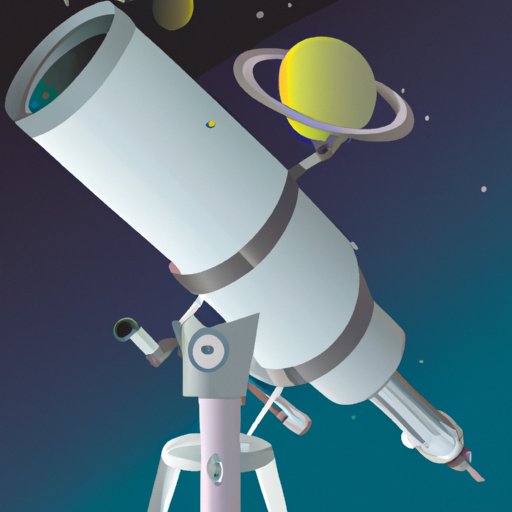
Technology plays an important role in astronomy. Telescopes, satellites, and other instruments allow astronomers to observe objects that are too far away or too faint to be seen with the naked eye. These instruments also enable astronomers to collect data about the objects they are studying. Computers are also essential tools for astronomers, allowing them to analyze large amounts of data and create detailed models of the universe. By combining observations with theory and computer simulations, astronomers can gain a better understanding of the universe and its contents.

The Basics of Astronomy: A Guide for Beginners
If you’re interested in getting started with astronomy, there are some basic concepts and tools you should be familiar with. First, it’s important to understand the scale of the universe – from the smallest particles to the largest galaxies. You should also be familiar with the motion of celestial objects, such as the stars, planets, and moons, and how they interact with each other. In addition, you should know the basics of telescope operation and the types of instruments used for observing the night sky.
In terms of equipment, you don’t need much to get started with astronomy. A pair of binoculars can be enough to see stars, planets, and even some galaxies. If you want to take your astronomy hobby to the next level, you can invest in a telescope. Telescopes come in a variety of sizes and designs, ranging from small tabletop models to large research-grade instruments. Whichever type you choose, make sure to read up on the basics of telescope operation before you start using it.
Exploring the Universe Through Astronomy
Astronomers observe the universe in a variety of ways. Visible light observations, which involve the use of telescopes, are the most common type of observation. Other methods include radio astronomy, X-ray astronomy, infrared astronomy, and gamma-ray astronomy. Each technique has its own advantages and disadvantages, and astronomers often combine multiple techniques to gain a more complete understanding of the universe.
There are a number of different types of telescopes and instruments used by astronomers. Ground-based telescopes are the most common type, and they come in a variety of sizes and designs. Large ground-based telescopes, such as the Hubble Space Telescope, have enabled astronomers to make some of the most remarkable discoveries of our time. In addition, space-based telescopes, such as the Chandra X-ray Observatory, have allowed astronomers to observe objects that are too faint or too distant to be seen from Earth.
Once astronomers have collected data about an object, they must analyze it to gain a better understanding of what they are seeing. Astronomers use mathematical models, computer simulations, and statistical analysis to make sense of the data they have collected. They also use various imaging techniques, such as spectroscopy, to learn more about the composition and characteristics of the objects they are studying.

A Look at Astronomical Discoveries and Advances
Over the centuries, astronomers have made a number of remarkable discoveries about the universe. In 1609, Galileo Galilei was the first person to observe the moons of Jupiter through a telescope, and in 1781 William Herschel discovered the planet Uranus. In 1924 Edwin Hubble discovered the expanding nature of the universe, and in 1965 Arno Penzias and Robert Wilson discovered the cosmic microwave background radiation. More recently, astronomers have discovered exoplanets, dark matter, and dark energy.
Astronomy has also seen many advances in technology over the years. Telescopes have become increasingly powerful and sophisticated, allowing astronomers to observe objects that were once thought to be impossible to see. Computers have also become essential tools for analyzing astronomical data, and new instruments and techniques have enabled astronomers to make further progress in understanding the universe.

Astronomy and Its Place in the History of Science
Astronomy has had a profound impact on the history of science. Ancient cultures around the world studied the stars and used them to navigate, tell time, and keep track of the seasons. Astronomical observations also played an important role in the development of mathematics, physics, and other sciences. In fact, the study of astronomy has helped to shape our modern understanding of the universe.
Today, astronomy continues to play an important role in science. Astronomers are working to uncover the secrets of the universe, from the nature of dark matter and dark energy to the search for extraterrestrial life. Astronomy is also helping us to understand our place in the universe and the evolution of life on Earth.
Conclusion
Astronomy is the scientific study of the universe and all of its contents. It is a field of science that has been around for thousands of years and has had a profound impact on the history of science. Today, astronomy is still making remarkable discoveries and advancing our understanding of the universe. From stars and planets to galaxies and beyond, astronomy offers a fascinating look at the universe and its mysteries.
In conclusion, the science of astronomy is a vast and ever-evolving field of study. Its sub-disciplines, technological advances, and historical influence have enabled astronomers to uncover some of the most remarkable secrets of the universe. Whether you’re just starting out or have been studying astronomy for years, there is always something new to discover.
(Note: Is this article not meeting your expectations? Do you have knowledge or insights to share? Unlock new opportunities and expand your reach by joining our authors team. Click Registration to join us and share your expertise with our readers.)