
Introduction
Culinary arts and culinary science are two fields that are often used interchangeably due to their overlapping nature. However, there are distinct differences between these two disciplines that should be explored in order to understand the nuances of each. In this article, we will explore the definition of culinary arts and culinary science, examine the differences between the two, compare the skills required for each, investigate the career opportunities available in each, and evaluate the pros and cons of each.
Exploring the Culinary Arts and Culinary Science: What’s the Difference?
Culinary arts and culinary science both involve working with food, but they differ in terms of how they approach it. In order to understand the difference between these two disciplines, it is important to start by defining each one.
Defining Culinary Arts
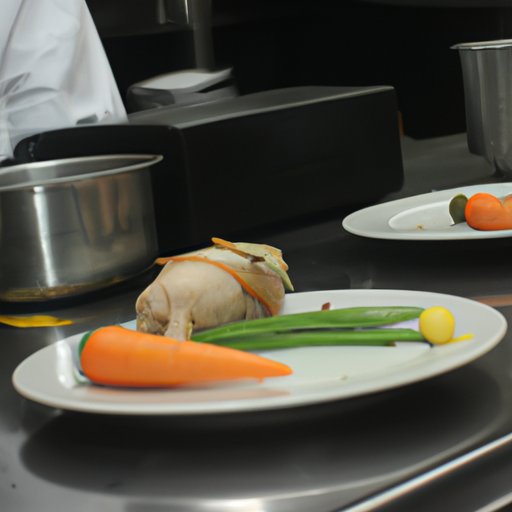
According to the Institute of Culinary Education, “Culinary arts is an art form focused on the preparation, presentation, and consumption of food. It combines ingredients to create dishes that are visually appealing, flavorful, and nutritious.” Culinary arts is a creative field that focuses on the aesthetic and sensory qualities of food. It is about creating delicious dishes that appeal to the palate and look beautiful on the plate. Culinary artists must have a deep understanding of flavors, textures, and techniques in order to be successful.
Defining Culinary Science
The American Culinary Federation defines culinary science as “the application of scientific principles to the creation and evaluation of food products and services.” Culinary science involves the study of the chemical and physical properties of ingredients and food products, as well as the development of new recipes, processes, and techniques. Culinary scientists must have a good understanding of chemistry, biology, nutrition, and food safety in order to be successful.
Examining the Differences Between the Two
The primary difference between culinary arts and culinary science is the focus. Culinary arts focuses on the aesthetics and taste of food, while culinary science focuses on the science behind food. Culinary artists are concerned with the presentation and flavor of food, while culinary scientists are concerned with the chemical and physical properties of food. Another key difference is the types of skills required for each discipline. Culinary artists need to have an artistic eye and a good palate, while culinary scientists need to have a strong knowledge of science and technology.
A Comparison of Culinary Arts and Culinary Science
Skills Required for Each Discipline
Culinary artists must have a good understanding of flavors, textures, and techniques in order to be successful. They need to be able to create visually appealing dishes that are also flavorful and nutritious. They also need to be able to come up with creative recipes and presentations. Culinary scientists need to have a strong knowledge of science and technology, as well as an understanding of chemistry, biology, nutrition, and food safety.
Career Opportunities in Each Discipline
Culinary artists can work in a variety of settings, such as restaurants, catering companies, hotels, and other food-related businesses. They may also work as private chefs or teach cooking classes. Culinary scientists can work in research and development for food companies, as well as in product testing and quality assurance. They may also work in food safety or nutrition.
Educational Requirements for Each Discipline
Culinary artists typically need to have at least a high school diploma or equivalent. Some may pursue a degree in culinary arts or a related field, such as hospitality management. Culinary scientists typically need to have a bachelor’s degree in food science, chemistry, or a related field. They may also need to have a master’s degree or PhD in order to work in certain positions.

A Deeper Look at Culinary Arts and Culinary Science
Exploring the History of Each Discipline
Culinary arts has a long and rich history that dates back to ancient times. Over the centuries, different cultures have developed their own unique styles of cooking and presentation. Culinary science is a relatively new field that has only been around for a few decades. It has grown rapidly in recent years due to advances in technology and increased interest in food science.
Examining the Different Techniques for Each Discipline
Culinary artists use a variety of techniques to create flavorful dishes. These techniques include baking, grilling, roasting, sautéing, braising, and more. Culinary scientists use scientific methods to analyze and understand the chemical and physical properties of food. This includes studying the effects of heat, moisture, and other factors on food.
Investigating the Various Types of Cuisines Studied in Each Discipline
Culinary artists typically focus on a particular type of cuisine or region. For example, they may specialize in French cuisine or Italian cuisine. Culinary scientists may focus on a specific type of food, such as dairy products or grains. They may also study how various types of food interact with each other and how they are affected by different environmental conditions.
How to Choose Between Culinary Arts and Culinary Science
When considering a career in either culinary arts or culinary science, it is important to consider your goals and interests. If you enjoy working with food and creating tasty dishes, then culinary arts may be the right choice for you. If you are interested in the science behind food and developing new recipes, then culinary science may be a better option.

The Pros and Cons of Culinary Arts and Culinary Science
Pros of Culinary Arts
The primary benefit of pursuing a career in culinary arts is the opportunity to be creative. Culinary artists get to experiment with different flavors, textures, and presentations to create delicious dishes. Additionally, they can work in a variety of settings, from restaurants to catering companies to teaching cooking classes.
Pros of Culinary Science
The primary benefit of pursuing a career in culinary science is the opportunity to work with cutting-edge technology. Culinary scientists get to use the latest scientific methods to analyze and understand the chemical and physical properties of food. They also get to develop new recipes and processes that can help improve the quality and safety of food products.
Cons of Culinary Arts
One of the downsides of pursuing a career in culinary arts is the lack of job security. The industry is highly competitive and jobs can be hard to come by. Additionally, culinary artists may find themselves working long hours in hot and stressful environments.
Cons of Culinary Science
One of the downsides of pursuing a career in culinary science is the amount of time and money needed to obtain the necessary education. A bachelor’s degree in food science or a related field is usually required, and some positions may require a master’s degree or PhD. Additionally, the job market for culinary scientists can be competitive.
Conclusion
Culinary arts and culinary science are two distinct disciplines that involve working with food. While they share some similarities, they differ in terms of their focus, skills required, career opportunities, and educational requirements. When choosing between the two, it is important to consider your goals and interests as well as the pros and cons of each discipline. With the right combination of education, experience, and passion, you can find success in either culinary arts or culinary science.
(Note: Is this article not meeting your expectations? Do you have knowledge or insights to share? Unlock new opportunities and expand your reach by joining our authors team. Click Registration to join us and share your expertise with our readers.)