
Introduction
Blockchain is a revolutionary technology that has the potential to transform many industries. But what exactly is it? In this article, we’ll explore the definition of blockchain, its benefits, challenges, use cases, and the future of this technology.
Blockchain Explained: A Comprehensive Guide
Let’s start by looking at the basics of blockchain technology.
What is a blockchain?
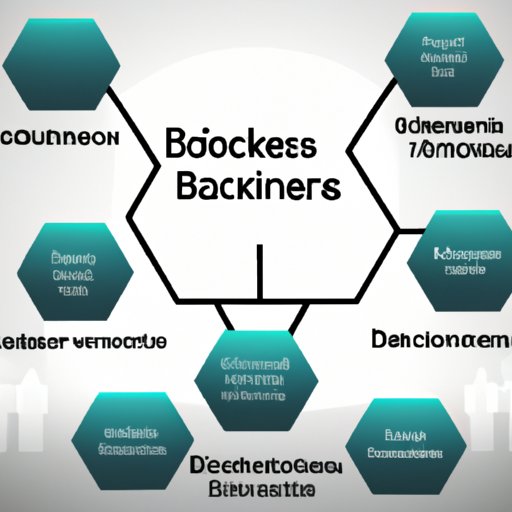
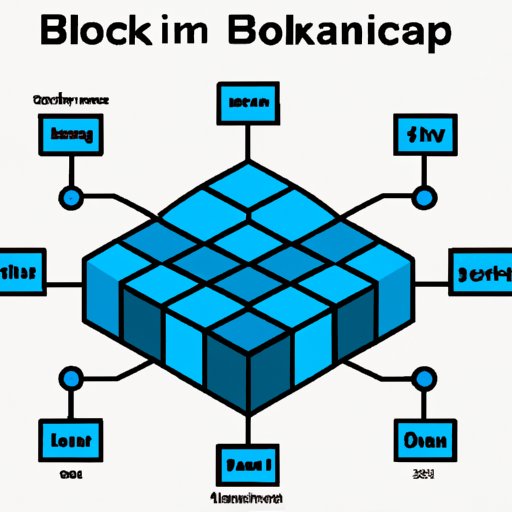
At its most basic level, blockchain is a distributed digital ledger of transactions. The ledger is stored across multiple computers or nodes, which are connected in a peer-to-peer network. Each node stores a copy of the ledger and all transactions are securely recorded and verified against the ledger. This makes the blockchain highly secure and tamper-proof.
How does blockchain technology work?
The core of blockchain technology is the cryptographic techniques used to secure and verify the transactions. Every transaction is encrypted, digitally signed, and timestamped before it is added to the blockchain. This ensures that no one can tamper with the data or make unauthorized changes. All the transactions are linked together in blocks and each block is linked to the previous one using a hash. This creates an immutable chain of records that can be traced back to the original transaction.
What are the benefits of blockchain?
One of the major advantages of blockchain technology is that it eliminates the need for a central authority or middleman to validate and record transactions. This makes it faster, more efficient, and more secure than traditional systems. Additionally, since all data is stored on a distributed ledger, it is much more difficult for hackers to gain access to sensitive information. Finally, because the blockchain is transparent, all participants have full visibility into the entire transaction process, making it easier to detect any fraudulent activity.
What Are the Use Cases for Blockchain?
Now let’s take a look at some of the potential applications of blockchain technology.
Financial services
Blockchain technology has the potential to revolutionize the financial services industry. By eliminating the need for a central authority, it could reduce the cost and time associated with transferring money and settling transactions. Additionally, smart contracts could be used to automate processes such as loan approvals and payments.
Healthcare
In healthcare, blockchain technology could be used to securely store and share patient medical records. This would allow healthcare providers to quickly and easily access patient information, while also ensuring that patient data remains confidential and secure.
Supply chain management
Blockchain technology can also be used to track the movement of goods through the supply chain. By recording all the steps along the way, from production to delivery, it can provide greater transparency and help to reduce fraud and errors.
Data storage and sharing
Finally, blockchain technology can be used to store and share data securely. By using distributed ledgers, users can control who has access to their data and ensure that it is not tampered with. This could be especially useful for companies that need to store large amounts of sensitive data.
What Are the Challenges of Blockchain?
Despite its potential, there are still some challenges that need to be addressed in order for blockchain technology to reach its full potential.
Scalability
One of the biggest challenges facing blockchain technology is scalability. As the number of users and transactions increase, the performance of the system will decrease. This is due to the fact that the blockchain needs to maintain a consensus among all the nodes in the network. As a result, the blockchain may not be able to handle large numbers of concurrent transactions.
Security
Another challenge is security. Despite the robustness of the blockchain, there is still a risk of malicious actors attempting to exploit the system. Additionally, there is always the risk of data being corrupted or lost due to a technical issue.
Interoperability
Finally, blockchain technology is still in its early stages and there is a lack of interoperability between different blockchains. This means that different blockchain networks cannot communicate with each other, which limits the potential applications of the technology.
Understanding the Different Types of Blockchain
There are three main types of blockchain: public, private, and consortium.
Public blockchains
Public blockchains are open to anyone and are completely decentralized. All transactions are publicly visible and users do not need permission to join the network. Examples of public blockchains include Bitcoin and Ethereum.
Private blockchains
Private blockchains are similar to public blockchains but they are restricted to certain users. Access to the network is controlled by a single entity and all transactions are kept private. Private blockchains are typically used by organizations that need to keep their data secure.
Consortium blockchains
Consortium blockchains are a hybrid of public and private blockchains. They are usually managed by a group of trusted parties and access to the network is restricted to certain users. Consortium blockchains are often used by banks and other financial institutions.
What Is the Future of Blockchain?
Blockchain technology is still in its infancy, but it has the potential to revolutionize many industries. Here are some of the ways that blockchain could shape the future.
The rise of decentralized applications
One of the most exciting developments in blockchain technology is the emergence of decentralized applications (dApps). These are applications that run on a blockchain network, making them secure, transparent, and immutable. dApps have the potential to revolutionize everything from finance to healthcare to gaming.
Increased usage in different industries
As the technology matures, we can expect to see blockchain being adopted in more and more industries. From manufacturing to logistics to energy, blockchain could help to streamline operations and improve efficiency.
Potential to revolutionize business models
Finally, blockchain technology could also revolutionize the way businesses operate. By removing the need for a central authority, it could enable new business models such as decentralized autonomous organizations (DAOs) and tokenized economies.
Conclusion
In conclusion, blockchain is a revolutionary technology that has the potential to transform many industries. It offers several benefits such as increased security, transparency, and efficiency. Additionally, it is being used in a variety of use cases, including finance, healthcare, and data storage. Despite its potential, there are still some challenges that need to be addressed, such as scalability, security, and interoperability. As the technology matures, we can expect to see more widespread adoption and the potential to revolutionize business models.
(Note: Is this article not meeting your expectations? Do you have knowledge or insights to share? Unlock new opportunities and expand your reach by joining our authors team. Click Registration to join us and share your expertise with our readers.)