
Introduction
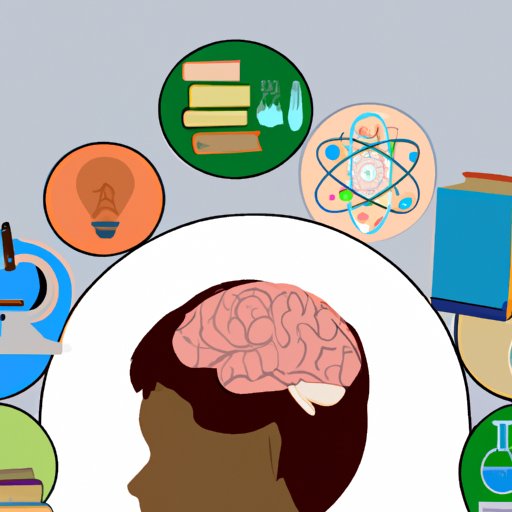
Teaching reading is a complex endeavor that requires a deep understanding of the science behind it. The science of teaching reading includes cognitive science, neuroscience, and educational research. This article will explore each of these areas and discuss how they can be applied to improve reading outcomes. We will also look at the psychology of teaching reading and how teachers can use it to enhance their instruction.

Exploring the Foundations of Teaching Reading: The Science Behind It
Cognitive science is the study of the human mind and its processes. It focuses on how people think, remember, and learn. Cognitive science can provide insight into how best to teach reading by examining memory and attention, language acquisition, and comprehension strategies. Neuroscience looks at the brain and how it develops and functions. It can provide insight into visual perception, phonemic awareness, and other aspects of reading development.
Educational research helps instructors understand the evidence and research related to teaching reading. It provides guidance on sources of evidence, analyzing evidence, and applying evidence to instruction. It can also help instructors design assessments and differentiated instruction that are tailored to meet student needs.
How Cognitive Science Can Help Instructors Teach Reading More Effectively
Memory and attention are key elements of learning to read. Memory involves the ability to store and retrieve information, while attention involves focusing on relevant information. Cognitive science can help instructors develop instruction that engages students’ memories and attentions. For example, research has shown that providing students with multiple exposures to a text can improve their recall of information (Meyer & Felton, 1999).
Language acquisition is another important aspect of teaching reading. Cognitive science can help instructors understand the complexities of language and how to support students in developing the skills needed for reading. Research has found that explicit instruction and scaffolding are effective techniques for supporting language acquisition (Snow, Burns, & Griffin, 1998).
Comprehension strategies are critical for successful reading. Cognitive science can help instructors understand how to teach students to use strategies such as summarizing, questioning, and making connections. Research has found that explicitly teaching these strategies can significantly improve students’ comprehension (Pressley, El-Dinary, & Brown, 1997).
Decoding the Complexity of Teaching Reading Through Neuroscience
Neuroscience can provide insight into brain development and how it relates to reading. The brain develops in a sequence, with certain skills emerging before others. For example, phonemic awareness—the ability to recognize and manipulate sounds within words—develops before decoding (Savage et al., 2003). Understanding this sequence can help instructors plan instruction that builds on prior knowledge.
Visual perception is also important for reading. Neuroscience can provide insight into how the brain processes visual information and how this affects reading. Research has found that poor visual processing can lead to difficulty with decoding, fluency, and comprehension (Kranzler, 2011).
Phonemic awareness is an essential skill for reading. Neuroscience can help instructors understand how the brain processes sound and how this impacts reading. Research has found that explicit instruction in phonemic awareness can improve students’ reading abilities (Torgesen, 2004).
A Guide to Understanding the Research and Evidence on Teaching Reading
Educational research can provide valuable insight into teaching reading. It can help instructors understand the sources of evidence, how to analyze evidence, and how to apply evidence to instruction. For example, research has found that instructional decisions should be based on evidence from multiple sources such as student data, classroom observations, and expert opinion (Lipsey & Wilson, 2001).
Analyzing evidence is an important step in applying research to instruction. Research has found that instructors should consider factors such as the source of the evidence, the quality of the research, and the relevance to their instruction (Slavin, 2008). Once the evidence has been analyzed, instructors can use it to inform their instructional decisions.
Applying evidence to instruction is the final step in using educational research to improve teaching reading outcomes. Research has found that instructors should use evidence to guide their selection of instructional materials, identify instructional goals, and plan instruction (Yuan & Jones, 2011). They should also use evidence to evaluate their instruction and make adjustments as needed.
The Psychology of Teaching Reading: What Teachers Need to Know
The psychology of teaching reading is an important area of research. It examines how teachers’ beliefs and attitudes, instructional design, and student motivation impact the teaching and learning process. Research has found that teachers who have positive beliefs and attitudes about teaching reading are more likely to use effective instructional strategies (Walter et al., 2010). Additionally, instructional design should be tailored to meet students’ needs and foster their motivation to learn (Bruner, 1996).

Applying Educational Research to Improve Teaching Reading Outcomes
Differentiated instruction is an approach to teaching that takes into account individual differences among students. Research has found that differentiated instruction can improve teaching reading outcomes by allowing instructors to adjust instruction to meet the needs of all students (Tomlinson, 1999). Active learning is another approach that has been found to be effective for teaching reading. It involves engaging students in activities that promote critical thinking and problem-solving (Fisher & Frey, 2007).
Assessment strategies are also important for teaching reading. Research has found that formative assessments—those that are given during instruction—can provide valuable feedback that can be used to adjust instruction (Black & Wiliam, 1998). Summative assessments—those that are given after instruction—can be used to measure students’ progress and evaluate instruction.
Unpacking the Science Behind Teaching Reading Strategies
Fluency is an important skill for reading. Research has found that explicit instruction and practice in fluency can improve students’ reading abilities (Rasinski, 2001). Vocabulary is another essential skill for reading. Research has found that explicit instruction in vocabulary can help students improve their comprehension (Stahl & Nagy, 2006). Finally, reading comprehension is an important goal for instruction. Research has found that explicit instruction and practice in comprehension strategies can help students understand what they read (Pressley et al., 1997).
Conclusion
The science of teaching reading is a complex endeavor that involves understanding cognitive science, neuroscience, and educational research. Cognitive science can provide insight into memory and attention, language acquisition, and comprehension strategies. Neuroscience can help instructors understand brain development and visual perception. Educational research can guide instructors in understanding the research and evidence on teaching reading, analyzing evidence, and applying evidence to instruction. The psychology of teaching reading can help instructors understand student motivation and the importance of teacher beliefs and attitudes. Finally, applying educational research can help instructors improve teaching reading outcomes through differentiated instruction, active learning, and assessment strategies. By understanding the science behind teaching reading, instructors can design instruction that is tailored to meet the needs of all learners.
(Note: Is this article not meeting your expectations? Do you have knowledge or insights to share? Unlock new opportunities and expand your reach by joining our authors team. Click Registration to join us and share your expertise with our readers.)