
Introduction
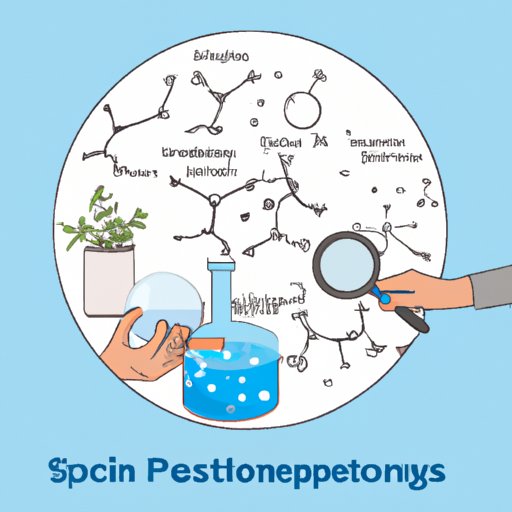
The scientific method is a systematic approach to conducting research and problem-solving. It involves making observations, forming questions, gathering evidence, testing hypotheses, analyzing data, and communicating results. The purpose of this article is to provide an overview of the scientific method, explore its components and benefits, and discuss how scientists use it in different fields as well as how to apply it to everyday problems.
Exploring the Basics of the Scientific Method: An Overview
At its core, the scientific method is a process for generating knowledge through observation and experimentation. According to the National Science Teachers Association, “The scientific method is a process used by scientists to study the world around them. It can also be used to test whether any statement is accurate.”
Overview of Scientific Method
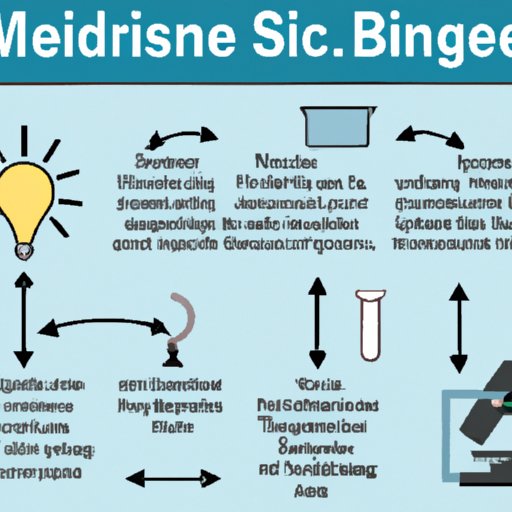
The scientific method is divided into six steps: asking a question, doing background research, constructing a hypothesis, testing the hypothesis, analyzing the data, and communicating results. Each step of the process builds on the previous one, leading to an understanding of the natural world.
Definition of Terms Used in Scientific Method
Observation: Observation is the process of making careful and detailed observations of the world around us. It is the first step in the scientific method, and it helps scientists form questions and generate ideas for further exploration.
Question: A question is a statement that seeks information or an answer from someone or something. In the scientific method, questions are used to guide the research process.
Hypothesis: A hypothesis is an educated guess about how something works. It is based on observations and prior knowledge. In the scientific method, hypotheses are tested to gain insight into the natural world.
Data: Data is the information collected during an experiment or observation. It is used to test hypotheses and draw conclusions.
Understanding the Steps and Components of the Scientific Method
Now that we have explored the basics of the scientific method, let’s take a closer look at each of its components.
Step 1: Ask a Question
The first step of the scientific method is to ask a question. This could be a question about the natural world or a problem that needs to be solved. Asking questions helps scientists focus their research and develop hypotheses.
Step 2: Do Background Research
Once a question has been asked, the next step is to do background research. This involves reading existing studies and gathering information related to the question. This helps scientists understand the context of the research and develop a hypothesis.
Step 3: Construct a Hypothesis
After doing background research, the next step is to construct a hypothesis. A hypothesis is an educated guess about how something works. It is based on observations and prior knowledge. Once a hypothesis has been constructed, it can be tested to see if it is correct.
Step 4: Test the Hypothesis
The fourth step of the scientific method is to test the hypothesis. This involves designing and conducting experiments to collect data. The data is then analyzed to determine if the hypothesis is supported or rejected.
Step 5: Analyze the Data and Draw a Conclusion
After collecting data, the next step is to analyze it and draw a conclusion. This involves looking for patterns and trends in the data and using them to make inferences about the natural world.
Step 6: Communicate Results
The final step of the scientific method is to communicate the results. This involves writing up the findings of the research and presenting them to other scientists. This allows other scientists to replicate the experiment and build upon the knowledge gained.
Examining the Benefits of Using the Scientific Method
Using the scientific method has many benefits. It provides a systematic approach to research and problem-solving, encourages objectivity, and allows for replicability. Let’s take a closer look at each benefit.
Systematic Approach
The scientific method provides a systematic approach to research and problem-solving. By following the steps of the scientific method, scientists can ensure that their research is thorough and rigorous. This helps them reach reliable conclusions and gain a better understanding of the natural world.
Objectivity
The scientific method encourages objectivity by requiring scientists to make observations and collect data without bias. This helps ensure that the results of the research are unbiased and accurate.
Replicability
The scientific method allows for replicability, meaning that other scientists can repeat the same experiment and get similar results. This is important because it allows scientists to confirm their results and build upon existing knowledge.

Investigating How Scientists Use the Scientific Method
Scientists use the scientific method in many different fields, from medicine to engineering. Let’s take a look at some examples of how scientists use the scientific method in different fields.
Examples from Different Fields
In medicine, scientists use the scientific method to test new treatments and medicines. They start by asking a question, such as “Does this new drug help reduce symptoms?” They then do background research and construct a hypothesis. Next, they test the hypothesis by running clinical trials. Finally, they analyze the data and communicate the results.
In engineering, scientists use the scientific method to design and build new products. They start by asking a question, such as “How can we make this product more efficient?” They then do background research and construct a hypothesis. Next, they test the hypothesis by building prototypes and running tests. Finally, they analyze the data and communicate the results.
The Role of Computers and Technology
Computers and technology play an important role in the scientific method. Computers can be used to analyze large amounts of data quickly and accurately. They can also be used to simulate experiments, allowing scientists to test hypotheses without having to run actual experiments. Technology can also be used to monitor experiments and collect data in real time.

Applying the Scientific Method to Everyday Problems
The scientific method can also be used to solve everyday problems. It provides an introduction to problem-solving skills and helps people think logically and objectively. Let’s take a look at how to apply the scientific method to everyday problems.
Introduction to Problem-solving Skills
The scientific method is a great way to introduce problem-solving skills. It helps people learn how to think logically and objectively about a problem and come up with a solution. The steps of the scientific method can be applied to any problem, from finding a lost item to figuring out how to save money.
Examples of Everyday Problems
Everyday problems can range from small annoyances to major life decisions. Some examples of everyday problems include deciding what to eat for dinner, figuring out how to save money, and finding a job.
Process for Solving Everyday Problems
The process for solving everyday problems is similar to the scientific method. Start by asking a question and doing background research. Then construct a hypothesis and test it. Finally, analyze the data and draw a conclusion.
Conclusion
The scientific method is a systematic approach to conducting research and problem-solving. It involves making observations, forming questions, gathering evidence, testing hypotheses, analyzing data, and communicating results. There are many benefits to using the scientific method, including a systematic approach, objectivity, and replicability. Scientists use the scientific method in many different fields, from medicine to engineering. It can also be used to solve everyday problems, providing an introduction to problem-solving skills.
In summary, the scientific method is a powerful tool for gaining insight into the natural world and solving everyday problems. It provides a systematic approach to research and encourages objectivity. It also allows for replicability, allowing other scientists to confirm the results and build upon existing knowledge. By understanding the scientific method and applying it to everyday problems, people can develop valuable problem-solving skills.
(Note: Is this article not meeting your expectations? Do you have knowledge or insights to share? Unlock new opportunities and expand your reach by joining our authors team. Click Registration to join us and share your expertise with our readers.)