
Introduction
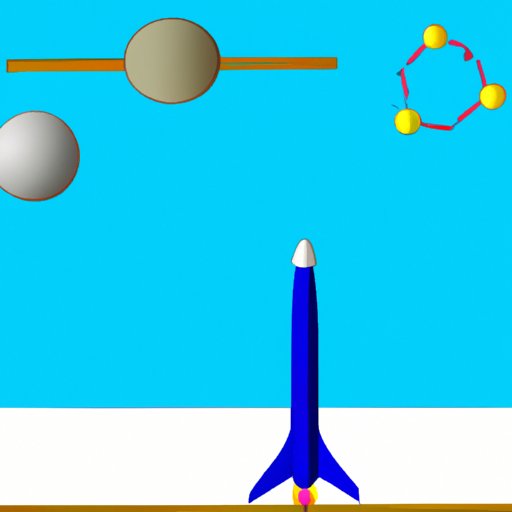
Rocket science is a term that is often used to describe something that is complicated or difficult to understand. However, the reality is that rocket science is actually a real field of study, focusing on the design and operation of spacecraft and other objects that use rocket propulsion. In this article, we will explore the basics of rocket science and its history and evolution, in addition to examining the applications, challenges, and benefits of this field.

Explaining the Basics of Rocket Science
At its core, rocket science is the study of how rockets work and how they can be used for various purposes. Rockets are propelled by a reaction force from the release of gas particles, which push against the surrounding air and propel the rocket forward. This reaction force, also known as thrust, is generated by the burning of fuel inside the rocket’s combustion chamber. The burning of this fuel produces hot gases, which are then expelled through the rocket’s nozzle. This process is referred to as rocket propulsion.
The amount of thrust generated by a rocket depends on the type and amount of fuel used, as well as the size and shape of the rocket’s nozzle. The speed and direction of the rocket’s movement can be controlled by adjusting the thrust, which is done by varying the fuel flow rate or changing the angle of the nozzle. Rockets can also be steered by using vanes or fins, which redirect the flow of gases coming out of the exhaust.
Examining the History and Evolution of Rocket Science
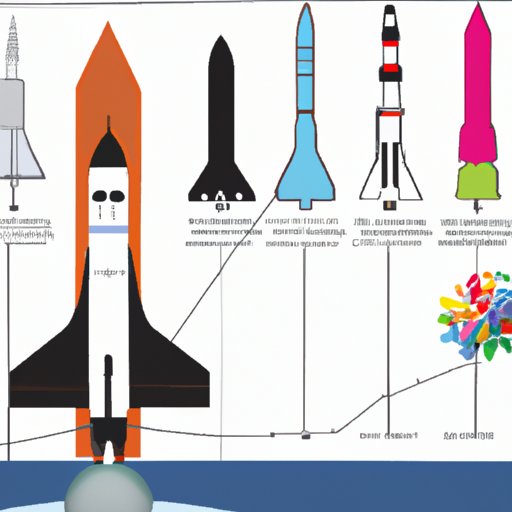
Rockets have been around for centuries, although their development has been relatively slow compared to other forms of technology. The earliest rockets were developed in China during the 13th century, and were used primarily for military applications. Over the years, rockets have become increasingly sophisticated and are now used for a variety of purposes, including space exploration and scientific research.
In the early 20th century, rocket technology began to advance rapidly. Scientists like Robert Goddard and Wernher von Braun made significant contributions to the field, and their work laid the groundwork for modern rocket science. Today, rockets are used for a variety of purposes, including satellite launches, intercontinental ballistic missiles, and space exploration. Advances in rocket science have enabled humans to explore outer space, which has opened up new opportunities for research and development.
Exploring the Applications of Rocket Science
Rockets have a wide range of applications in both civilian and military contexts. One of the most prominent uses of rocket science is in space exploration. Rockets are used to launch satellites and probes into orbit, as well as to transport astronauts to and from the International Space Station. Rockets are also used for commercial purposes, such as launching communication satellites or delivering cargo to the ISS.
Rockets are also used for military applications, such as launching intercontinental ballistic missiles (ICBMs). ICBMs are capable of carrying nuclear warheads over long distances, making them one of the most powerful weapons ever developed. Rockets are also used to launch reconnaissance satellites, which can provide valuable intelligence data to militaries around the world.
Investigating the Future of Rocket Science
In recent years, there have been a number of new developments in rocket science. Scientists are working on ways to make rockets more efficient and reliable, as well as developing new types of propulsion systems. There is also ongoing research into the use of reusable rockets, which could significantly reduce the cost of space exploration and other applications.
The future of rocket science could also include advances in space exploration. For example, scientists are exploring the possibility of using rockets to send humans to Mars and beyond. Furthermore, new technologies could enable humans to land on asteroids and other celestial bodies, allowing us to explore the universe in unprecedented ways.
Identifying the Challenges of Rocket Science
Despite the potential benefits of further advances in rocket science, there are also some significant challenges that must be addressed. The most pressing of these is the technical difficulty of building and operating rockets. Rockets are complex machines, and even small mistakes can have catastrophic consequences. Furthermore, rockets require a large amount of resources and materials, making them expensive to develop and maintain.
Financial considerations are also a major challenge for rocket science. Research and development costs are high, and the cost of launching a rocket can be prohibitively expensive for many organizations. These financial constraints limit the progress that can be made in this field, and could prevent some projects from ever getting off the ground.
Understanding Key Concepts of Rocket Science
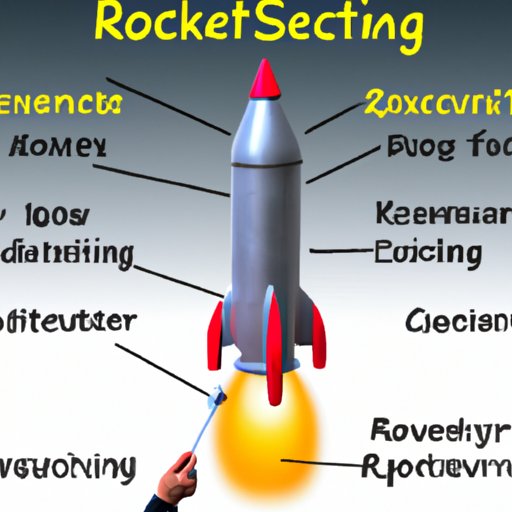
Before attempting to build or operate a rocket, it is important to understand some of the fundamental concepts of rocket science. Two of the most important concepts are Newton’s laws of motion and the forces acting on a rocket. Newton’s laws of motion explain the relationship between an object’s mass, acceleration, and the forces acting upon it. The forces acting on a rocket include gravity, drag, and thrust.
It is also important to understand the concept of rocket stability. A stable rocket will remain upright while in flight, while an unstable rocket will veer off course. Rocket designers must take into account the effects of gravity, drag, and thrust when designing a rocket, as any imbalance can lead to instability.

Exploring the Benefits of Rocket Science
Despite the challenges associated with rocket science, there are also a number of potential benefits. One of the most important of these is increased access to space. Rockets are currently the only way to get to and from the International Space Station, and advances in rocket science could open up new possibilities for exploration and research. Additionally, advances in rocket science could lead to improved safety and reliability, making space travel safer and more accessible.
Finally, advances in rocket science could lead to new opportunities for research and development. The development of new propulsion systems, for example, could open up new possibilities for exploration and research. Similarly, improvements in rocket technology could lead to new applications in civil and military contexts.
Conclusion
In conclusion, rocket science is a fascinating field of study that has a wide range of applications. Its history and evolution have enabled humans to explore outer space, and advances in this field could continue to open up new possibilities for exploration and research. Despite the challenges associated with rocket science, it is clear that the potential benefits far outweigh the risks, making it an exciting and promising field of study.
(Note: Is this article not meeting your expectations? Do you have knowledge or insights to share? Unlock new opportunities and expand your reach by joining our authors team. Click Registration to join us and share your expertise with our readers.)