
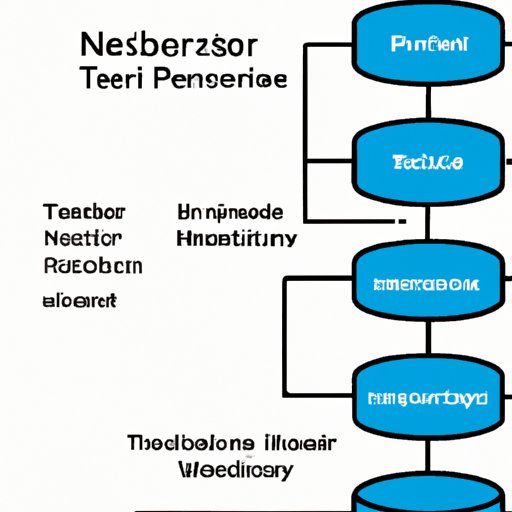
Introduction
N-Tier architecture is a type of software architecture that divides an application into multiple tiers or layers. Each tier provides a specific service and can be distributed across multiple physical or virtual machines. This type of architecture has become increasingly popular due to the scalability and flexibility it offers.
What is N-Tier Architecture?
N-Tier architecture is a type of software architecture where applications are divided into multiple tiers or layers. Each tier provides a specific service and can be distributed across multiple physical or virtual machines. This type of architecture enables applications to scale easily and quickly, as each layer can be independently managed and modified.
The number of tiers in an N-Tier architecture can vary from two to five. The most common type of N-Tier architecture consists of three tiers: presentation layer, business logic layer, and data access layer. The presentation layer is responsible for the user interface, while the business logic layer contains the core business logic and rules. Finally, the data access layer is responsible for connecting to the database and retrieving data.
Benefits of Using an N-Tier Architecture
N-Tier architecture offers many advantages, such as scalability, flexibility, and maintainability. By distributing the application across multiple tiers or layers, it becomes easier to scale up or down depending on the needs of the application. Additionally, since each layer can be independently managed and modified, it makes the application more flexible and easier to maintain.
Another benefit of using an N-Tier architecture is that it allows for better security. Since each layer can be securely accessed by authorized users only, it helps to protect sensitive information from unauthorized access. Furthermore, since each layer is independent, it makes it easier to apply updates and patches without affecting other parts of the application.
Comparing N-Tier Architecture to Other Architectures
It is important to understand the differences between N-Tier architecture and other architectures in order to choose the best architecture for a given application. There are two main types of architectures that are commonly compared to N-Tier architecture: monolithic and layered.
Monolithic vs. N-Tier Architecture
A monolithic architecture is a single-tier application where all components are tightly coupled together. In this type of architecture, changes to one component will likely affect other components as well. This makes it difficult to scale and maintain the application.
In comparison, N-Tier architecture is a multi-tier application where each component is separated into its own tier. This makes it easier to scale and maintain the application, as each tier can be independently managed and modified.
Layered vs. N-Tier Architecture
Layered architecture is similar to N-Tier architecture, in that it also consists of multiple components. However, in layered architecture, the components are not necessarily distributed across multiple tiers. Instead, they are arranged in a hierarchical structure with each layer dependent on the layer below it.
In comparison, N-Tier architecture is more flexible and scalable, as each tier can be independently managed and modified. Additionally, since each tier is distributed across multiple physical or virtual machines, it makes it easier to scale the application up or down as needed.
Examining the Challenges of N-Tier Architecture
Despite the many benefits of using an N-Tier architecture, there are also some challenges associated with it. One of the biggest challenges is complexity, as it can be difficult to manage and maintain a complex architecture. Additionally, since each tier is distributed across multiple machines, it can be difficult to ensure that each tier is secure and properly configured.
Complexity
N-Tier architecture can be complex to manage and maintain, especially when dealing with large-scale applications. Additionally, since each tier is distributed across multiple machines, it can be difficult to ensure that all components are properly configured and working correctly.
Security
Since each tier is distributed across multiple machines, it can be difficult to ensure that each tier is secure. Additionally, since each tier is connected to the other, it can be difficult to prevent unauthorized access to sensitive data.
Exploring Different Types of N-Tier Architectures
There are several different types of N-Tier architectures, each of which are designed for different types of applications. The most common types of N-Tier architectures are client/server and web application architectures.
Client/Server
Client/server architecture is the most common type of N-Tier architecture. In this type of architecture, the presentation layer is typically located on the client side, while the business logic and data access layers are located on the server side. This type of architecture is ideal for applications that require a high degree of scalability and flexibility.
Web Application
Web application architecture is another type of N-Tier architecture. In this type of architecture, the presentation layer is typically located on the client side, while the business logic and data access layers are located on the server side. Additionally, this type of architecture is often used in conjunction with web services, which allow for communication between the various tiers.
Analyzing How N-Tier Architecture is Used in Large-Scale Projects
N-Tier architecture is often used in large-scale projects, as it provides scalability and flexibility. Additionally, it can be used to manage and maintain complex databases, as each tier can be independently managed and modified.
Database Management
N-Tier architecture can be used to manage and maintain large databases. Since each tier can be independently managed and modified, it makes it easier to update and maintain the database. Additionally, since each tier is distributed across multiple machines, it makes it possible to scale the database up or down as needed.
Scalability
N-Tier architecture is ideal for applications that need to be able to scale easily and quickly. Since each tier can be independently managed and modified, it makes it easy to scale up or down depending on the needs of the application.
Demonstrating How to Implement N-Tier Architecture
Now that we have discussed the benefits and challenges of using N-Tier architecture, let’s take a look at how to implement it. Here is a step-by-step guide to implementing N-Tier architecture:
Step-by-Step Guide
- Identify the components that need to be separated into separate tiers.
- Design the architecture of each tier.
- Implement the architecture of each tier.
- Configure the tiers to communicate with each other.
- Test the application to ensure it is functioning properly.
Examples
Here are some examples of how N-Tier architecture can be implemented:
- An e-commerce application can be implemented using N-Tier architecture, with the presentation layer being the website, the business logic layer being the code that handles orders and payments, and the data access layer being the code that connects to the database.
- A social media application can be implemented using N-Tier architecture, with the presentation layer being the website or mobile app, the business logic layer being the code that handles user authentication and authorization, and the data access layer being the code that connects to the database.
Conclusion
N-Tier architecture is a type of software architecture that divides an application into multiple tiers or layers. Each tier provides a specific service and can be distributed across multiple physical or virtual machines. This type of architecture offers many advantages, such as scalability, flexibility, and maintainability. Additionally, it can be used to manage and maintain complex databases, as each tier can be independently managed and modified.
Although N-Tier architecture does offer many benefits, there are also some challenges associated with it, such as complexity and security. Additionally, there are several different types of N-Tier architectures, such as client/server and web application architectures. Finally, N-Tier architecture can be implemented using a step-by-step guide, as well as examples of how it can be used in real-world applications.
(Note: Is this article not meeting your expectations? Do you have knowledge or insights to share? Unlock new opportunities and expand your reach by joining our authors team. Click Registration to join us and share your expertise with our readers.)