
Introduction
Fire is one of the oldest known forms of energy, and its effects have been studied for centuries. But what is fire in science? In this article, we’ll explore the science of fire—what it is, how it works, and how we use it—through an overview of the topics covered.
Exploring the Science of Fire: An Overview
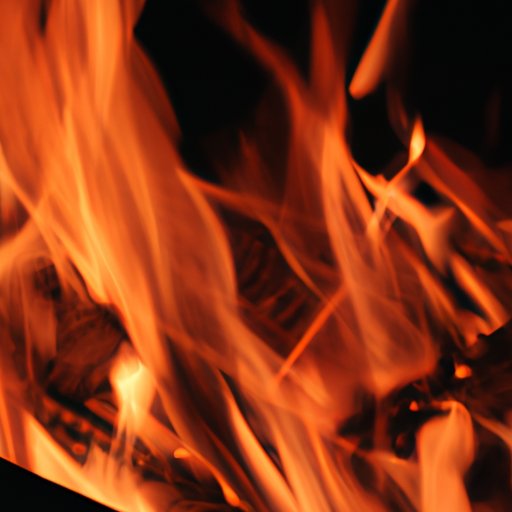
At its most basic level, fire is a form of energy created by chemical reactions. The process begins with a fuel source, such as wood or gasoline, and when this fuel is combined with oxygen, the result is an exothermic reaction that produces heat, light, and other byproducts. This reaction is known as combustion.
What is a Flame?
A flame is the visible part of the combustion process. It is made up of hot gases, which are released during the burning of the fuel. The color of the flame depends on the temperature of the gases and the amount of oxygen available for the combustion process.
Properties of Fire
Fire has several properties that make it unique. For instance, it is self-sustaining, meaning that once the combustion process begins, it will continue until the fuel is exhausted or the fire is extinguished. Additionally, fire requires fuel, oxygen, and heat to exist and spread. When any of these three elements is removed, the fire will stop.
Types of Fire
There are several types of fire, including open fires (such as bonfires and campfires), contained fires (such as those used for cooking and heating), and electrical fires (which are caused by short circuits). Each type of fire has a different set of characteristics and requires different approaches for extinguishing.
How Fire Works: The Chemical Reactions Behind Flames
The combustion process involves a series of chemical reactions that produce heat and other byproducts. A fuel source, such as wood or gasoline, is mixed with oxygen in the presence of heat. This creates a chain reaction of chemical reactions, releasing energy in the form of heat and light.
Combustion Process
The combustion process begins with a fuel source, such as wood or gasoline, and oxygen. As the fuel and oxygen mix, they react chemically, creating a chain reaction of chemical reactions. This reaction releases energy in the form of heat and light, which is what we see as a flame.
Chemical Reactions Involved
The chemical reactions involved in the combustion process depend on the type of fuel being burned. Generally speaking, the combustion of hydrocarbon fuels such as wood or gasoline produces carbon dioxide, water vapor, and other byproducts. However, the exact chemistry of the reaction can vary depending on the fuel and oxygen levels present.

Fire Safety: Understanding Heat and Smoke
Heat and smoke are two of the main components of fire, and understanding them is important for fire safety. Heat transfer occurs when the energy released by the combustion process is transferred to the surrounding environment, while smoke is created when the fuel is incompletely burned.
Heat Transfer
Heat transfer occurs when the energy released by the combustion process is transferred to the surrounding environment. This heat can cause damage to property and can be dangerous to people if they come into contact with it. Fire safety measures, such as using fire retardants and keeping flammable materials away from sources of heat, can help reduce the risk of heat transfer.
Smoke and Its Effects
Smoke is created when the fuel is incompletely burned. It is made up of tiny particles of soot, ash, and other substances that can be hazardous to breathe in. Smoke inhalation can cause serious health problems, such as respiratory irritation and lung damage. Fire safety measures, such as using fire-resistant materials and proper ventilation, can help reduce the risk of smoke inhalation.
Investigating the Physics and Chemistry of Fire
In order to understand fire, we must also understand the physics and chemistry behind it. Temperature and pressure play an important role in the combustion process, as does the physical and chemical changes that occur when the fuel is burned.
Temperature and Pressure
Temperature and pressure both affect the combustion process. Higher temperatures accelerate the reaction, while higher pressures increase the amount of fuel that can be burned at once. Additionally, the temperature and pressure of the surroundings can affect the rate at which the fire spreads.
Physical and Chemical Changes
When a fuel is burned, it undergoes a number of physical and chemical changes. These changes include the release of heat and light, the production of smoke and other byproducts, and the formation of new compounds. By understanding these changes, scientists can develop methods for controlling the combustion process and reducing the risks associated with it.
Fighting Fire with Science: Research and Technology
The science of fire has advanced greatly in recent years, and researchers continue to develop new technologies to help fight fires. Fire retardants, which are chemicals that slow down the combustion process, are widely used in building materials and firefighting equipment. Additionally, advances in fire prevention technology, such as smoke detectors and sprinkler systems, have helped reduce the number of fires and the damage they cause.
Fire Retardants
Fire retardants are chemicals that are added to building materials and firefighting equipment to slow down the combustion process. These chemicals work by forming a protective layer on the surface of the material, which prevents the fuel from igniting or spreading the fire. Fire retardants are widely used in a variety of products, from furniture to construction materials.
Fire Prevention Technology
Advances in fire prevention technology have made it easier to detect and prevent fires before they start. Smoke detectors, which are designed to detect smoke in the air, can alert people to the presence of a fire and give them time to evacuate safely. Additionally, sprinkler systems, which are designed to automatically extinguish fires, can help reduce the spread and damage of a fire.
Conclusion
Through this exploration of the science of fire, we’ve learned what fire is, how it works, and how it can be fought. We’ve seen how temperature, pressure, and other physical and chemical changes are involved in the combustion process, as well as how fire prevention technology can help reduce the risks associated with it. For more information on fire science, check out the resources listed below.
Summary of Information Learned
This article explored the science of fire, from what it is to how it works. We discussed the properties of fire, the chemical reactions involved in the combustion process, and the technologies used to fight it. Additionally, we looked at the physics and chemistry of fire, as well as the importance of fire safety.
Resources for Further Learning
National Fire Protection Association: https://www.nfpa.org/
U.S. Fire Administration: https://www.usfa.fema.gov/
Fire Engineering: https://www.fireengineering.
(Note: Is this article not meeting your expectations? Do you have knowledge or insights to share? Unlock new opportunities and expand your reach by joining our authors team. Click Registration to join us and share your expertise with our readers.)