

Introduction
Automation testing is a type of software testing process that uses special software tools to control the execution of tests and then compares the actual results with the expected results. Automation testing is used to speed up the software development process by reducing the amount of manual work while improving accuracy and reliability. It is commonly used in agile development, where rapid iteration and continuous delivery are key objectives.
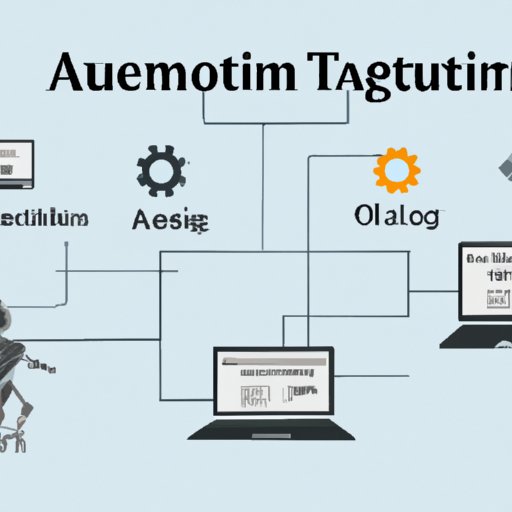
Exploring the Advantages of Automation Testing
Automation testing provides several advantages for software development teams. Firstly, it increases the overall quality of the software product by enabling testers to quickly identify and address potential bugs or issues before they become major problems. Secondly, it helps to reduce costs associated with manual labor, as well as time spent on testing. Finally, automation testing can be used to streamline the development process and make it more efficient.
What is Automation Testing and How Does it Work?
Automation testing is an automated process that uses special software tools to control the execution of tests and then compares the actual results with the expected results. The goal of automation testing is to reduce the amount of manual work required to test a product and improve the accuracy and reliability of the tests. Automation testing is often used in conjunction with manual testing in order to ensure the highest quality software product.
There are several types of automation testing, including unit testing, integration testing, functional testing, regression testing, performance testing, and usability testing. Each type of testing is used to validate different aspects of a software product. Additionally, there are many different automation tools available, such as Selenium, Appium, Robot Framework, and TestComplete.
Automation Testing for Improved Software Quality
Automated regression testing is used to ensure that changes made to a software product do not introduce new bugs or regressions. This type of testing can be used to quickly identify any issues that may arise from changes to the codebase. Automated functional testing is used to verify that all the features of a software product are working correctly. Automated performance testing is used to measure the response time of a system under various loads and conditions.
Analyzing the Cost-Benefit of Automation Testing
When considering whether or not to use automation testing, it’s important to consider the associated costs. The initial setup costs for automation testing can be quite high, but these costs are offset by the savings in manual labor costs and time savings. Maintenance costs for automation testing will depend on the complexity of the tests and the number of tests being run. On the other hand, time savings can be significant, since automated tests can be run much faster than manual tests.

Understanding Automation Testing in the Context of Agile Development
Automation testing is especially useful in the context of agile development, where rapid iteration and continuous delivery are key objectives. Test-driven development (TDD) is a common practice in agile development, where tests are written before the code is written. This approach helps to ensure that the code meets the desired specifications and that no regressions are introduced. Continuous integration is another important practice in agile development, where code is integrated and tested frequently. Automation testing is essential for ensuring that the code is tested quickly and accurately.
Finally, automation testing is also important for continuous delivery, where software is released to customers on a regular basis. Automated tests can be used to quickly validate the software and ensure that it is ready for release. Automation testing can help to reduce the time required for testing and enable teams to deliver software to customers faster.
Conclusion
Automation testing is an essential part of the software development process. It can help to improve the overall quality of the software product, reduce costs associated with manual labor, and streamline the development process. Automation testing is especially useful in the context of agile development, where rapid iteration and continuous delivery are key objectives. By understanding the advantages of automation testing and how it works, software development teams can use it to their advantage.
(Note: Is this article not meeting your expectations? Do you have knowledge or insights to share? Unlock new opportunities and expand your reach by joining our authors team. Click Registration to join us and share your expertise with our readers.)