
Introduction
Plank exercises are a great way to build core strength and stability. They can be used as part of any fitness routine, from beginners to experienced athletes. Planks are a simple yet effective full-body exercise that can be done anywhere with minimal equipment. In this article, we’ll go over what a plank exercise is, the benefits it provides, and how you can incorporate it into your workout routine.
A Beginner’s Guide to Plank Exercises
A plank exercise is an isometric exercise that involves holding your body in a rigid position for a certain amount of time. It requires you to use your abdominal muscles, obliques, lower back, glutes, and hamstrings to stay still and maintain good form. When done correctly, planks can help strengthen your core muscles, improve posture, and reduce back pain.
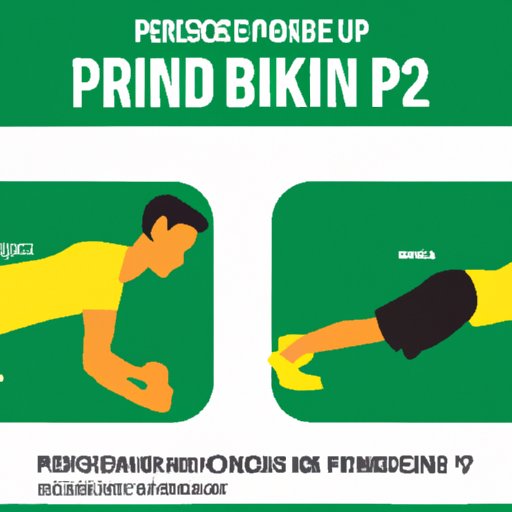
The first step to incorporating plank exercises into your workout is to understand the basics. Start by getting into a face down position on the floor. Place your forearms on the ground so that your elbows are directly underneath your shoulders. Make sure your feet are flat on the floor and your body is in a straight line. Hold this position for 30 seconds to one minute, then rest for 10 seconds before repeating.
Once you’re comfortable with the basic plank, you can start to add variations to your routine. Try single leg planks, side planks, or even reverse planks. As you progress, you can increase the length of time you hold each variation, or add weights to make the exercise more challenging.
Explaining the Different Types of Plank Exercises
There are several different types of plank exercises, each with its own set of benefits. Here are some of the most popular varieties:
- Standard Plank: This is the most basic type of plank exercise. It involves holding your body in a straight line, with your toes and forearms flat on the ground. The standard plank works your core and helps improve your posture.
- Side Plank: Side planks are similar to standard planks, but they target your obliques. To do a side plank, start in a standard plank position, then rotate your body so that your right arm is extended toward the ceiling and your left foot is resting on top of your right foot. Hold this position for 30 seconds to one minute, then switch sides.
- Reverse Plank: Reverse planks work your back and glutes. To do a reverse plank, sit on the ground with your legs extended out in front of you. Place your hands behind your back and lift your hips off the ground until your body is in a straight line. Hold this position for 30 seconds to one minute.
- Single Leg Plank: Single leg planks are an advanced variation that require you to balance on one leg while maintaining a plank position. To do a single leg plank, start in a standard plank position, then lift one leg off the ground and hold it in the air for 30 seconds to one minute. Switch legs and repeat.

Tips for Improving Your Plank Exercise Performance
Plank exercises can be difficult, especially if you’re a beginner. To ensure that you’re doing them correctly, it’s important to focus on proper form and technique. Keep your body in a straight line from head to toe, and make sure your elbows are directly underneath your shoulders. Additionally, don’t forget to engage your core muscles and keep your neck and spine in alignment. Lastly, make sure to take breaks when needed and avoid overexerting yourself.
Common mistakes to avoid when doing plank exercises include letting your hips sag, arching your back, or putting too much weight on your arms. Additionally, remember to keep your breathing steady and controlled throughout the exercise. This will help you maintain your form and maximize the benefits of the exercise.
Conclusion
Plank exercises are a great way to build core strength and stability. They can help improve your posture, reduce back pain, and increase your overall fitness level. There are several different types of plank exercises, each with their own set of benefits. To get the most out of your plank exercises, make sure to focus on proper form and technique, and avoid making common mistakes such as letting your hips sag or putting too much weight on your arms.
By following these tips, you can maximize the benefits of plank exercises and make them a regular part of your workout routine.
(Note: Is this article not meeting your expectations? Do you have knowledge or insights to share? Unlock new opportunities and expand your reach by joining our authors team. Click Registration to join us and share your expertise with our readers.)