
Introduction
Understanding your exercise heart rate is key to getting the most out of your workouts. Knowing what is a good exercise heart rate can help you maximize the benefits of your exercise routine while avoiding overexertion. But what exactly is a good exercise heart rate?
An exercise heart rate is simply the number of times your heart beats per minute (bpm) when you are engaged in physical activity. It is typically measured by taking your pulse at the wrist or neck. Your heart rate increases as your body exerts more energy, and it decreases as your body relaxes. Monitoring your heart rate during exercise helps you gauge your intensity level so you can adjust your workout accordingly.
Evaluating Your Heart Rate During Exercise: What is a Good Exercise Heart Rate?
Many factors can affect your exercise heart rate, including age, fitness level, medications, and even the type of exercise you’re doing. Generally speaking, a good exercise heart rate is one that is within the range of 60-80% of your maximum heart rate. To determine this range, you need to calculate your maximum heart rate.
Factors that Affect Your Heart Rate
Age is one of the main factors that affects your heart rate. According to the American Heart Association, “The normal resting heart rate for adults over the age of 10 years, including older adults, is between 60 and 100 beats per minute (bpm).” This means that younger people tend to have higher heart rates than older people.
Other factors such as medications and health conditions can also affect your heart rate. For example, some medications can cause your heart rate to slow down. Additionally, those with heart conditions may find that their heart rate is lower than the average. It’s important to consult with your doctor if you have any concerns about your heart rate.
Calculating Your Maximum Heart Rate
Your maximum heart rate is the highest number of beats per minute (bpm) your heart can reach during strenuous physical activity. It is usually calculated by subtracting your age from 220. For example, if you are 30 years old, your maximum heart rate would be 190 bpm (220 – 30 = 190). Once you know your maximum heart rate, you can calculate the range of your good exercise heart rate.

How to Calculate and Maintain a Healthy Heart Rate During Exercise
In order to get the most out of your workout, it’s important to maintain a healthy heart rate during exercise. Keeping your heart rate within the range of 60-80% of your maximum heart rate is considered to be a good exercise heart rate.
Benefits of Keeping a Healthy Heart Rate During Exercise
Maintaining a healthy heart rate during exercise has many benefits. Not only does it help you to avoid overexertion, but it also helps to improve your overall cardiovascular fitness. Studies have found that regular exercise can reduce the risk of heart disease and stroke, as well as improve blood pressure, cholesterol levels, and mood. Additionally, keeping a healthy heart rate during exercise can help you to burn more calories and achieve your fitness goals faster.
Guidelines for Establishing an Optimal Exercise Heart Rate
Once you know your maximum heart rate, use the following guidelines to establish an optimal exercise heart rate:
- For moderate intensity exercise, aim for a heart rate of 50-70% of your maximum heart rate.
- For vigorous intensity exercise, aim for a heart rate of 70-90% of your maximum heart rate.
It’s important to note that these ranges are just general guidelines. If you are new to exercise or have any health concerns, talk to your doctor about what is a good exercise heart rate for you.
The Best Way to Monitor Your Exercise Heart Rate
Monitoring your heart rate during exercise is the best way to make sure you’re staying within the range of a good exercise heart rate. There are several ways to measure and monitor your heart rate during exercise.
How to Measure and Monitor Your Heart Rate During Exercise
The easiest way to measure your heart rate during exercise is to take your pulse at your wrist or neck. To do this, place your index and middle fingers on either side of your radial artery (located on the inside of your wrist) and count the number of beats for 15 seconds. Multiply this number by four to get your heart rate in beats per minute (bpm). You can also use a heart rate monitor to track your heart rate during exercise.
Tracking Apps and Devices to Monitor Your Heart Rate
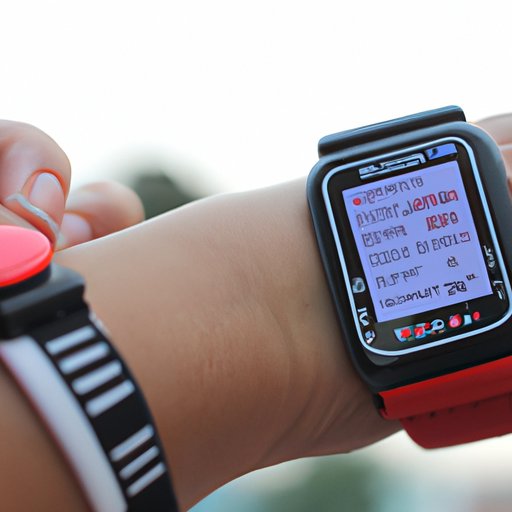
There are also tracking apps and devices available to help you monitor your heart rate during exercise. These include fitness trackers, smart watches, and smartphone apps. These devices can provide real-time information about your heart rate, as well as other data such as steps taken and calories burned. This information can help you stay on track and make adjustments to your workout as needed.
How to Use Heart Rate Training to Maximize Your Workouts
Heart rate training is a great way to maximize your workouts and get the most out of your exercise routine. This type of training involves adjusting your intensity level based on your heart rate. By understanding the different zones of heart rate training, you can customize your workouts to meet your fitness goals.
Understanding the Different Zones of Heart Rate Training
The five zones of heart rate training are:
- Zone 1: 50-60% of your maximum heart rate – Used for warm up and cool down.
- Zone 2: 60-70% of your maximum heart rate – Used for light aerobic activities.
- Zone 3: 70-80% of your maximum heart rate – Used for moderate aerobic activities.
- Zone 4: 80-90% of your maximum heart rate – Used for high intensity interval training.
- Zone 5: 90-100% of your maximum heart rate – Used for maximum effort efforts.
Adjusting Your Workouts Based on Your Heart Rate
By understanding the different zones of heart rate training, you can adjust the intensity of your workouts accordingly. For example, if you want to do a moderate intensity workout, you should aim for a heart rate of 70-80% of your maximum heart rate. If you want to do a high intensity interval workout, you should aim for a heart rate of 80-90% of your maximum heart rate. You can also use heart rate training to ensure you are not overexerting yourself.
Conclusion
Knowing what is a good exercise heart rate is key to getting the most out of your workouts. Your exercise heart rate is the number of times your heart beats per minute when you are engaged in physical activity, and it should generally be within the range of 60-80% of your maximum heart rate. Factors such as age, medications, and health conditions can affect your heart rate, so it’s important to consult with your doctor if you have any concerns. The best way to monitor your heart rate during exercise is to take your pulse at your wrist or neck, or use a tracking app or device. Lastly, heart rate training can help you adjust the intensity of your workouts and get the most out of your exercise routine.
Whether you’re just starting out or are a seasoned athlete, understanding your exercise heart rate is essential for getting the most out of your workouts. By knowing what is a good exercise heart rate and using heart rate training, you can maximize the benefits of your exercise routine and reach your fitness goals faster.
(Note: Is this article not meeting your expectations? Do you have knowledge or insights to share? Unlock new opportunities and expand your reach by joining our authors team. Click Registration to join us and share your expertise with our readers.)