

Introduction
Blockchain technology is a revolutionary new way of managing and storing data in a decentralized manner. By utilizing cryptographic techniques and distributed ledgers, blockchain technology offers a secure, transparent, and immutable way to store and manage data. This article will explore the definition and benefits of blockchain technology, as well as examine the potential applications and challenges associated with it.
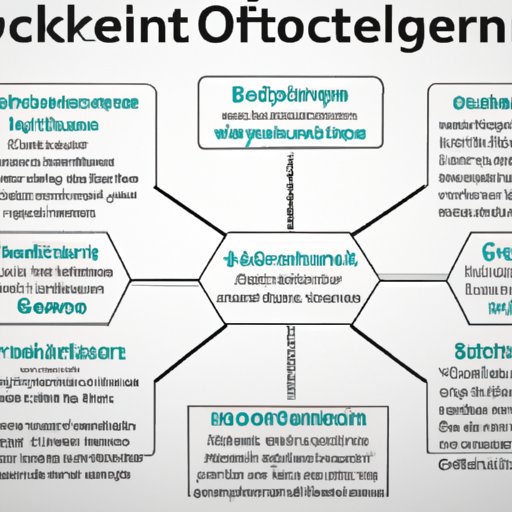
Overview of Blockchain Technology: Definition and Benefits
Blockchain technology is a type of distributed ledger technology (DLT) that stores data in a shared, immutable ledger. Unlike traditional databases, which are centralized and managed by a single entity, blockchains are decentralized and managed by multiple participants. The data stored on a blockchain is secured using cryptography, making it difficult to tamper with or alter without permission.
The most notable benefit of blockchain technology is its security. Because the data is distributed across a network of computers, it is virtually impossible to hack or manipulate. Additionally, because there is no central authority controlling the data, it is highly resistant to censorship. Furthermore, because all transactions are recorded on the blockchain, they are transparent and easily verifiable.
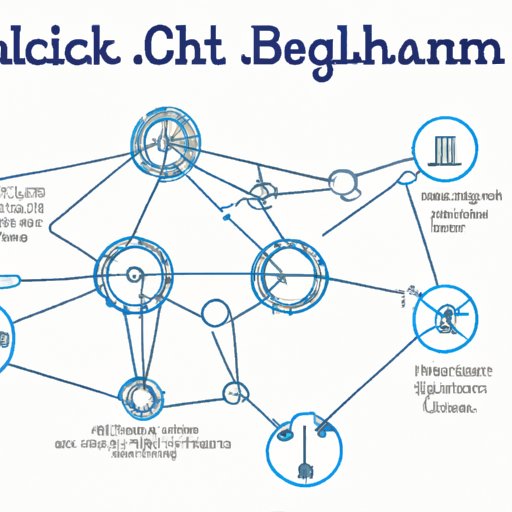
Exploring the Mechanics Behind Blockchain
In order to understand how blockchain technology works, it is important to first understand what a blockchain is. A blockchain is a distributed database that stores data in a series of blocks. Each block is linked to the previous block via a cryptographic hash, creating a chain of blocks. This chain is immutable, meaning it cannot be altered or deleted.
Once a transaction is made, it is broadcast to the network of computers running the blockchain software. This network of computers, known as nodes, then validate the transaction and add it to the blockchain. Once the transaction has been added to the blockchain, it cannot be changed or reversed.
Distributed ledger technology (DLT) is another key component of blockchain technology. DLT is a type of database that stores data across a network of computers instead of on a single server. This allows the data to be distributed and encrypted, making it virtually impossible to tamper with or alter without permission.
Examining the Potential of Blockchain Applications
The potential applications of blockchain technology are vast, ranging from financial services to supply chain management. In the financial services industry, blockchain technology has the potential to revolutionize the way payments are processed. By utilizing smart contracts, blockchain technology can streamline and automate the payment process, making it faster and more efficient.
In the supply chain management industry, blockchain technology can be used to track the movement of goods and materials. By utilizing smart contracts and distributed ledgers, companies can track the movement of products in real-time, ensuring accuracy and reducing costs. Additionally, blockchain technology can be used to store data securely, such as medical records and legal documents.
Smart contracts are another potential application of blockchain technology. Smart contracts are self-executing contracts that can be used to automate certain processes, such as the transfer of funds or the execution of a will. These contracts are written in code, making them secure and immutable.
Finally, blockchain technology can be used to store data securely. By utilizing distributed ledgers and encryption, data stored on a blockchain is secure and virtually impossible to hack or manipulate. Additionally, blockchain technology can be used to facilitate the Internet of Things (IoT), allowing devices to securely communicate with each other.
Analyzing the Challenges and Limitations of Blockchain
Although blockchain technology offers numerous benefits, there are still some challenges and limitations that need to be addressed. One of the biggest concerns with blockchain technology is security. As with any system, there are potential security risks that must be taken into consideration when implementing a blockchain solution. Additionally, blockchain technology is not yet scalable, meaning it cannot handle large amounts of data.
Another challenge facing blockchain technology is regulatory uncertainty. Governments around the world are still trying to figure out how to regulate blockchain technology, making it difficult for companies to adopt. Additionally, blockchain technology is energy intensive, requiring large amounts of power to run. Finally, blockchain technology lacks interoperability, meaning it cannot communicate with other systems.
Investigating the Impact of Blockchain on Businesses and Industries
The impact of blockchain technology on businesses and industries is just beginning to be felt. Many companies have begun adopting blockchain technology in order to improve efficiency, reduce costs, and increase transparency. Additionally, many governments around the world are investing in blockchain technology in order to improve security and reduce fraud.
The impact of blockchain technology on global markets is also beginning to be seen. Cryptocurrencies, such as Bitcoin and Ethereum, are becoming increasingly popular, leading to increased investment and speculation. Additionally, blockchain technology is being used to create new types of financial instruments, such as stablecoins, which are designed to maintain their value regardless of market conditions.
Comparing Blockchain to Other Technologies
In order to better understand the implications of blockchain technology, it is important to compare it to other technologies. Traditional database systems are centralized, meaning they are controlled by a single entity. This makes them vulnerable to manipulation and censorship. By contrast, blockchain technology is decentralized, making it more secure and resistant to censorship.
Cryptocurrencies, such as Bitcoin and Ethereum, are also related to blockchain technology. Cryptocurrencies are digital currencies that use blockchain technology to facilitate secure and anonymous transactions. However, unlike blockchain technology, cryptocurrencies are not used to store data or execute smart contracts.
Finally, distributed ledger technology (DLT) is another related technology. DLT is a type of database that stores data across a network of computers instead of on a single server. This allows the data to be distributed and encrypted, making it virtually impossible to tamper with or alter without permission.
Guiding Principles for Implementing Blockchain Solutions
When implementing a blockchain solution, it is important to consider the following guiding principles: leadership and governance, security, privacy, transparency, and scalability. Leaders should ensure that the blockchain solution is properly governed, with clear rules and regulations. Additionally, the solution should be secure, with access controls and encryption protocols in place. Furthermore, the solution should protect user privacy, while still maintaining transparency. Finally, the solution should be scalable, meaning it can handle large amounts of data.
Conclusion
Blockchain technology is a revolutionary new way of managing and storing data in a decentralized manner. By utilizing cryptographic techniques and distributed ledgers, blockchain technology offers a secure, transparent, and immutable way to store and manage data. This article has explored the definition and benefits of blockchain technology, as well as examined the potential applications and challenges associated with it. Additionally, it has provided guiding principles for implementing blockchain solutions. While there are still some challenges and limitations that need to be addressed, it is clear that blockchain technology has the potential to revolutionize the way we manage and store data.
(Note: Is this article not meeting your expectations? Do you have knowledge or insights to share? Unlock new opportunities and expand your reach by joining our authors team. Click Registration to join us and share your expertise with our readers.)