
Introduction
Natural selection is a process in which organisms that possess certain advantageous traits have a higher probability of surviving and reproducing than those that do not. This process has played an integral role in the development and diversification of life on Earth, and it continues to shape the evolution of species today. In this article, we will explore the basics of natural selection, examine its mechanisms, and investigate its implications for human health.
Exploring the Basics of Natural Selection
In order to gain a better understanding of natural selection, it is important to first consider what it is and how it works. Natural selection is a process in which organisms with certain advantageous traits are more likely to survive and reproduce than those without them. As a result, these advantageous traits become more common in the population over time. This process is driven by the fact that living organisms face a constant struggle for survival, and only those with the best-adapted traits are able to survive long enough to reproduce and pass on their genes to the next generation.
The role of variation in natural selection is also important to consider. Variation refers to the differences between individuals within a population. These variations can be due to genetic mutations, environmental factors, or a combination of both. It is these variations that provide the raw material for natural selection to act upon. For example, if a particular trait makes an organism more likely to survive and reproduce in its environment, then those individuals with that trait will have a greater chance of passing it on to their offspring. Over time, this process can lead to significant changes in the genetic makeup of a population.
To illustrate this concept further, let’s consider the example of peppered moths. The peppered moth is a species of moth found in the United Kingdom that exhibits two distinct color morphs: light and dark. Prior to the industrial revolution, the light morph was much more common than the dark morph. However, as industrial cities became increasingly polluted, soot began to coat the trees where the moths lived. This made the light morphs more visible to predators, while the dark morphs were better camouflaged against the soot-covered trees. As a result, the dark morphs had a higher probability of surviving and reproducing, leading to a shift in the population from mostly light to mostly dark.
A Comprehensive Guide to Natural Selection in Science
Now that we have explored the basics of natural selection, let’s take a closer look at the process itself. In order to understand how natural selection works, it is important to consider the following components: variation, competition, and adaptation.
The process of natural selection begins with variation. As previously mentioned, variation refers to the differences between individuals within a population. These variations can be due to genetic mutations, environmental factors, or a combination of both. It is these variations that provide the raw material for natural selection to act upon. Once variation is present, competition begins to occur. Competition occurs when individuals of the same species compete for resources such as food, water, and space. Those individuals who are better adapted to their environment are more likely to win the competition and survive long enough to reproduce. This leads to the third component: adaptation. Adaptation occurs when individuals who possess certain advantageous traits have a higher probability of surviving and reproducing than those who do not. Over time, this process can lead to significant changes in the genetic makeup of a population.
Once the process of natural selection has been established, it is important to consider how it drives evolution. Evolution is the process by which populations of organisms change over time in response to changes in their environment. Natural selection is the primary mechanism by which this occurs. As previously discussed, natural selection acts on existing variation within a population and favors those individuals who are better adapted to their environment. Over time, these advantageous traits become more common in the population, leading to evolutionary changes. Additionally, natural selection helps to ensure that species remain adapted to their environment, allowing them to survive and reproduce in changing conditions.
Finally, it is important to consider the role of natural selection in species adaptation. Species adaptation occurs when a species evolves in response to changes in its environment. Natural selection plays a key role in this process, as it allows organisms with advantageous traits to survive and reproduce, while those without them are less likely to do so. This helps to ensure that species remain well adapted to their environment and can survive and reproduce in changing conditions.
The Role of Natural Selection in Evolutionary Theory
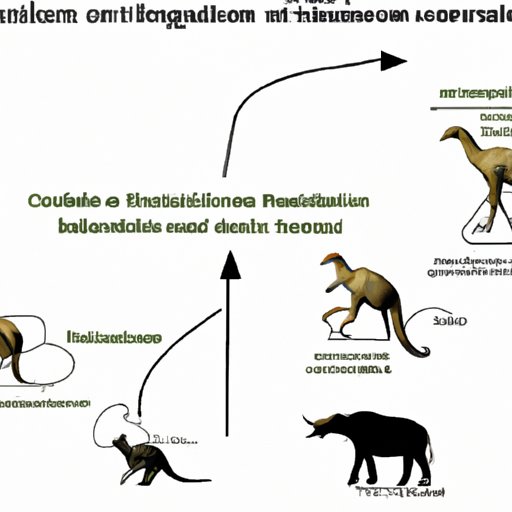
Natural selection is a fundamental concept in evolutionary theory, and it has played a major role in shaping the history of life on Earth. Charles Darwin was the first to propose the idea that natural selection was responsible for the origin of species. In his book On the Origin of Species, he argued that species evolve through the process of natural selection. He proposed that individuals with advantageous traits are more likely to survive and reproduce, thus passing on their genes to the next generation. Over time, this process can lead to significant changes in the genetic makeup of a population.
Darwin’s theory of natural selection has since been widely accepted and has helped to explain many of the observed patterns in nature. For example, it can help to explain why some species have become extinct while others have flourished. Additionally, natural selection has been shown to influence genetic diversity within a population. Studies have found that natural selection can lead to the accumulation of beneficial mutations and the elimination of deleterious ones, thus increasing the genetic variation of a population over time.
Natural selection also plays an important role in the evolution of species characteristics. By favoring individuals with advantageous traits, natural selection helps to ensure that species remain adapted to their environment. This process can lead to the development of new traits, as well as the loss of existing ones. For example, studies have shown that natural selection can lead to the emergence of new behaviors, increased body size, and even changes in the coloration of an organism.
Investigating the Impact of Natural Selection on Species
In addition to influencing genetic diversity and species characteristics, natural selection can also have a profound impact on species survival. Studies have found that natural selection can significantly affect the survival rate of a species, as well as its overall abundance. For example, research has shown that natural selection can lead to the emergence of new species and the extinction of existing ones. Additionally, natural selection can lead to the adaptation of species to new environments, allowing them to survive and reproduce in changing conditions.
It is also important to consider the impact of artificial selection on species. Artificial selection refers to the process by which humans select certain desirable traits and breed them into a population. This process is similar to natural selection in that it favors individuals with advantageous traits, but it is driven by human preference rather than natural forces. Examples of artificial selection include the domestication of animals and the cultivation of crops.
Understanding the Mechanisms of Natural Selection
In order to gain a deeper understanding of natural selection, it is important to consider how it works in nature. Studies have identified several factors that drive natural selection, including mutation, gene flow, genetic drift, and selection pressure. Mutation refers to random changes in the genetic code of an organism, while gene flow refers to the movement of genes between populations. Genetic drift is the random fluctuations in the frequency of genes in a population, while selection pressure is the degree to which a trait is favored or disfavored by natural selection.
It is also important to consider the role of competition in natural selection. Competition occurs when individuals of the same species compete for resources such as food, water, and space. Those individuals who are better adapted to their environment are more likely to win the competition and survive long enough to reproduce. This helps to ensure that species remain adapted to their environment and can survive and reproduce in changing conditions.
Examining the Implications of Natural Selection for Human Health
Finally, it is important to consider the implications of natural selection for human health. Natural selection has been shown to play an important role in human genetics, as it can lead to the accumulation of beneficial mutations and the elimination of deleterious ones. Additionally, natural selection can influence disease susceptibility. Studies have found that individuals with certain advantageous traits are more likely to survive and reproduce, thus passing on their genes to the next generation. This can lead to changes in the frequency of certain diseases in a population over time.
Natural selection can also affect human lifespan. Studies have found that natural selection can lead to increased longevity in a population, as those individuals with advantageous traits are more likely to survive and reproduce. Additionally, natural selection can influence the rate at which aging occurs, as those individuals with advantageous traits are more likely to live longer and thus experience slower rates of aging.
Conclusion
In conclusion, natural selection is a powerful process in which organisms with certain advantageous traits are more likely to survive and reproduce than those without them. This process has played an integral role in the development and diversification of life on Earth, and it continues to shape the evolution of species today. Additionally, natural selection has important implications for human health, as it can influence genetic diversity, disease susceptibility, and human lifespan. It is clear that natural selection is a complex and fascinating process, and it is one that we must continue to study in order to gain a better understanding of the world around us.
Summary of Key Points
• Natural selection is a process in which organisms with certain advantageous traits are more likely to survive and reproduce than those without them.
• Variation is the differences between individuals within a population, and it provides the raw material for natural selection to act upon.
• Natural selection drives evolution by favoring those individuals who are better adapted to their environment.
• Natural selection can lead to changes in genetic diversity, species characteristics, and species survival.
• Natural selection can also have important implications for human health, as it can influence genetic diversity, disease susceptibility, and human lifespan.
Final Thoughts on Natural Selection
Natural selection is a powerful process that has shaped the evolution of life on Earth. Through its ability to favor those individuals with advantageous traits, natural selection has enabled species to adapt and survive in changing conditions. Additionally, natural selection has important implications for human health, as it can influence genetic diversity, disease susceptibility, and human lifespan. As we continue to explore the complexities of natural selection and its effects on life, we can gain a better understanding of the world around us.
(Note: Is this article not meeting your expectations? Do you have knowledge or insights to share? Unlock new opportunities and expand your reach by joining our authors team. Click Registration to join us and share your expertise with our readers.)