

Introduction
Automation engineering is a rapidly growing field that utilizes advanced technology to automate processes, reduce costs, and improve efficiency. Automation engineers are responsible for designing, developing, testing, and maintaining automated systems. In this article, we will explore the various aspects of automation engineering, including what automation engineers do on a daily basis, the skills and knowledge needed to be successful in the profession, and the potential career paths available. We will also delve into the benefits and challenges associated with automation engineering, and offer advice for those interested in pursuing a career in this field.
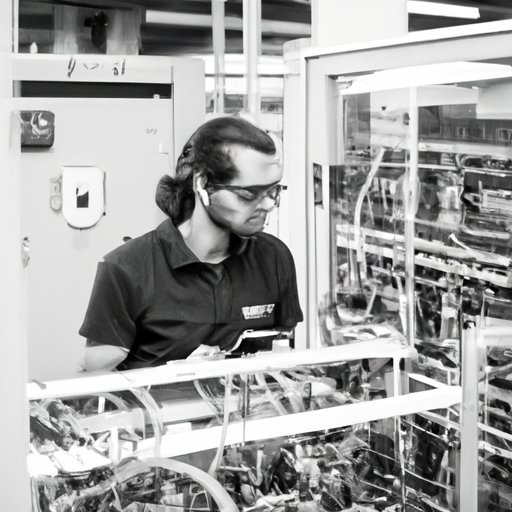
A Day in the Life of an Automation Engineer
The day-to-day tasks of an automation engineer vary depending on the project they are working on; however, there are some common tasks that automation engineers typically perform. These include conducting research to identify solutions for automation problems, designing automated systems, writing code to control the system, and testing the system to ensure it meets requirements. Automation engineers must also stay up-to-date with the latest technologies and trends, and provide technical support when needed.
Examples of projects that automation engineers may work on include creating automated systems for manufacturing plants, developing software applications for controlling robots, and designing systems for controlling complex machinery. Automation engineers must have a comprehensive understanding of both hardware and software in order to design and implement these types of systems.
Understanding Automation Engineering: The Basics
Automation engineering can be divided into two main categories: industrial and software. Industrial automation engineers are responsible for designing, developing, and implementing automated systems that are used in manufacturing environments, while software automation engineers focus on developing software applications and systems. Both types of automation engineers require a deep understanding of hardware and software, as well as strong problem-solving and analytical skills.
In order to become an automation engineer, individuals must possess a thorough understanding of computer programming languages, such as C++ and Java, and have experience with digital electronics and robotics. Additionally, automation engineers must have a good grasp of mathematics and physics, as well as an understanding of the principles of engineering. Depending on the type of automation engineering job, individuals may need to obtain additional certifications or qualifications.

Exploring Career Paths for Automation Engineers
Automation engineering is an in-demand field, with job opportunities in a variety of industries, such as manufacturing, healthcare, transportation, and energy. According to the U.S. Bureau of Labor Statistics, employment of automation engineers is projected to grow 7% between 2019 and 2029, faster than the average for all occupations.
The salary of an automation engineer depends on the individual’s education level, experience, and location. According to Glassdoor, the average salary for an automation engineer in the United States is $84,000 per year. With experience and additional qualifications, automation engineers can advance their careers by taking on more complex projects and higher-level managerial roles.
Automation Engineering: Embracing Automation to Improve Efficiency
Automation engineering is a field that relies heavily on automation technology, which is defined as “the use of machines, information technology, and other tools to streamline or replace manual labor.” Automation technology has been used for decades to improve efficiency and reduce costs in manufacturing and other industries. Automation engineers are responsible for designing, developing, and maintaining automated systems, utilizing a wide range of technologies such as sensors, robots, and artificial intelligence.
Automation technology offers numerous benefits to businesses, including increased production speed, improved accuracy, and reduced labor costs. Automation engineers are essential in helping organizations embrace automation and realize its full potential.

The Benefits and Challenges of Automation Engineering
Automation engineering offers many advantages to businesses and individuals alike. Automation engineers enjoy the challenge of solving complex problems and developing innovative solutions. As automation becomes increasingly prevalent, automation engineers are in high demand, with lucrative salaries and career growth opportunities.
However, automation engineering is not without its challenges. Automation technology is constantly evolving, and automation engineers must stay up-to-date on the latest trends and technologies. Additionally, automation engineers must be prepared to troubleshoot and address any issues that arise with automated systems.
Conclusion
Automation engineering is a rapidly growing field that offers numerous job opportunities, high salaries, and the chance to develop innovative solutions. Automation engineers are responsible for designing, developing, and maintaining automated systems, utilizing a wide range of technologies to improve efficiency and reduce costs. While the field offers many advantages, automation engineers must be prepared to stay up-to-date on the latest trends and technologies and be able to troubleshoot any issues that arise. For those interested in pursuing a career in automation engineering, it is important to gain a comprehensive understanding of the field, develop the necessary skills and knowledge, and obtain the required certifications.
(Note: Is this article not meeting your expectations? Do you have knowledge or insights to share? Unlock new opportunities and expand your reach by joining our authors team. Click Registration to join us and share your expertise with our readers.)