
Introduction
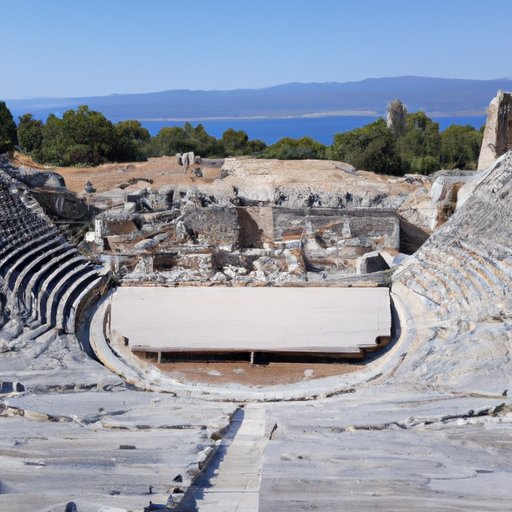
Greek theater is an ancient art form that has had a profound influence on modern theater. From the time of its earliest roots in the sixth century BCE, Greek theater has been used to celebrate mythology and religion as well as to entertain and educate audiences. In this article, we will explore what Greek theater originally celebrated and how it has evolved over time to become one of the most popular forms of entertainment in the world today.

A Historical Overview of Greek Theater and Its Original Celebrations
The history of Greek theater can be traced back to the sixth century BCE. It was developed in the city-state of Athens, which was then the center of culture and learning in the Mediterranean region. The first plays were performed in honor of Dionysus, the god of wine, fertility, and theater. Over time, these performances grew larger and more elaborate, and eventually the theater became a major part of life in ancient Greece.
The ancient Greeks believed that their theater had a religious significance. They viewed it as a way to honor the gods and goddesses of Greek mythology and to pay homage to the gods for their blessings. This belief was reflected in the types of plays that were performed at Greek theaters, which included tragedies, comedies, and satyr plays.
In addition to honoring the gods, the theater was also used as a form of entertainment and education. Plays were often used to teach moral lessons and to provide social commentary on the issues of the day. This was especially true of tragedy plays, which often focused on the consequences of human folly and hubris.

Exploring the Ancient Origins of Greek Theater and Its Celebrations
The development of Greek drama began with the introduction of choral songs and dances as a way to honor the gods. These performances were usually accompanied by recitations of epic poems such as the Iliad and Odyssey. Eventually, playwrights began to write plays that were specifically designed for the stage. These plays typically featured characters, dialogue, and action, and they were performed at festivals throughout Greece.
The most popular type of play performed at Greek theaters was tragedy. Tragedy plays typically focused on characters from Greek mythology or from the works of Homer and other classical authors. They were meant to evoke pity and fear in the audience, and they often ended with a tragic conclusion. Other types of plays included comedies, which were often satirical in nature, and satyr plays, which were lighthearted and humorous.
Theater was also used to celebrate mythology and religion. Plays would often feature stories from Greek mythology, such as those about the gods and goddesses. They were also used to honor the gods by retelling their stories and offering up sacrifices. In some cases, the plays themselves were seen as offerings to the gods.

Understanding the Cultural Impact of Greek Theater and Its Festivals
The popularity of Greek theater festivals increased over time, and they eventually became major events in ancient Greece. These festivals were held annually in honor of Dionysus, and they attracted people from all walks of life. People would come from far and wide to watch the plays, participate in the festivities, and offer up sacrifices to the gods.
The theater festivals also had a significant impact on ancient Greek society. They provided an opportunity for people to come together and share ideas, and they often served as a platform for political debate. They also helped to spread knowledge and foster an appreciation for literature and the arts. In addition, they were seen as a form of entertainment and relaxation, and they provided a much-needed respite from the everyday pressures of life.
The influence of Greek theater can still be seen in modern theater. Many of the conventions and techniques used in modern theater, such as the use of masks and exaggerated gestures, were first developed in ancient Greece. Theater is also still used as a way to celebrate mythology and religion, as well as to educate and entertain audiences.
Analyzing the Role and Purpose of Greek Theater in Ancient Society
Greek theater was an important part of ancient society, and it had both symbolic and practical applications. On a symbolic level, theater was a representation of Greek culture and values. It was used to honor the gods and goddesses of Greek mythology and to tell stories that taught moral lessons. On a practical level, theater was used to educate audiences and to provide a form of entertainment and relaxation.
Theater also played an important role in educating ancient audiences. Plays were often used to discuss political and social issues, and they provided a platform for debate and discussion. In addition, theater was used to teach the values of Greek society, such as justice, courage, and moderation. As a result, theater was an essential part of life in ancient Greece.
Finally, theater had a significant impact on ancient Greek values. It encouraged people to think critically and to reflect on the consequences of their actions. It also helped to instill a sense of morality and civic duty in its audiences. By celebrating the gods and goddesses of Greek mythology, theater reminded people of the importance of religious faith and reverence for the divine.
Conclusion
Greek theater has had a lasting impact on modern theater and culture. From its ancient origins, it has evolved into one of the most popular forms of entertainment in the world today. This article has explored what Greek theater originally celebrated and how it has shaped our understanding of theater and its role in society. We have seen how theater was used to honor the gods and goddesses of Greek mythology, to educate and entertain audiences, and to foster an appreciation for the values of Greek society.
The legacy of Greek theater is still evident today. The conventions and techniques of modern theater are rooted in the practices of ancient Greece, and theater continues to be used to celebrate mythology and religion. Greek theater, therefore, is a testament to the power of storytelling and the enduring impact of art.
(Note: Is this article not meeting your expectations? Do you have knowledge or insights to share? Unlock new opportunities and expand your reach by joining our authors team. Click Registration to join us and share your expertise with our readers.)