
Introduction
Hand sanitizers are an essential part of staying safe during the COVID-19 pandemic. But with so many different types of sanitizers on the market, it can be difficult to understand what makes one product more effective than another. This article will explore what causes a hand sanitizer to not work well, including examining the ingredients in hand sanitizers, investigating common mistakes people make when using them, understanding how temperature, humidity and UV rays impact their efficacy, analyzing how long they remain effective after application and exploring the connection between hand sanitizer expiration dates and its effectiveness.

Examining the Ingredients in Hand Sanitizers and their Effectiveness
Most hand sanitizers contain either alcohol or benzalkonium chloride as their active ingredient. Alcohol-based sanitizers are usually at least 60% ethanol or 70% isopropanol. Benzalkonium chloride-based products are typically around 0.1%. Both types of sanitizers have been proven to be effective at killing germs, but alcohol-based sanitizers tend to be more effective.
In addition to their active ingredient, most hand sanitizers also contain other ingredients such as glycerin, emollients and fragrances. Glycerin is added to help keep hands from drying out, while emollients help to keep skin moisturized. Fragrances can help mask the smell of alcohol or benzalkonium chloride and make the product more pleasant to use.
Investigating Common Mistakes People Make When Using Hand Sanitizers
It’s important to remember that hand sanitizers are not a substitute for soap and water. They should only be used when soap and water are not available. Additionally, there are some common mistakes people make when using hand sanitizers that can reduce their effectiveness.
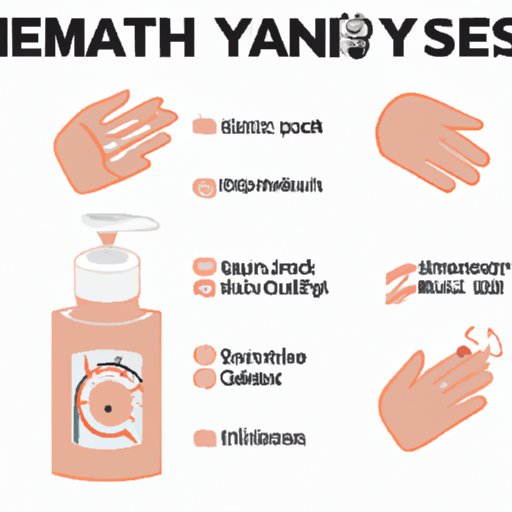
One mistake people make is not rubbing their hands together long enough. It’s important to rub your hands together for at least 20 seconds to ensure that all surfaces of the hands are coated with the sanitizer and that it has time to work. Another mistake is not applying enough product. You should use enough sanitizer to cover all surfaces of your hands, including between the fingers and under the nails. Finally, people often don’t allow sufficient time for the sanitizer to dry. You should wait for the sanitizer to dry completely before touching anything else.
Understanding How Temperature, Humidity and UV Rays Impact the Efficacy of Hand Sanitizers
Temperature, humidity and UV rays can all have an effect on the efficacy of hand sanitizers. Alcohol-based sanitizers become less effective at temperatures above 80°F (27°C). In high temperatures, the alcohol evaporates more quickly, reducing the amount of time it has to kill germs. High levels of humidity can also reduce the effectiveness of alcohol-based sanitizers because the alcohol can be diluted by the moisture in the air.
UV rays can also reduce the effectiveness of hand sanitizers, particularly those containing alcohol. Exposure to UV rays breaks down the alcohol molecules, reducing their ability to kill germs. To maximize the effectiveness of your hand sanitizer, store it away from direct sunlight.

Analyzing How Long Hand Sanitizers Remain Effective After Application
Once you’ve applied a hand sanitizer, it will remain effective for a certain amount of time. This depends on a number of factors, including the type of sanitizer, the amount of product applied and the environmental conditions. Generally speaking, alcohol-based sanitizers will remain effective for up to four hours, while benzalkonium chloride-based products may last for up to six hours.

Exploring the Connection Between Hand Sanitizer Expiration Dates and its Effectiveness
Most hand sanitizers come with an expiration date. This date indicates the date after which the product may no longer be effective. The ingredients in sanitizers can break down over time, reducing their efficacy. Additionally, some sanitizers may contain preservatives that can lose their effectiveness over time.
It’s important to check the expiration date on your hand sanitizer before using it to ensure that it is still effective. If you have a product that has expired, it’s best to discard it and purchase a new one.
Conclusion
The efficacy of hand sanitizers is impacted by a variety of factors, including its ingredients, how it’s applied, environmental conditions and even its expiration date. Understanding these factors can help ensure that your hand sanitizer works as effectively as possible. Be sure to read the label on your hand sanitizer carefully and follow the directions for proper use. Additionally, check the expiration date before using your hand sanitizer and discard any products that have expired.
(Note: Is this article not meeting your expectations? Do you have knowledge or insights to share? Unlock new opportunities and expand your reach by joining our authors team. Click Registration to join us and share your expertise with our readers.)