

Introduction
Telehealth technologies are being increasingly used in healthcare, as they allow healthcare providers to connect with their patients remotely. Telehealth technologies include a wide range of digital tools, such as video conferencing, remote patient monitoring, and medical imaging. These technologies are used to provide healthcare services at a distance, allowing healthcare providers to deliver care to patients who may not be able to access it otherwise.
In this article, we will explore what are the two overarching types of telehealth technologies and how they can be used to benefit both healthcare providers and patients. We will look at the advantages and disadvantages of each type, as well as compare and contrast them to gain a better understanding of the technology.
Exploring the Two Types of Telehealth Technologies: A Comprehensive Guide
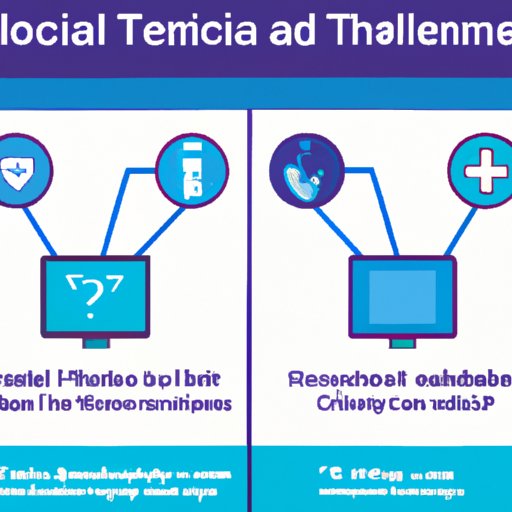
The two main types of telehealth technologies are synchronous telehealth technology and asynchronous telehealth technology. Synchronous telehealth technology involves real-time communication between healthcare providers and patients. Asynchronous telehealth technology, on the other hand, does not involve real-time communication and instead utilizes stored data or pre-recorded messages.
A Closer Look at Two Key Types of Telehealth Technologies
Synchronous Telehealth Technology
Synchronous telehealth technology involves real-time communication between healthcare providers and patients, usually through video conferencing. The advantage of this type of technology is that healthcare providers can interact with patients in real-time, providing immediate feedback and advice. Examples of synchronous telehealth technology include telemedicine, telepsychiatry, and teleconsultation.
Advantages of synchronous telehealth technology include improved access to care for patients in remote areas and reduced costs for healthcare providers. Additionally, synchronous telehealth technology can improve communication and collaboration between healthcare providers and patients, as well as reduce wait times for appointments.
Asynchronous Telehealth Technology
Asynchronous telehealth technology does not involve real-time communication and instead utilizes stored data or pre-recorded messages. Examples of asynchronous telehealth technology include email, text messaging, and online patient portals. This type of technology is useful for providing patients with health information and reminders, as well as for collecting data from patients for follow-up visits.
Advantages of asynchronous telehealth technology include improved patient engagement and convenience, as well as reduced costs for healthcare providers. Additionally, asynchronous telehealth technology can help healthcare providers to monitor patients more closely and reduce the risk of errors.

Comparing and Contrasting the Two Main Types of Telehealth Technologies
When comparing and contrasting the two main types of telehealth technologies, there are several similarities and differences. Both synchronous and asynchronous telehealth technologies can be used to provide healthcare services remotely and offer benefits to both healthcare providers and patients. However, there are some key differences between the two types.
One of the main differences between synchronous and asynchronous telehealth technologies is the type of communication involved. Synchronous telehealth technology involves real-time communication, while asynchronous telehealth technology does not. Additionally, synchronous telehealth technology is often used for more complex tasks, such as diagnoses and consultations, while asynchronous telehealth technology is typically used for simpler tasks, such as sending reminders and collecting data.
An Overview of Telehealth Technologies: What are the Two Major Types?
Telehealth technologies are digital tools used to provide healthcare services remotely. The two main types of telehealth technologies are synchronous telehealth technology and asynchronous telehealth technology. Synchronous telehealth technology involves real-time communication between healthcare providers and patients, while asynchronous telehealth technology does not involve real-time communication and instead utilizes stored data or pre-recorded messages.
What are the Primary Types of Telehealth Technologies?
The primary types of telehealth technologies are synchronous telehealth technology and asynchronous telehealth technology. Synchronous telehealth technology involves real-time communication between healthcare providers and patients, while asynchronous telehealth technology does not involve real-time communication and instead utilizes stored data or pre-recorded messages.
Examining the Pros and Cons of the Two Types of Telehealth Technologies
Synchronous Telehealth Technology
The advantages of synchronous telehealth technology include improved access to care for patients in remote areas and reduced costs for healthcare providers. Additionally, synchronous telehealth technology can improve communication and collaboration between healthcare providers and patients, as well as reduce wait times for appointments. The disadvantages of synchronous telehealth technology include the need for specialized equipment and the potential for technical difficulties.
Asynchronous Telehealth Technology
The advantages of asynchronous telehealth technology include improved patient engagement and convenience, as well as reduced costs for healthcare providers. Additionally, asynchronous telehealth technology can help healthcare providers to monitor patients more closely and reduce the risk of errors. The disadvantages of asynchronous telehealth technology include the potential for misinterpretation of data and the lack of real-time communication.
Conclusion
Telehealth technologies are invaluable tools that allow healthcare providers to connect with their patients remotely. In this article, we explored what are the two overarching types of telehealth technologies and how they can be used to benefit both healthcare providers and patients. We looked at the advantages and disadvantages of each type, as well as compared and contrasted them to gain a better understanding of the technology.
The two main types of telehealth technologies are synchronous telehealth technology and asynchronous telehealth technology. Synchronous telehealth technology involves real-time communication between healthcare providers and patients, while asynchronous telehealth technology does not involve real-time communication and instead utilizes stored data or pre-recorded messages. Both types of telehealth technologies offer benefits to healthcare providers and patients, although there are some key differences between them.
Overall, telehealth technologies are invaluable tools that allow healthcare providers to deliver care to patients who may not be able to access it otherwise. By understanding the two overarching types of telehealth technologies, healthcare providers can make informed decisions about which type of technology is best suited for their needs.
(Note: Is this article not meeting your expectations? Do you have knowledge or insights to share? Unlock new opportunities and expand your reach by joining our authors team. Click Registration to join us and share your expertise with our readers.)