
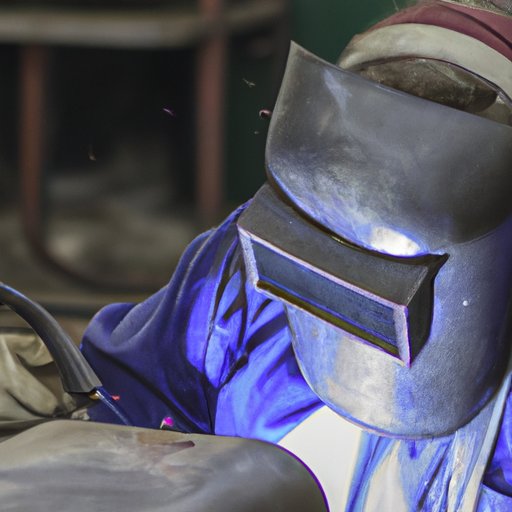
Introduction
Welding is a process used to join two or more pieces of metal together by melting and fusing them. The process involves using high temperatures, electric arcs, and gas flames to melt the metals and form a bond. Welding is an essential skill in many industries, including manufacturing, construction, automotive, and aerospace.
Though welding is necessary for many projects, it can be dangerous and carries some potential health risks. In this article, we explore the potential health hazards associated with welding and what welders can do to protect their health.
The Risks and Benefits of Welding for Workers
Welding is a job that requires physical labor and puts welders at risk of injury or illness. Welders may be exposed to potentially hazardous materials and substances, such as fumes, radiation, and heat. It is important to understand the risks associated with welding in order to take appropriate safety measures.
Examining the Short-Term Effects of Welding Fumes on Health
Welding produces fumes that contain particles of dust, smoke, and other chemicals, such as lead, chromium, manganese, and nickel. These particles can be inhaled and can cause short-term health issues such as coughing, wheezing, eye irritation, and nausea. According to the Centers for Disease Control and Prevention (CDC), “exposure to welding fumes can lead to metal fume fever, which causes flu-like symptoms such as chills, fever, headache, nausea, and vomiting.”
Investigating the Long-Term Effects of Welding Fumes on Health
Long-term exposure to welding fumes can increase a welder’s risk of developing serious health conditions, such as lung cancer, kidney damage, and neurological disorders. A study published in the American Journal of Industrial Medicine found that welders who were exposed to welding fumes for 10 or more years had a higher risk of developing lung cancer than those who were not exposed to welding fumes.
In addition, exposure to welding fumes has been linked to increased risk of kidney disease, asthma, and chronic bronchitis. Studies have also shown that welders are at higher risk of developing neurological disorders, such as Parkinson’s disease, due to exposure to certain metals, like manganese.

Common Safety Practices to Minimize Health Risks from Welding
Though welding is a dangerous job, there are several safety practices that welders can use to reduce the risk of health hazards. It is important for welders to be aware of the different types of welding and their potential health impacts, as well as the impact of their working environment on their health.
Understanding the Different Types of Welding and Their Potential Health Impacts
There are several different types of welding, and each type has its own set of health risks. For example, arc welding is one of the most commonly used welding processes, but it produces higher levels of fumes and ultraviolet (UV) radiation than other types of welding. It is important for welders to understand the different types of welding and their potential health impacts so they can take the necessary safety precautions.
Exploring the Impact of Welders’ Working Environment on Health
Welders should also be aware of the impact of their working environment on their health. Poor ventilation, inadequate lighting, and excessive noise can all contribute to health risks. Welders should make sure that their work area is well-ventilated and free of any hazardous materials.
Assessing Protective Gear for Welders to Reduce Health Risks
Finally, welders should assess their protective gear to ensure that it is adequate for the job. Personal protective equipment (PPE) such as helmets, gloves, and respirators can help reduce the risk of health hazards from welding. The Occupational Safety and Health Administration (OSHA) recommends that welders wear PPE that is specifically designed for welding.
Conclusion
Welding is an essential skill in many industries, but it carries some potential health risks. Welders should be aware of the short-term and long-term effects of welding fumes on their health, as well as the impact of their working environment. Common safety practices, such as understanding the different types of welding and assessing protective gear, can help reduce the risk of health hazards from welding.
By following these safety practices and taking the necessary precautions, welders can reduce their risk of developing long-term health conditions. It is important to remember that welding is a dangerous job, and welders should always use caution when performing their duties.
(Note: Is this article not meeting your expectations? Do you have knowledge or insights to share? Unlock new opportunities and expand your reach by joining our authors team. Click Registration to join us and share your expertise with our readers.)