
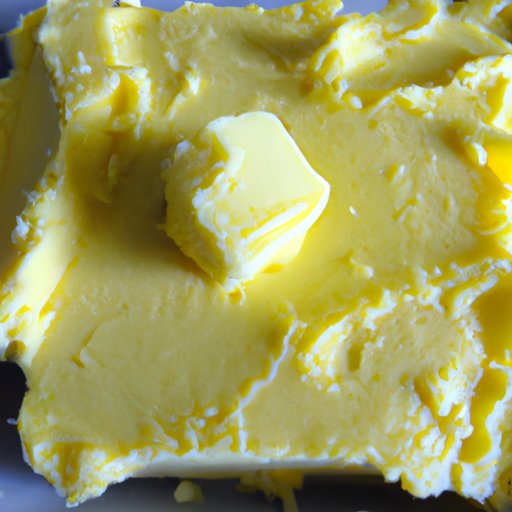
Introduction
Vegan butter has become increasingly popular in recent years as more people are looking for plant-based alternatives to animal products. But is vegan butter actually healthy? This article will explore the potential health benefits and risks of eating vegan butter, so readers can make informed decisions about whether or not to include it in their diets.

Exploring the Health Benefits of Vegan Butter
Vegan butter is typically made from plant oils such as coconut, olive, or sunflower oil. These oils provide a variety of vitamins, minerals, and other nutrients that can benefit overall health. Here’s a closer look at the potential health benefits of vegan butter:
Nutrient Profile
Vegan butter is a good source of essential fatty acids, which are important for maintaining cell membrane structure and function. It also contains vitamin E, an antioxidant that helps protect cells from damage caused by free radicals. Additionally, many brands of vegan butter are fortified with other vitamins and minerals, including calcium, iron, and vitamin B12.
Potential to Reduce Risk of Heart Disease and Diabetes
Studies have shown that replacing saturated fat with unsaturated fat, like that found in vegan butter, may help reduce the risk of heart disease and diabetes. A 2018 study published in the journal Nutrition, Metabolism & Cardiovascular Diseases showed that replacing saturated fat with unsaturated fat was associated with a lower risk of coronary heart disease, stroke, and type 2 diabetes.
Effects on Cholesterol Levels
Replacing saturated fat with unsaturated fat may also help improve cholesterol levels. A 2020 study published in the American Journal of Clinical Nutrition found that replacing saturated fat with unsaturated fat was associated with a decrease in total cholesterol and LDL (“bad”) cholesterol levels.

Comparing Nutritional Content of Vegan Butter to Regular Butter
It’s important to compare the nutritional content of vegan butter to regular butter to get a better understanding of how they differ. Here’s a look at some key differences between the two:
Comparison of Macronutrients
Regular butter is higher in calories, fat, and saturated fat than vegan butter. One tablespoon of regular butter contains 102 calories, 11.5 grams of fat, and 7 grams of saturated fat, while one tablespoon of vegan butter contains 100 calories, 11 grams of fat, and 2 grams of saturated fat.
Comparison of Micronutrients
When it comes to micronutrients, vegan butter is typically higher in vitamin E and other vitamins and minerals. For example, one tablespoon of regular butter contains 0.02 milligrams of vitamin E, while one tablespoon of vegan butter contains 0.7 milligrams.
Examining the Impact of Eating Vegan Butter on Overall Health
In addition to comparing the nutritional content of vegan butter to regular butter, it’s important to consider how eating vegan butter might affect overall health. Here’s a closer look at some potential impacts:
Effect on Weight and Body Composition
Replacing saturated fat with unsaturated fat, like that found in vegan butter, may help support weight loss and body composition goals. A 2019 study published in the International Journal of Obesity found that replacing saturated fat with unsaturated fat was associated with a decrease in body fat mass.
Effect on Digestion and Gut Health
Vegan butter is also a good source of dietary fiber, which is important for maintaining digestive health. Dietary fiber helps keep the digestive system running smoothly by promoting regular bowel movements, reducing constipation, and helping to maintain a healthy balance of gut bacteria.
Investigating the Role of Vegan Butter in a Healthy Diet
Now that we’ve explored the potential health benefits and risks of eating vegan butter, let’s take a look at how it can be incorporated into a healthy diet. Here are some tips for using vegan butter as part of a balanced meal plan:
Using Vegan Butter as a Healthy Substitute for Other Fats
Vegan butter can be used as a healthier substitute for other fats, such as margarine and shortening. For example, it can be used in baking recipes instead of butter or oil, or as a spread on toast or crackers instead of margarine.
Adding Vegan Butter to Balanced Meals
Vegan butter can also be added to balanced meals to increase the amount of healthy fats. For example, it can be added to a vegetable stir-fry or tossed with cooked grains and vegetables. It can also be used to sauté vegetables or to add flavor to soups and stews.

Analyzing the Potential Risks of Substituting Vegan Butter for Regular Butter
While vegan butter does offer some potential health benefits, it’s important to be aware of some potential risks as well. Here’s a look at some potential risks of substituting vegan butter for regular butter:
Risk of High Saturated Fat Intake
Although vegan butter is lower in saturated fat than regular butter, it still contains some saturated fat. Eating too much saturated fat can raise LDL (“bad”) cholesterol levels, which increases the risk of heart disease. Therefore, it’s important to limit saturated fat intake from all sources, including vegan butter.
Risk of Increased Trans Fat Intake
Some brands of vegan butter contain trans fats, which can increase the risk of heart disease. Trans fats are formed when liquid vegetable oils are processed into solid fats, and they can be found in some margarines, shortenings, and other processed foods. Therefore, it’s important to check the label of vegan butter to make sure it doesn’t contain any trans fats.
Evaluating the Taste and Texture of Vegan Butter Versus Regular Butter
In addition to considering the health implications of vegan butter, it’s important to consider the taste and texture. Here’s a look at some key differences between the two:
Differences in Flavor
Vegan butter has a slightly different flavor than regular butter, due to the type of oil used. Some brands use coconut oil, which gives it a slight coconut flavor. Others use olive oil, which gives it a mild olive flavor.
Differences in Texture
Vegan butter also has a slightly different texture than regular butter. It tends to be softer and smoother, making it easier to spread.

Revealing the Pros and Cons of Eating Vegan Butter
Now that we’ve explored the potential health benefits and risks of eating vegan butter, as well as the differences in taste and texture, let’s take a look at some of the pros and cons of incorporating it into a diet.
Pros
The potential health benefits of vegan butter include a reduced risk of heart disease and diabetes, improved cholesterol levels, and increased intake of essential fatty acids and other vitamins and minerals. Additionally, it has a slightly different flavor and texture than regular butter, which may appeal to some people.
Cons
The potential risks of vegan butter include a high saturated fat content, the potential for trans fat intake, and the fact that it is still a high-calorie food. Additionally, some people may not like the taste or texture of vegan butter compared to regular butter.
Conclusion
In conclusion, vegan butter can be a healthy option for those looking for plant-based alternatives to animal products. It offers several potential health benefits, such as a reduced risk of heart disease and diabetes, improved cholesterol levels, and increased intake of essential fatty acids and other vitamins and minerals. However, it’s important to be aware of some potential risks, such as a high saturated fat content and the potential for trans fat intake. Additionally, some people may not like the taste or texture of vegan butter compared to regular butter. To ensure a balanced diet, it’s important to limit saturated fat intake from all sources, including vegan butter, and to add it to balanced meals in moderation.
(Note: Is this article not meeting your expectations? Do you have knowledge or insights to share? Unlock new opportunities and expand your reach by joining our authors team. Click Registration to join us and share your expertise with our readers.)