
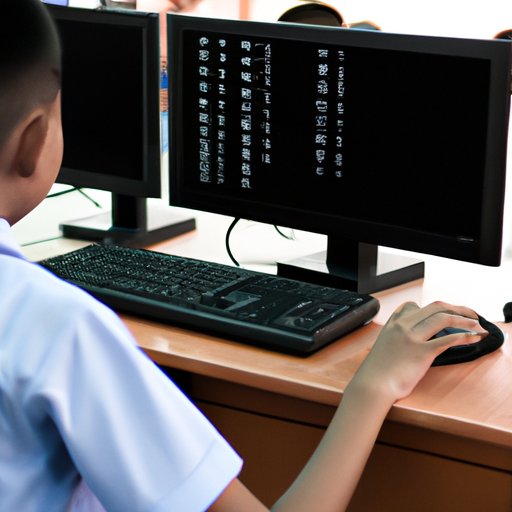
Introduction
Technology has revolutionized the way we live and work, and it has also had a dramatic impact on the world of education. As more and more schools embrace digital learning environments and students become increasingly tech savvy, it’s important to consider the implications of technology for teaching and learning. This article will explore the pros and cons of using technology in the classroom and assess its potential to enhance learning outcomes.
Examining the Impact of Technology in Education
The use of technology in education is growing rapidly, with more and more schools incorporating digital tools into their classrooms. Technology can be used to support instruction, facilitate collaboration, and enhance student engagement. However, it is important to consider the implications of this shift from traditional to digital learning environments.
Research has shown that technology can have both positive and negative effects on student learning. On the one hand, technology can be used to facilitate communication and collaboration, promote critical thinking skills, and create new opportunities for exploration and discovery. On the other hand, technology can be distracting and overwhelming, and it can lead to a decrease in student motivation and engagement.
Exploring the Benefits and Drawbacks of Technology in the Classroom
When examining the benefits and drawbacks of technology in the classroom, it is important to consider both the advantages and disadvantages of using technology in education. Some of the potential advantages of using technology in the classroom include:
- Improving access to educational materials
- Providing students with more opportunities for exploration and discovery
- Facilitating collaboration and communication
- Enhancing student engagement and motivation
However, there are also some potential drawbacks to using technology in the classroom. These include:
- Creating distractions for students
- Increasing the amount of time students spend on digital devices
- Leading to an over-reliance on technology
- Limiting face-to-face interaction between students and teachers

Assessing the Role of Technology in Enhancing Learning Outcomes
In order to evaluate the role of technology in enhancing learning outcomes, it is important to examine the impact of digital learning environments on student achievement. Studies have shown that when used appropriately, technology can have a positive impact on student achievement. For example, research has shown that technology can be used to support personalized learning, which can help students achieve better outcomes.
In addition, technology can also be used to improve student engagement. By providing students with interactive, engaging content, technology can help keep students motivated and engaged in their learning. Furthermore, technology can also be used to create new opportunities for exploration and discovery, which can lead to increased student understanding and deeper learning.

Investigating the Pros and Cons of Technology in Education
When considering the pros and cons of technology in education, it is important to examine how technology can be used to improve student engagement. Studies have shown that when used effectively, technology can be used to create interactive, engaging learning experiences that can help keep students motivated and interested in their learning. Technology can also be used to provide students with opportunities for exploration and discovery, which can lead to increased understanding and deeper learning.
However, it is also important to consider the potential drawbacks of technology in education. Technology can create distractions for students, leading to decreased focus and motivation. In addition, technology can also lead to an over-reliance on digital devices, which can limit face-to-face interaction between students and teachers. Finally, technology can also lead to an increase in the amount of time students spend on digital devices, which can have a negative impact on physical health.

Analyzing How Technology is Changing the Way Students Learn
As technology becomes increasingly prevalent in the classroom, it is important to examine the effects of technology on teaching methods. Research has shown that technology can be used to support traditional instruction, as well as to create new opportunities for exploration and discovery. Technology can also be used to create interactive, engaging learning experiences that can help keep students motivated and interested in their learning.
However, it is also important to consider the implications of technology for traditional instruction. Technology can lead to an over-reliance on digital devices, which can limit face-to-face interaction between students and teachers. In addition, technology can also lead to an increase in the amount of time students spend on digital devices, which can have a negative impact on physical health.
Comparing Traditional and Digital Learning Environments
When comparing traditional and digital learning environments, it is important to consider the advantages and disadvantages of each. Traditional learning environments offer the opportunity for face-to-face interaction between students and teachers, as well as the potential for hands-on learning experiences. However, traditional learning environments can also be limited in terms of access to educational materials and opportunities for exploration and discovery.
Digital learning environments, on the other hand, offer students access to a wide range of educational materials and resources. They also provide students with more opportunities for exploration and discovery, as well as the potential to create interactive, engaging learning experiences. However, digital learning environments can also lead to an over-reliance on technology, which can limit face-to-face interaction between students and teachers.
It is important to consider how technology can be used to complement traditional instruction. Technology can be used to provide students with access to a wide range of educational materials and resources, as well as to create interactive, engaging learning experiences. In addition, technology can also be used to facilitate collaboration and communication, which can help to enhance student engagement and motivation.
Evaluating the Effectiveness of Technology-Enhanced Education
In order to evaluate the effectiveness of technology-enhanced education, it is important to examine the impact of technology on student achievement. Research has shown that when used appropriately, technology can have a positive impact on student achievement. For example, studies have found that technology can be used to support personalized learning, which can help students achieve better outcomes.
In addition, technology can also be used to improve student engagement. By providing students with interactive, engaging content, technology can help keep students motivated and engaged in their learning. Furthermore, technology can also be used to create new opportunities for exploration and discovery, which can lead to increased student understanding and deeper learning.
Conclusion
In conclusion, technology can be a powerful tool for enhancing learning outcomes. However, it is important to consider the potential benefits and drawbacks of using technology in the classroom. Technology can be used to improve student access to educational materials, facilitate collaboration and communication, and create new opportunities for exploration and discovery. However, it can also lead to distractions and an over-reliance on technology, which can limit face-to-face interaction between students and teachers.
Overall, technology can be a valuable tool for supporting teaching and learning, but it is important to consider the implications of technology for traditional instruction. By carefully assessing the potential benefits and drawbacks of technology in the classroom, educators can ensure that technology is used effectively to enhance learning outcomes.
(Note: Is this article not meeting your expectations? Do you have knowledge or insights to share? Unlock new opportunities and expand your reach by joining our authors team. Click Registration to join us and share your expertise with our readers.)