
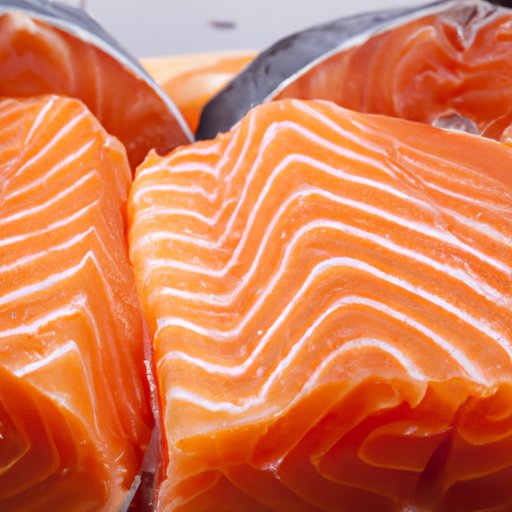
Introduction: Exploring the Health Benefits of Eating Salmon
Salmon is a type of fish that is widely enjoyed for its flavor, versatility, and nutritional benefits. While salmon is often thought of as a luxury food, it is actually quite affordable and easy to incorporate into your diet on a regular basis. In this article, we will explore the many health benefits of eating salmon and discuss the best ways to prepare it for maximum nutrition.

The Healthiest Ways to Prepare Salmon
One of the great things about salmon is that it can be cooked in a variety of ways, so you can enjoy it even if you don’t have access to a grill or oven. Here are some of the healthiest ways to prepare salmon:
Baking
Baking is one of the simplest and healthiest ways to cook salmon. To bake salmon, simply preheat your oven to 375 degrees Fahrenheit, season your salmon with salt and pepper, and place it on a baking sheet lined with parchment paper. Bake for 12-15 minutes, until the salmon is fully cooked and flakes easily with a fork. Baking is a great way to retain the natural flavor and nutrients of the salmon.
Grilling
Grilling is another popular way to prepare salmon. To grill salmon, preheat your grill to medium-high heat and lightly oil the grates. Place the salmon on the grill, skin side down, and cook for 4-5 minutes before flipping and cooking for an additional 3-4 minutes. Be sure to watch your salmon carefully and turn off the grill when it is done.
Poaching
Poaching is a healthy and flavorful way to prepare salmon. To poach salmon, fill a large pot with water and bring it to a boil. Reduce the heat and add your salmon to the pot. Simmer for 8-10 minutes, until the salmon is cooked through. Serve with a light sauce or vinaigrette for added flavor.
How Much Salmon Should You Eat for Optimal Health?
The recommended serving size for salmon is 3 ounces per person. However, there are other factors to consider when determining how much salmon you should eat. Your age, activity level, and dietary needs all play a role in determining the optimal amount of salmon for your individual health.
Is Farmed or Wild Salmon Healthier?
When shopping for salmon, you may notice that there are two main types available: farmed and wild. Both types of salmon provide similar amounts of macronutrients and vitamins. However, there are some key differences between farmed and wild salmon. Farmed salmon typically has higher levels of saturated fat and sodium, while wild salmon is higher in omega-3 fatty acids.
In addition, farmed salmon is more likely to contain pollutants such as PCBs, which can be harmful to your health. For this reason, it is important to choose wild salmon whenever possible. Wild salmon is also better for the environment, as it is not farmed in pens that can damage local ecosystems.

Understanding the Nutritional Content of Salmon
Salmon is a nutrient-dense food, meaning it packs a lot of nutritional value into a small package. It is an excellent source of protein, providing around 22 grams per 3-ounce serving. It is also packed with essential vitamins and minerals, including vitamin D, selenium, and magnesium.
Salmon is also a great source of omega-3 fatty acids, which are essential for heart health. These fatty acids can help reduce inflammation, lower blood pressure, and reduce the risk of stroke and heart disease. Additionally, salmon is low in calories and contains no carbohydrates, making it a great choice for those following a low-carb diet.
How Does Salmon Compare to Other Types of Fish?
When comparing salmon to other types of fish, it is important to consider the amount of omega-3 fatty acids and protein they contain. Salmon is one of the highest sources of omega-3 fatty acids, providing around 1.5 grams per 3-ounce serving. It is also higher in protein than many other types of fish, making it a great option for those looking to increase their intake of this nutrient.
When it comes to taste, salmon is generally considered to be one of the mildest-flavored fish. Its mild flavor makes it a great choice for those who are new to eating fish, as well as those who may not enjoy the taste of stronger-flavored fish such as mackerel or tuna.

Conclusion: Summary of Health Benefits and Recommendations for Healthy Eating Habits
Salmon is a delicious and nutritious fish that can be enjoyed on a regular basis. It is an excellent source of protein, omega-3 fatty acids, and essential vitamins and minerals. When choosing salmon, opt for wild-caught varieties whenever possible, as they are the most sustainable and nutritious option. Additionally, it is important to pay attention to portion sizes and limit your intake to 3 ounces per serving.
By incorporating salmon into your diet, you can enjoy the many health benefits it provides. From reducing inflammation to supporting heart health, salmon is a great addition to any meal. Enjoy it baked, grilled, or poached for maximum nutrition and flavor.
(Note: Is this article not meeting your expectations? Do you have knowledge or insights to share? Unlock new opportunities and expand your reach by joining our authors team. Click Registration to join us and share your expertise with our readers.)