
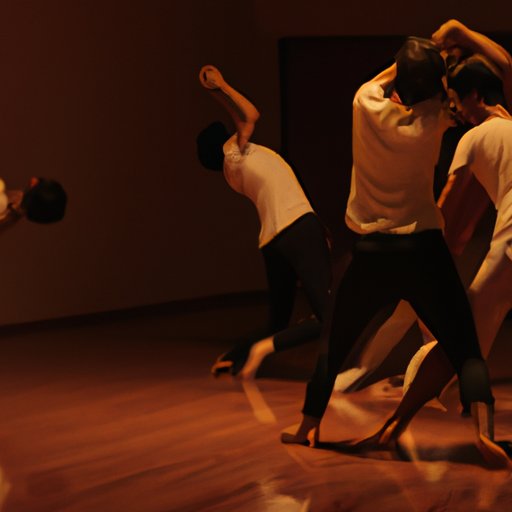
Introduction
Dance has been around for centuries and has evolved over time to become the popular activity we know today. But the question remains: is dance a sport or an art? This debate has been ongoing for many years, with both sides providing compelling arguments. In this article, we will explore the physical and mental components of dance, as well as the social perception of it, in order to gain a better understanding of the debate.
Physical Components of Dance
When it comes to the physical aspects of dance, there is no denying that it can be just as demanding as any other sport. Studies have shown that dancing requires the same level of physical endurance, strength, and coordination as other sports such as running and swimming.
However, not all types of dance require the same amount of physical exertion. For example, ballet is a much more physically demanding form of dance than hip hop or jazz. Ballet requires a high level of strength, flexibility, and control, while hip hop and jazz are more focused on movement and rhythm.
No matter what type of dance you participate in, though, it is important to remember that it is still a form of physical exercise and should be treated as such. Regular practice and proper nutrition are essential to achieving success in any type of dance.
Mental Components of Dance
When it comes to the mental aspects of dance, it is clear that there is much more to it than meets the eye. Not only does dance require physical exertion, but it also requires a great deal of mental discipline and focus.
Studies have shown that participating in dance can help improve memory, concentration, and problem-solving skills. It can also help reduce stress and anxiety levels, as well as increase self-confidence and self-esteem. These benefits can be especially beneficial to children, who often struggle with these issues.
In addition to the mental benefits, dance can also provide an outlet for creative expression. Many people use dance as a way to express themselves and find joy in the process. By engaging in creative activities like dance, people can find a sense of purpose and fulfillment that they may not find elsewhere.
Social Perception of Dance
The way society perceives dance has changed drastically over the years. With the rise of technology, people now have easier access to different forms of dance, which has helped to normalize it in many ways. In addition, the popularity of TV shows like Dancing with the Stars has helped to make dance more mainstream and accessible to everyone.
However, despite its growing acceptance, dance is still not seen by some as a “real” sport. This is mainly because it does not involve direct competition like traditional sports do. Despite this, it is important to remember that dance does still require physical and mental effort, and thus should be considered just as much of a sport as any other activity.
Conclusion
In conclusion, it is clear that dance is both a sport and an art. The physical demands of dance can be just as intense as those of traditional sports, while the mental benefits are numerous. Additionally, the increasing acceptance of dance in society has helped to normalize it and make it more accessible to everyone. Ultimately, it is up to each individual to decide whether they view dance as a sport or an art, but it is clear that both labels can be applied.
(Note: Is this article not meeting your expectations? Do you have knowledge or insights to share? Unlock new opportunities and expand your reach by joining our authors team. Click Registration to join us and share your expertise with our readers.)