
Introduction
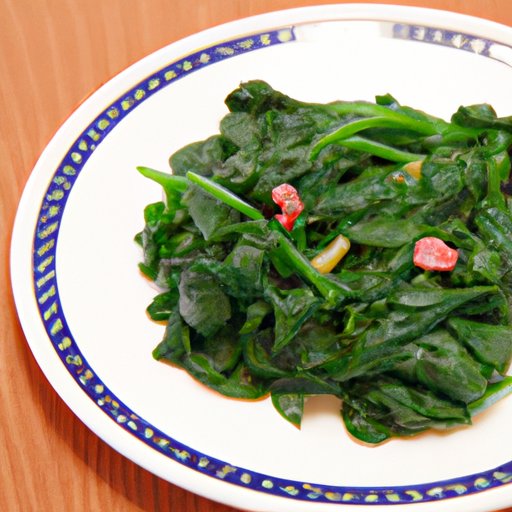
Spinach is a nutrient-dense vegetable with many health benefits. It’s high in vitamins, minerals, antioxidants, and fiber. You may have heard that eating cooked spinach is healthier than eating it raw, but is this really true? In this article, we will explore the nutritional benefits of cooked spinach, how to prepare it in the healthiest way, and the differences between cooked and raw spinach.
Nutritional Benefits of Eating Cooked Spinach
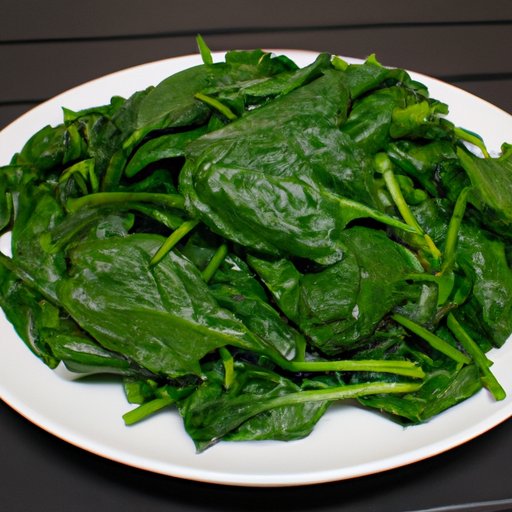
Spinach is an incredibly nutritious food. According to the United States Department of Agriculture (USDA), one cup of cooked spinach contains 7.6 grams of carbohydrates, 3.5 grams of protein, 0.9 grams of fat, 2.4 grams of fiber, and 37 calories. It’s also packed with essential vitamins and minerals, including vitamin A, vitamin K, folate, calcium, iron, magnesium, phosphorus, potassium, zinc, and more. Additionally, spinach is a good source of antioxidants like beta-carotene, lutein, and zeaxanthin, which can help protect your cells from damage caused by free radicals.
How to Prepare Healthy Cooked Spinach
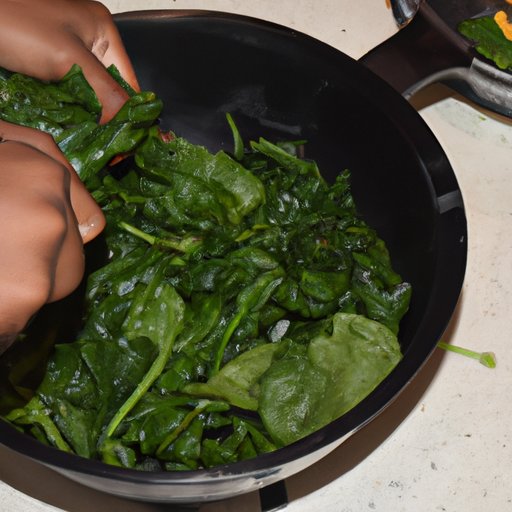
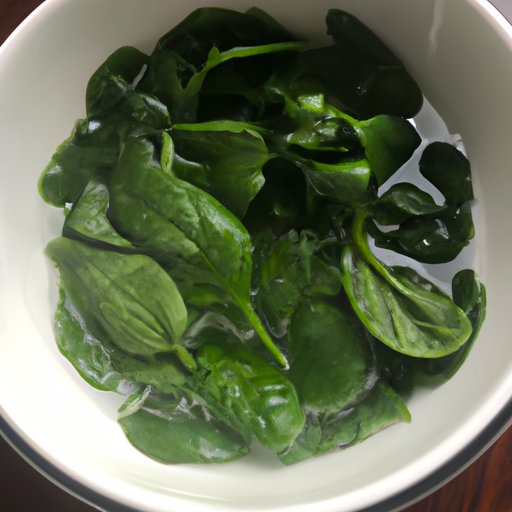
If you want to get the most out of your cooked spinach, it’s important to choose and prepare it properly. First, look for fresh spinach with vibrant green leaves and no wilting or yellowing. If you’re buying pre-washed spinach, make sure it doesn’t have any signs of spoilage. Once you’ve chosen your spinach, wash it thoroughly under cold running water to remove any dirt or bacteria. Finally, consider how you’re going to cook it. Boiling, steaming, sautéing, baking, and microwaving are all good cooking methods for spinach.
How Does Cooking Spinach Affect Its Nutritional Content?
Cooking spinach can affect its nutritional content. Studies show that cooking spinach can reduce its vitamin C content by up to 50%, while boiling can cause up to an 80% loss of vitamin C. However, other vitamins and minerals, such as vitamin A, folate, and iron, remain relatively unchanged when cooked. Additionally, cooking spinach can break down some of the cell walls, making it easier for your body to absorb the nutrients.
Health Benefits of Eating Cooked Spinach vs. Raw Spinach
The health benefits of cooked spinach compared to raw spinach depend on the specific nutrients. For example, cooked spinach has more calcium, iron, and protein than raw spinach. According to a study published in the Journal of Food Science, cooked spinach has higher levels of carotenoids, which are powerful antioxidants that can help protect against cancer and heart disease. On the other hand, raw spinach has more vitamin C and folic acid than cooked spinach.
The Healthiest Ways to Cook Spinach
The healthiest ways to cook spinach are those that retain the most nutrients. According to a study published in the journal Food Chemistry, steaming, sautéing, and baking are the best cooking methods for preserving the nutritional content of spinach. Steaming preserves the most vitamins and minerals, while sautéing and baking both result in a lower loss of vitamins and minerals. Boiling spinach can cause a significant loss of nutrients, so it’s best to avoid this method if possible.
Is Cooked Spinach as Healthy as Raw Spinach?
Cooked spinach is still a healthy food, but it may not be as nutrient-dense as raw spinach. A comparative analysis of cooked and raw spinach found that cooked spinach has lower levels of vitamins A and C and higher levels of iron and calcium. Additionally, the cell walls of cooked spinach are broken down, which makes it easier for your body to absorb the nutrients. While cooked spinach may not be as nutrient-dense as raw spinach, it can still provide many health benefits.
Tips for Adding More Cooked Spinach to Your Diet
Adding more cooked spinach to your diet is a great way to increase your nutrient intake. Consider incorporating cooked spinach into dishes like omelets, quiches, and soups. You can also add it to smoothies or use it as a base for salads. Experiment with different cooking methods to find the one you like best. Remember, the key is to cook the spinach in a way that preserves its nutritional content.
Conclusion
Cooked spinach is a healthy and delicious food that can provide many nutritional benefits. It’s high in vitamins, minerals, antioxidants, and fiber. When preparing cooked spinach, choose fresh spinach and wash it thoroughly. Consider cooking methods like steaming, sautéing, and baking to preserve the most nutrients. Cooked spinach may not be as nutrient-dense as raw spinach, but it can still provide many health benefits. Try adding more cooked spinach to your diet by incorporating it into dishes, adding it to smoothies, or making salads.
(Note: Is this article not meeting your expectations? Do you have knowledge or insights to share? Unlock new opportunities and expand your reach by joining our authors team. Click Registration to join us and share your expertise with our readers.)