
Introduction
Since its introduction in 2009, Bitcoin has become one of the world’s most popular and widely used forms of digital currency. But is it real money? In this article, we’ll take an in-depth look at what exactly Bitcoin is and explore the legitimacy of this cryptocurrency as a form of real money.
Definition of Bitcoin
Bitcoin is a decentralized digital currency that can be used to make payments without the need for a third-party intermediary such as a bank. Transactions are stored on a public ledger called the blockchain, which is maintained by a network of computers known as miners. Bitcoins can be bought and sold on exchanges, and users can also earn them through a process known as mining.
Overview of the Legitimacy of Bitcoin as a Form of Money
The legitimacy of Bitcoin as a form of money is a hotly debated topic, with opinions ranging from those who view it as a legitimate form of money to those who view it as nothing more than a speculative asset. To determine whether Bitcoin is real money, it’s important to examine its economic impact, advantages and disadvantages, comparison to traditional currency, and potential for adoption as a mainstream currency.
Examining Bitcoin’s Economic Impact
To understand the economic impact of Bitcoin, it’s important to consider how it affects currency markets and traditional financial systems.
Analysis of Currency Markets
When it comes to currency markets, Bitcoin has had a profound impact. The currency has been highly volatile, with its value fluctuating drastically over short periods of time. This volatility has made it difficult for investors to accurately predict the future value of Bitcoin, resulting in large losses for some investors. Despite this volatility, the currency has gained traction among traders and investors due to its potential for rapid gains.
Impact on Traditional Financial Systems
In terms of its impact on traditional financial systems, Bitcoin presents both opportunities and challenges. On one hand, the currency could potentially provide access to financial services to people in developing countries who may not have access to traditional banking services. On the other hand, the lack of regulation and oversight could lead to fraud and other criminal activities.
Advantages and Disadvantages of Using Bitcoin as Money
When it comes to the advantages and disadvantages of using Bitcoin as money, there are a few key points to consider.
Benefits of Using Bitcoin
One of the main benefits of using Bitcoin is its low transaction fees. Since there is no need for a third-party intermediary to process payments, the cost of making transactions is much lower than with traditional currencies. Additionally, Bitcoin transactions are secure and private, as they are conducted directly between two parties without any personal information being shared.
Potential Risks of Using Bitcoin
However, there are also some potential risks associated with using Bitcoin as a form of money. First, the currency is highly volatile, meaning its value can change dramatically over short periods of time. Second, since the currency is not regulated by any government or central bank, there is no protection against fraud or theft. Finally, since the currency is not backed by any tangible asset, its value is subject to speculation, making it difficult to accurately predict its future value.
Comparing Bitcoin to Traditional Currency
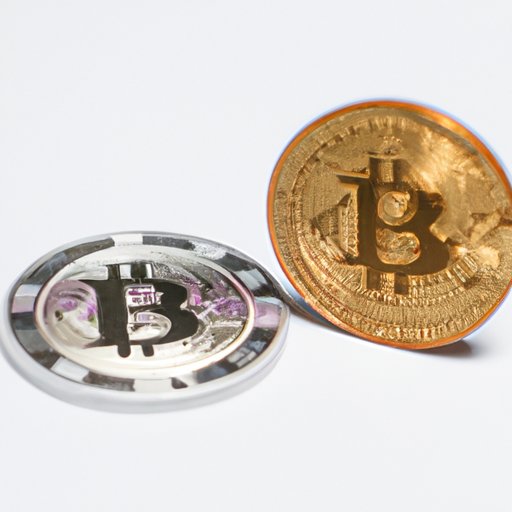
Another important factor in determining the legitimacy of Bitcoin as a form of real money is comparing it to traditional currency.
Purchasing Power of Bitcoin vs. Traditional Currency
When it comes to purchasing power, Bitcoin and traditional currencies are fairly similar. While Bitcoin’s value is often volatile, its purchasing power is still relatively stable compared to traditional currencies. Additionally, since Bitcoin is accepted by many online merchants, it can be used to purchase goods and services just like traditional currencies.
Volatility of Bitcoin in Comparison to Traditional Currency
However, when it comes to volatility, Bitcoin is far more unpredictable than traditional currencies. Its value can swing dramatically within a short period of time, making it difficult to accurately predict its future value. As a result, investors should be aware of the risks associated with investing in Bitcoin.

Investigating the Potential for Bitcoin as a Mainstream Currency
Finally, it’s important to consider the potential for Bitcoin to become a mainstream currency. To do this, it’s important to examine the regulatory environment surrounding Bitcoin and the challenges facing its adoption as a mainstream currency.
Regulatory Environment Surrounding Bitcoin
At present, the regulatory environment surrounding Bitcoin is still evolving. In some countries, such as the United States, the currency is considered to be a commodity and is subject to certain regulations. In other countries, such as Japan, the currency is recognized as a legal form of payment. As the regulatory landscape continues to develop, it remains to be seen how it will affect the future of Bitcoin.
Challenges Facing Bitcoin’s Adoption as a Mainstream Currency
In addition to the regulatory environment, there are a few key challenges facing the adoption of Bitcoin as a mainstream currency. First, the currency is still largely unknown and misunderstood by many people. Second, its high volatility makes it difficult to accurately predict its future value. Finally, its lack of widespread acceptance by merchants means it cannot yet be used to purchase goods and services in the same way as traditional currencies.
Conclusion
In conclusion, while Bitcoin has made significant strides in becoming a legitimate form of money, it is still not widely accepted as a mainstream currency. Its high volatility and lack of regulation make it risky for investors, and its lack of widespread acceptance by merchants limits its purchasing power. However, the fact that it can be used to make secure and private payments without the need for a third-party intermediary makes it an attractive option for some people. Ultimately, only time will tell if Bitcoin will become a mainstream currency.
(Note: Is this article not meeting your expectations? Do you have knowledge or insights to share? Unlock new opportunities and expand your reach by joining our authors team. Click Registration to join us and share your expertise with our readers.)