
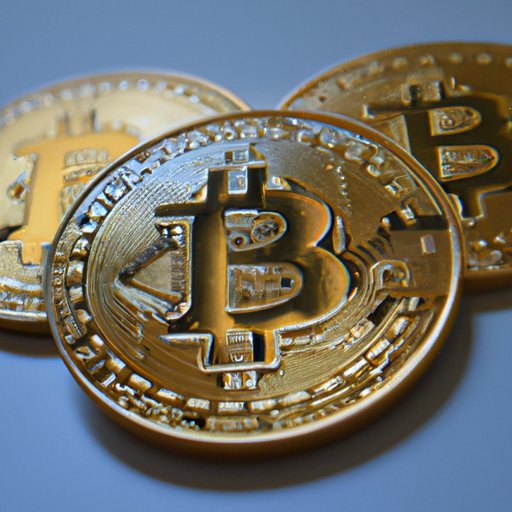
Introduction
Bitcoin is a type of cryptocurrency that has been gaining traction around the world since its introduction in 2009. As a decentralized digital currency, it has the potential to revolutionize how we think about money by providing an alternative to traditional currencies. But is Bitcoin really money? In this article, we’ll explore the potential of Bitcoin as money and examine its advantages and challenges.
Exploring the Potential of Bitcoin as Money
The use of Bitcoin as money has both advantages and disadvantages. On the one hand, it offers users the ability to make secure, anonymous transactions without the need for intermediaries such as banks or payment processors. This can be especially beneficial for those in countries with weak financial systems or those who don’t have access to traditional banking services. It also eliminates the need to exchange currencies when making international payments, since Bitcoin is a global currency.
On the other hand, using Bitcoin as money poses certain challenges. For example, its value is highly volatile, making it difficult to predict its future price. Furthermore, because Bitcoin is not backed by any government or central bank, there is no guarantee that it will remain stable or retain its value over time. Finally, there is no customer protection in place if something goes wrong with a transaction, making it a risky proposition for those who are unfamiliar with the technology.

The Benefits and Risks of Investing in Bitcoin
Investing in Bitcoin can be a lucrative endeavor, but it’s important to understand the risks involved. The first is the volatility of the currency, which can lead to large gains or losses depending on market conditions. Additionally, the security of Bitcoin wallets and exchanges is constantly under threat from hackers, so investors must take steps to protect their funds.
Comparing Bitcoin to Traditional Currency
When compared to traditional currencies, Bitcoin has some distinct differences. One of the most obvious is its lack of physical form – unlike paper money or coins, Bitcoin exists only as digital information. Additionally, Bitcoin’s value is determined by supply and demand rather than by government-controlled monetary policy. Finally, Bitcoin transactions are irreversible, meaning that once a transaction has been made, it cannot be undone.

Understanding the Economics Behind Bitcoin
In order to fully understand the potential of Bitcoin as money, it’s important to understand the economics behind it. Specifically, analyzing Bitcoin’s supply and demand dynamics can help us gain insight into its long-term prospects. Additionally, examining Bitcoin’s role in market cycles can help us determine whether it is likely to become a widely accepted form of money.
Examining Bitcoin’s Relationship to Other Cryptocurrencies
Bitcoin is far from being the only type of cryptocurrency available, and understanding its relationship to other types of crypto can help us better understand its potential as money. Different types of cryptocurrencies have different uses and features, and they interact with each other in various ways. Understanding these interactions can help us gain insight into the future of cryptocurrency as a whole.

Exploring the Legality of Bitcoin
The legality of Bitcoin varies from country to country, and regulatory frameworks are constantly evolving. In some countries, Bitcoin is completely legal, while in others it is banned or heavily restricted. It’s important to understand the legal landscape in order to properly assess the potential of Bitcoin as money.
Analyzing the Future of Bitcoin as Money
It’s impossible to predict the future of Bitcoin as money, but there are some potential growth areas that could lead to increased adoption. For example, new technologies such as the Lightning Network have the potential to make Bitcoin transactions faster and more secure. Additionally, new products and services are being developed to make it easier for people to buy and sell Bitcoin, which could lead to increased usage.
Ultimately, the success of Bitcoin as money depends on its ability to provide a safe, reliable, and cost-effective way to transfer value. If it can do that, then it has the potential to become a widely accepted form of currency.
Conclusion
In conclusion, Bitcoin has the potential to revolutionize how we think about money. While it has some advantages over traditional currencies, it also has its own unique set of challenges. Investors should understand the risks involved before investing in Bitcoin, and those looking to use it as money should be aware of the legal implications. Ultimately, the success of Bitcoin as money will depend on its ability to provide a safe and reliable way to transfer value.
(Note: Is this article not meeting your expectations? Do you have knowledge or insights to share? Unlock new opportunities and expand your reach by joining our authors team. Click Registration to join us and share your expertise with our readers.)