

Introduction
Rocks and minerals are two very different things, yet they are often confused for one another. To understand the difference between the two, it is important to explore the definition of minerals, how rocks fit in, and the various characteristics which define them.
Chemical Composition of Rocks and Mineral Content
Minerals are naturally-occurring substances composed of specific chemical elements or compounds. They have a definite chemical composition and a crystalline structure, which gives them a unique set of physical properties. Rocks, on the other hand, are made up of a combination of minerals, as well as organic material such as shells and fossils. Rocks also contain other materials such as clay, sand and silt. This means that rocks are not minerals, but rather a collection of minerals.
To examine the chemistry of rocks, we can look at the different types of mineral content they contain. Igneous rocks typically contain silicate minerals, such as quartz, feldspar, mica and amphibole. Sedimentary rocks often contain calcite, dolomite, gypsum, halite and anhydrite. Metamorphic rocks may contain garnet, sillimanite, kyanite and staurolite.
Processes That Form Rocks and Minerals
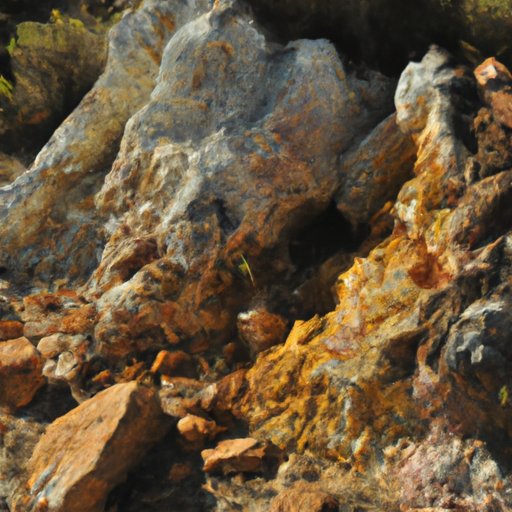
The formation of rocks and minerals is a complex process. Rocks are formed through various geological processes, such as volcanism, erosion and sedimentation. Igneous rocks form when molten material cools and solidifies, while sedimentary rocks form when sediments such as sand and mud are deposited and eventually undergo compaction and cementation. Metamorphic rocks form when pre-existing rocks are subjected to intense heat and pressure.
Minerals, on the other hand, form through crystallization. This process occurs when atoms and molecules arrange themselves into ordered structures which become the building blocks of minerals. Crystallization can occur in many different environments, including hot magma, ocean water and even in the air.
Physical Properties of Rocks and Minerals
Rocks and minerals can be identified by their physical properties, such as color, hardness, streak, crystal habits, cleavage, and luster. Color is an easy way to identify rocks and minerals, though it can be misleading since some minerals can be found in multiple colors. Hardness is a measure of how easily a rock or mineral can be scratched. Streak is the color of a mineral’s powder when it is rubbed against a white ceramic plate. Crystal habits refer to the shape of crystals, while cleavage is the tendency of certain minerals to break along certain planes. Luster is the reflection of light off the surface of a mineral.
Types of Rocks and Their Mineral Content
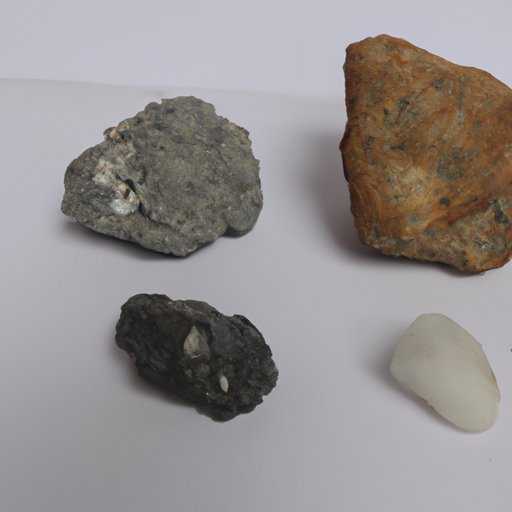
Igneous rocks are classified based on the size and texture of their mineral grains. Granite, for example, is an igneous rock with large mineral grains, while basalt has small mineral grains. Sedimentary rocks are formed from layers of sediment particles, such as sand and mud. Sandstone, limestone and shale are examples of sedimentary rocks. Metamorphic rocks are formed when pre-existing rocks are subjected to intense heat and pressure. Marble, quartzite and slate are all examples of metamorphic rocks.
Uses of Rocks and Minerals
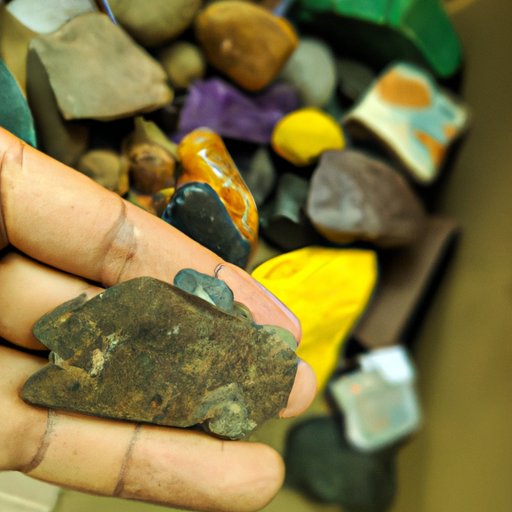
Rocks and minerals have a wide range of uses in our everyday lives. Rocks are used for building materials, such as bricks, concrete and stone walls. Decorative stones are also popular for landscaping and interior design purposes. Gemstones are highly sought-after for their beauty and rarity. Industrial applications of rocks and minerals include the production of cement, asphalt, glass, steel and fertilizer.
Value of Rocks and Minerals in Everyday Life
Rocks and minerals are valuable in many ways. They can be appreciated for their natural beauty, and can inspire awe in those who observe them. They can also be used as teaching tools, providing insight into the Earth’s history and composition. Finally, rocks and minerals can have cultural significance, being used in religious ceremonies and traditional customs.
Conclusion
Rocks and minerals are two distinct entities, each with its own unique characteristics. Rocks are composed of a variety of minerals, and can be identified by their physical properties. They have many uses in everyday life, from building materials to decorative stones and industrial applications. They also have great value in terms of appreciation of nature, education and cultural significance.
(Note: Is this article not meeting your expectations? Do you have knowledge or insights to share? Unlock new opportunities and expand your reach by joining our authors team. Click Registration to join us and share your expertise with our readers.)