
Introduction
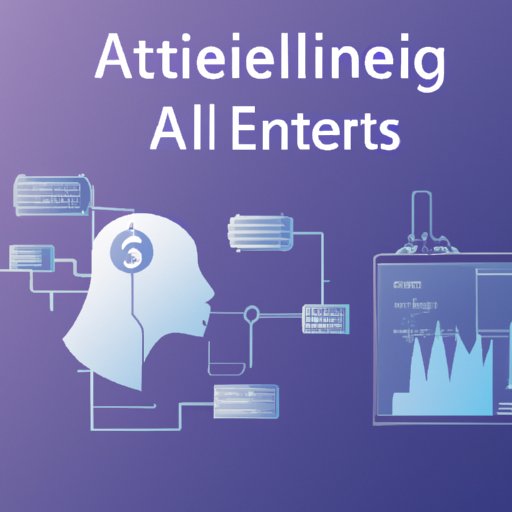
Artificial Intelligence (AI) has revolutionized many aspects of modern life, including the way we invest in stocks. By leveraging AI techniques such as machine learning, traders can now make decisions faster and more accurately than ever before. In this article, we’ll explore the potential benefits and risks of using AI for stock trading, as well as how to create a robust AI-based trading strategy for maximum returns.

Overview of Artificial Intelligence and Stock Trading
AI is a broad term which encompasses many different technologies, from natural language processing (NLP) and computer vision to robotics and deep learning. In the context of stock trading, AI is used to develop algorithms which can identify patterns in market data and then leverage those patterns to make predictions about future price movements. This enables traders to gain an edge over other investors, as they can act on the insights provided by the AI system before anyone else.
Benefits of Using AI for Stock Trading
The primary benefit of using AI for stock trading is the ability to make decisions quickly and accurately. AI systems can process large amounts of data in a matter of seconds, allowing traders to react to market changes almost instantaneously. Additionally, AI systems are able to identify patterns in market data which may be difficult for humans to spot. This enables traders to gain an edge over other investors who may not have access to the same data or insights. Finally, AI systems can also be used to automate certain aspects of trading, such as order execution and portfolio rebalancing. This can save traders time and money, as they don’t need to manually monitor the markets or execute trades.
Exploring the Potential Risks of AI for Stock Trading
While there are many potential benefits to using AI for stock trading, there are also some potential risks that should be considered. One of the main risks is that AI systems may be vulnerable to manipulation by malicious actors. For example, if hackers were able to gain access to an AI system, they could potentially manipulate the system to generate false signals or take advantage of other traders. Additionally, AI-based trading systems may be subject to “overfitting,” which occurs when a system is trained on a limited set of data and then fails to accurately predict outcomes for new data points.

Understanding the Different Types of AI Used in Stock Trading
In order to minimize the risks associated with AI-driven stock trading, it’s important to understand the different types of AI that are used. The most common type of AI used in stock trading is supervised learning, which involves training a system on labeled data and then using that data to make predictions. Unsupervised learning, on the other hand, involves training a system on unlabeled data and then allowing it to identify patterns in the data. Finally, reinforcement learning involves training a system by providing rewards or punishments based on its performance. Each type of AI has its own strengths and weaknesses, so it’s important to choose the right type of AI for your trading needs.

Analyzing the Impact of AI on Market Volatility
Another potential risk of using AI for stock trading is the impact it can have on market volatility. AI-driven trading systems can cause sudden spikes or dips in prices due to their ability to process large amounts of data and make decisions quickly. This can lead to increased market volatility and make it difficult for traders to accurately predict future price movements. Therefore, it’s important to take into account the potential impact of AI on market volatility when developing trading strategies.
Examining the Role of Human Intervention in AI-Driven Stock Trading
Despite the potential risks associated with AI-driven stock trading, it’s still possible to make the most of the technology by incorporating human intervention. While AI systems can automate certain aspects of trading, it’s important to remember that they are not infallible and may need assistance from human traders in order to make the most accurate decisions. For example, a trader may be able to spot patterns in market data that an AI system may miss. Additionally, a trader may be able to provide insight into the long-term implications of a decision, while an AI system may only be able to focus on the short-term results.
Comparing AI-Based Strategies with Manual Trading Strategies
In order to get the most out of AI-driven stock trading, it’s important to compare AI-based strategies with manual trading strategies. While AI systems may be able to process data faster and identify patterns more accurately than humans, they may lack the intuition and experience that comes with manual trading. On the other hand, manual trading strategies may be slower and less efficient than AI-based strategies, but they may be better suited for longer-term investments. Therefore, it’s important to consider both types of strategies and determine which one is best suited for your particular investing goals.
Creating a Robust AI-Based Trading Strategy for Maximum Returns
Once you’ve decided to use AI-driven stock trading, the next step is to create a robust trading strategy. This involves choosing the right AI system for your needs, understanding the different types of data that can be used to train the system, and setting realistic expectations for the system’s performance. Additionally, it’s important to incorporate human intervention into the system in order to maximize its accuracy and minimize the potential for errors. Finally, it’s also important to regularly review and adjust the system in order to stay up-to-date with changing market conditions.
Conclusion
AI-driven stock trading has the potential to revolutionize the way we invest in stocks. By leveraging AI techniques such as machine learning, traders can make decisions faster and more accurately than ever before. However, it’s important to understand the potential benefits and risks associated with AI-driven stock trading before implementing a system. Additionally, it’s important to incorporate human intervention into the system in order to maximize its accuracy and minimize the potential for errors. With the right strategy in place, AI-driven stock trading can be a powerful tool for achieving maximum returns.
(Note: Is this article not meeting your expectations? Do you have knowledge or insights to share? Unlock new opportunities and expand your reach by joining our authors team. Click Registration to join us and share your expertise with our readers.)