
Introduction
Artificial intelligence (AI) has become an increasingly popular field of study, as it is being used in various industries to improve efficiency, accuracy, and productivity. This article will provide a comprehensive guide on how to study AI, from understanding the fundamentals to exploring the benefits and applications of the technology.
Overview of Artificial Intelligence
In simple terms, artificial intelligence is the ability of computers or machines to perform tasks that would normally require human intelligence. AI enables machines to learn from experience, adapt to new inputs, and perform human-like tasks such as problem solving, decision making, and language processing. AI has been used in many different industries, including healthcare, finance, education, transportation, and robotics.
Purpose of the Article
The purpose of this article is to provide a comprehensive guide for those interested in studying AI. It will outline the fundamentals of AI, explore the benefits and applications of the technology, compare different types of AI, describe the processes involved in AI development, and provide tips for learning AI.
Outline the Fundamentals of Artificial Intelligence
Before delving into the specifics of AI, it is important to understand the fundamentals of the technology.
Definition of AI
According to John McCarthy, one of the founders of AI research, “AI is the science and engineering of making intelligent machines, especially intelligent computer programs.” In other words, AI is the use of computers or machines to perform tasks that would normally require human intelligence.
Components of AI
AI is comprised of three main components: machine learning, natural language processing, and robotics. Machine learning is the process of teaching machines to identify patterns and make decisions based on data. Natural language processing is the ability of a machine to understand and respond to human language. Robotics is the use of robots to complete tasks that would otherwise be difficult or impossible for humans to do.
Machine Learning Algorithms
Machine learning algorithms are the core of AI technology and are used to train machines to identify patterns and make decisions. There are three main types of machine learning algorithms: supervised learning, unsupervised learning, and reinforcement learning. Supervised learning involves training a machine with labeled data. Unsupervised learning involves training a machine with unlabeled data. Reinforcement learning involves training a machine by providing rewards for good behavior and punishments for bad behavior.
Natural Language Processing
Natural language processing (NLP) is the ability of a machine to understand and respond to human language. NLP is used in various applications such as chatbots, automated customer service, and voice recognition systems. NLP can also be used to analyze large amounts of text data to extract insights and trends.
Explore the Benefits and Applications of AI
AI is being used in various industries to improve efficiency, accuracy, and productivity. Here are some of the most common applications of AI:
Healthcare
AI is being used in the healthcare industry to diagnose diseases, monitor patients, and develop personalized treatments. AI-powered technologies such as image analysis and natural language processing can help doctors make more accurate diagnoses and reduce the time needed to treat patients. According to a study conducted by the American Medical Association, AI could potentially save the U.S. healthcare system up to $150 billion annually.
Finance
AI is being used in the finance industry to automate financial transactions, detect fraud, and make investment decisions. AI-powered technologies such as machine learning and natural language processing can help financial institutions make more informed decisions and reduce the risk of fraud. According to a study conducted by Accenture, AI could potentially save the global banking industry up to $1 trillion annually.
Education
AI is being used in the education industry to improve the learning experience and create personalized learning paths for students. AI-powered technologies such as natural language processing and machine learning can help teachers tailor instruction to individual students and provide real-time feedback. According to a study conducted by McKinsey, AI could potentially increase student performance by up to 30%.
Compare Different Types of AI
As mentioned earlier, there are three main types of AI: supervised learning, unsupervised learning, and reinforcement learning. Here is a brief overview of each type of AI:
Supervised Learning
Supervised learning is the process of training a machine with labeled data. This type of AI is useful for predictive analytics, such as predicting customer behavior or stock prices. Supervised learning algorithms include linear regression, logistic regression, and support vector machines.
Unsupervised Learning
Unsupervised learning is the process of training a machine with unlabeled data. This type of AI is useful for clustering and segmentation, such as segmenting customers into groups or clustering images into categories. Unsupervised learning algorithms include k-means clustering, hierarchical clustering, and self-organizing maps.
Reinforcement Learning
Reinforcement learning is the process of training a machine by providing rewards for good behavior and punishments for bad behavior. This type of AI is useful for complex tasks, such as playing chess or driving a car. Reinforcement learning algorithms include Q-learning and deep Q-networks.
Describe the Processes Involved in AI Development
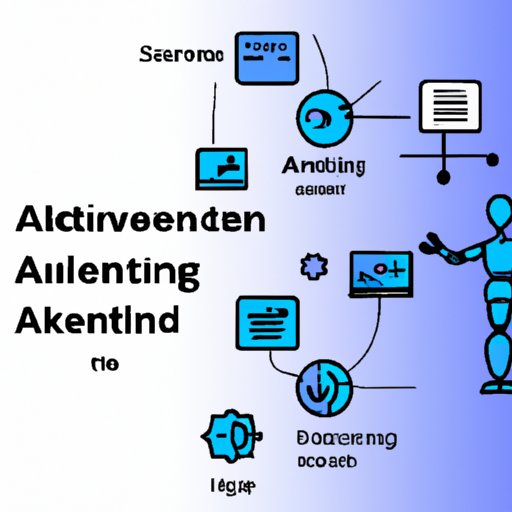
Once you have a basic understanding of AI, it is important to understand the processes involved in AI development. These processes include data collection, training, and testing.
Data Collection
The first step in AI development is data collection. Data is collected from various sources such as databases, surveys, and online sources. The data must be cleaned and structured before it can be used for AI development.
Training
The next step in AI development is training. Training involves using machine learning algorithms to teach the AI how to recognize patterns and make decisions based on data. The AI is trained using labeled data, which is data that has been manually labeled by humans.
Testing
The final step in AI development is testing. Testing involves evaluating the AI’s performance on unseen data to ensure it is performing as expected. The AI is tested using unlabeled data, which is data that has not been manually labeled by humans.

Provide Tips for Learning AI
Learning AI can be a daunting task, but there are several steps you can take to make the process easier. Here are some tips for learning AI:
Practice
One of the best ways to learn AI is to practice. There are many online resources available, such as tutorials and courses, that can help you get started. Additionally, you can join online communities where you can ask questions and get feedback from experienced AI practitioners.
Resources
It is also important to have access to the right resources. There are many books and websites dedicated to AI, so make sure to read up on the latest developments in the field. Additionally, there are many open source tools and frameworks available that can help you develop AI applications.
Staying Up-to-Date
Finally, it is important to stay up-to-date on the latest developments in AI. There are many conferences, seminars, and workshops dedicated to AI, so make sure to attend these events to stay up-to-date. Additionally, following AI experts on social media can help you stay informed on the latest trends in the field.
Conclusion
In conclusion, AI is an increasingly popular field of study, as it is being used in various industries to improve efficiency, accuracy, and productivity. This article provided an overview of AI, outlined the fundamentals of the technology, explored the benefits and applications of AI, compared different types of AI, described the processes involved in AI development, and provided tips for learning AI. With the right resources and dedication, anyone can learn AI and unlock its potential.
(Note: Is this article not meeting your expectations? Do you have knowledge or insights to share? Unlock new opportunities and expand your reach by joining our authors team. Click Registration to join us and share your expertise with our readers.)