
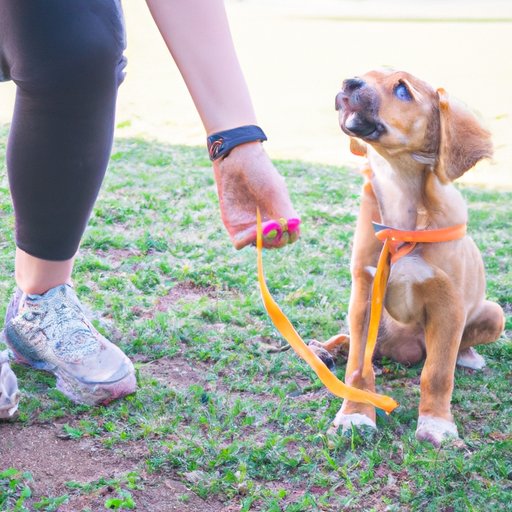
Introduction
Bringing home a puppy is an exciting experience. It’s also a big responsibility since it’s up to you to make sure your pup grows into a healthy and well-behaved dog. If you’re feeling overwhelmed by the prospect of training your new pup, don’t worry – this article will provide you with all the information you need to get started.
This article will cover the basics of puppy training. We will discuss the importance of creating a positive environment through the use of rewards and positive reinforcement, establishing a routine, beginning basic obedience training, socializing your pup, and avoiding common mistakes. By following these steps, you can give your pup the best possible start in life.
Create a Positive Environment
Creating a positive environment is essential for successful puppy training. Studies have found that puppies trained with positive reinforcement are more likely to follow commands and form better relationships with their owners than those trained with negative reinforcement or punishment.
Positive reinforcement involves rewarding desired behavior with treats, praise, or playtime. This teaches your pup that good behavior is rewarded, which encourages them to continue doing it. Additionally, positive reinforcement helps to build trust and create a strong bond between you and your pup.
Examples of rewards include treats, verbal praise (“Good boy!”), petting, and playing with toys. You should vary the rewards based on what your pup likes most – some may be motivated by treats, while others may respond better to verbal praise or playtime.
Establish a Routine
Having a regular routine is important for puppies, as it gives them structure and helps them learn what is expected of them. This can include things like feeding times, potty breaks, playtime, and training sessions.
Feeding can be done at the same time each day. This will help keep your pup’s energy levels consistent and make it easier for them to get used to eating at certain times. Make sure to provide your pup with fresh water throughout the day as well.
Potty breaks should be taken regularly throughout the day. Puppies generally need to go outside every few hours, so it’s important to be aware of when they last went and plan accordingly. Taking them out after meals and naps is especially important.
Playtime is important for your pup’s physical and mental development. This can include activities such as fetch, tug-of-war, and hide-and-seek. Playing with other dogs is also beneficial, as it helps your pup learn how to interact with other animals.
Finally, training sessions should be done regularly. This will help your pup learn basic commands and good behaviors. Training sessions should be kept short and fun, as too much repetition can lead to boredom and frustration.
Begin Basic Obedience Training
Once you have established a routine, it’s time to start teaching your pup basic obedience commands. This is a great way to help your pup learn how to behave and also builds trust between you and your pup.
The first command to teach your pup is “sit.” To do this, hold a treat in front of your pup’s nose and slowly move it back over their head. As they follow the treat with their eyes, their bottom should naturally drop into a sitting position. When they do this, say “sit” and give them the treat.
The next command to teach is “stay.” Once your pup has mastered the “sit” command, you can begin teaching them “stay.” To do this, hold a treat in front of your pup and tell them to stay. Slowly move away from them and if they stay in the “sit” position, reward them with the treat. Gradually increase the amount of time they must stay before giving them the treat.
The third command to teach is “come.” To do this, stand a few feet away from your pup and call their name. When they look at you, say “come” and hold out your hand. When they come to you, reward them with a treat.
The fourth command to teach is “down.” To do this, hold a treat near your pup’s nose and move it down towards the ground. As they follow the treat, their body should lower into a “down” position. When they do this, say “down” and reward them with the treat.
Socialize Your Puppy
Socialization is an important part of puppy training. Your pup needs to learn how to interact with people and other animals, as well as how to behave in different environments.
Start by introducing your pup to people. Have friends, family, and neighbors come over to visit and give your pup treats and verbal praise when they interact with them. This will help them learn that people are friendly and should be treated with respect.
Next, introduce your pup to other animals. Take them to the park or arrange playdates with other dogs. This will help them learn proper canine etiquette and how to interact with other animals in a safe and appropriate manner.
Finally, take your pup to new environments. Visiting different places such as the beach, the woods, or even the city will help them become familiar with different sights and sounds. This will also help them learn to control their behavior in unfamiliar situations.
Avoid Common Mistakes
It’s important to avoid common mistakes when training your pup. These can include using punishment, being inconsistent, and expecting too much too soon.
Punishment is not an effective way to train your pup. It can create fear and anxiety, which can lead to behavioral problems in the future. Instead, focus on rewarding good behavior with treats, verbal praise, and playtime.
Inconsistency can also be a problem. If you only reward your pup for good behavior sometimes, they won’t understand what is expected of them. Be sure to reward them consistently each time they do something correctly.
Finally, don’t expect too much too soon. Puppies take time to learn, and it’s important to be patient and understanding. With patience and consistency, your pup will eventually learn the behaviors you want them to display.
Conclusion
Training your puppy takes time and patience, but the effort is worth it. By creating a positive environment, establishing a routine, beginning basic obedience training, socializing your pup, and avoiding common mistakes, you can give your pup the best possible start in life.
Remember to be patient and consistent with your pup, and reward them for good behavior. With patience and practice, your pup will soon become a happy and well-behaved member of the family.
(Note: Is this article not meeting your expectations? Do you have knowledge or insights to share? Unlock new opportunities and expand your reach by joining our authors team. Click Registration to join us and share your expertise with our readers.)