
Introduction
A snowblower is an invaluable tool for clearing snow off driveways, sidewalks, and more in the winter months. It can save time and energy compared to shoveling the snow by hand. However, it’s important to understand the basics of safely operating a snowblower before getting started. This article will provide a step-by-step guide on how to start a snowblower, as well as important safety information.
Step-by-Step Instructions
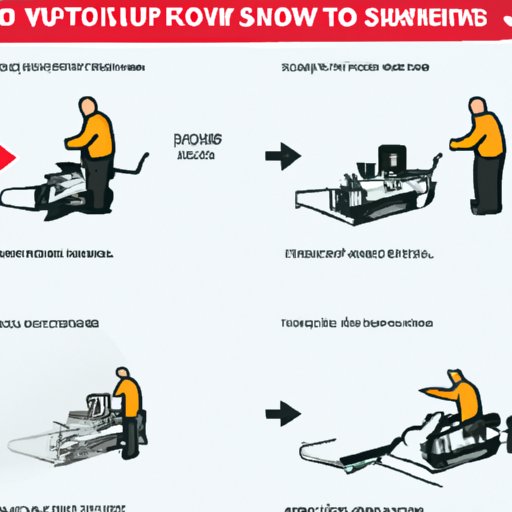
The first step in starting a snowblower is preparing it. This includes priming the engine, setting the choke, and adjusting the speed of the auger. Here are the specific steps to take:
Preparing the Snowblower
1. Priming the engine: Before starting the engine, you should prime it with fuel. This helps the engine get started quicker and easier. To do this, simply press the primer bulb until you feel resistance and hear a clicking sound. This indicates that the fuel has been drawn into the engine.
2. Setting the choke: After priming the engine, you’ll need to set the choke. The choke is a lever or knob located near the engine that restricts air flow. Depending on the temperature outside, you’ll need to adjust the choke accordingly. For cold days, you’ll want to set it to “full”; for warmer days, set it to “half” or “open”.
Operating the Snowblower
1. Adjusting the speed of the auger: The auger is the part of the snowblower that actually moves the snow. You’ll need to adjust the speed of the auger based on the conditions outside. If there is a lot of snow, you may want to set it to a lower speed. Conversely, if there is only a light dusting, you can set it to a higher speed.
2. Clearing clogged snow from the chute: During operation, the snow may become clogged in the chute. In this case, you’ll need to manually clear it out. Use a long stick or pole to push the snow through the chute. Never put your hands inside the chute for any reason.
3. Taking proper safety precautions: As with any machine, operating a snowblower comes with certain risks. Be sure to wear protective eyewear and heavy gloves when using the device. Also, avoid running over stones, sticks, or other debris that could be thrown out of the chute at high speeds.
Storing the Snowblower
Once you’re finished using the snowblower, it’s important to shut down the engine and properly store the device. Here are the steps to take:
Shutting Down the Engine
1. Shutting down the engine: When you’re done using the snowblower, shut down the engine. This can be done by turning the key switch to “off” or pulling the cord until the engine stops running.
Cleaning Off Debris
2. Cleaning off debris: Before storing your snowblower, make sure to clean off any debris that may have accumulated on the machine. This will help keep the device in good working condition.
Securing the Device
3. Securing the device: Once the snowblower is clean, secure it in a safe place. This can be done by locking it in a shed or garage, or tying it down with a rope or chain.
Conclusion
Starting a snowblower is not difficult, but it does require some preparation and knowledge. By following the steps outlined above, you can safely and effectively operate your snowblower. Make sure to always follow safety precautions such as wearing protective eyewear and avoiding running over debris. Finally, be sure to shut down the engine and clean off debris before storing the snowblower. If you have any questions, don’t hesitate to ask a professional.
(Note: Is this article not meeting your expectations? Do you have knowledge or insights to share? Unlock new opportunities and expand your reach by joining our authors team. Click Registration to join us and share your expertise with our readers.)