
Introduction
Properly inflating car tires is crucial for safe and efficient driving. Underinflated tires can reduce fuel efficiency, wear out faster, and even lead to blowouts. Overinflated tires can also cause problems like poor handling and uneven wear. In this article, we will cover everything you need to know about pumping your car tire at home, including step-by-step instructions, the benefits of DIY tire inflation, and how proper tire maintenance can maximize your car’s performance and save you money in the long run.
5 Easy Steps to Pump Your Car Tire Like a Pro
Here are the five simple steps to pumping your car tire at home:
Step 1: Gather the necessary tools
You’ll need a tire pressure gauge, a tire pump, and possibly a valve stem tool if your valve caps are hard to remove by hand.
Step 2: Checking the recommended tire pressure
Check your car owner’s manual or the sticker on the driver’s side doorjamb to find the recommended tire pressure for your car’s make and model.
Step 3: Removing valve caps and attach the pump head
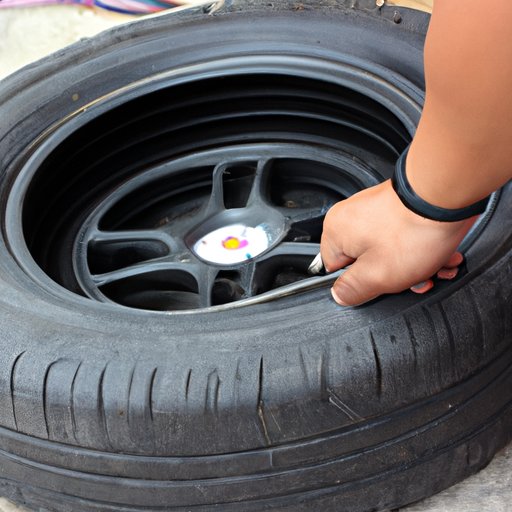
Remove the valve stem caps from the tire you want to inflate. Attach the pump head to the valve stem. Make sure it’s a tight fit to prevent leaks.
Step 4: Pumping air into the tire
Pump air into the tire until the pressure gauge reads the recommended level. You can add more air if necessary, but make sure not to exceed the maximum tire pressure listed on the sidewall.
Step 5: Checking the tire pressure again
Check the tire pressure again with your gauge to ensure it matches the recommended level. If it’s too high, release some air by pressing the valve stem with the gauge until it’s at the right pressure.
DIY Car Maintenance: How to Properly Inflate Your Tires
Proper tire inflation is an essential part of car maintenance. Not only does it prevent accidents and improve handling, but it also maximizes fuel efficiency and can save you money in the long run. Taking the DIY approach to tire inflation gives you control over the process and reduces the risk of errors or overcharging from a service station or mechanic.
Save Money and Time by Learning How to Pump Your Own Car Tires
In addition to the financial benefits, properly inflating your own car tires can save you time and stress. In an emergency, knowing how to pump your own tires can alleviate a lot of anxiety and get you back on the road faster than waiting for roadside assistance or finding a service station.
Maximizing Your Car’s Performance with Proper Tire Inflation
Proper tire inflation is key to achieving optimal driving performance. Underinflated tires can decrease fuel efficiency by up to 3%, while overinflated tires can cause poor handling and a rougher ride. Maintaining the right tire pressure can also prolong the life of your tires and prevent uneven wear and tear.
The Ultimate Guide to Pumping Your Car Tire at Home
If you want to take DIY tire inflation to the next level, here is a complete guide to properly inflating and maintaining your car tires:
- Check tire pressure at least once a month and before long trips
- Use a high-quality tire pressure gauge
- Check tire pressure when tires are cold (before driving)
- Inflate tires to the recommended pressure level
- Check all four tires, including your spare tire
- Replace tires when they are old or worn (usually every 6 years)
- Regularly rotate tires to prevent uneven wear and tear
The Importance of Regularly Checking and Inflating Your Tires: A Step-by-Step Tutorial
Finally, here is a step-by-step tutorial on how to check and inflate your car tires:
- Remove the valve stem cap
- Press the gauge onto the valve stem and hold it down until the number stops moving
- Read the number on the gauge carefully
- Compare the reading to the recommended tire pressure
- If the pressure is too low, inflate the tire until it reaches the recommended level
- If the pressure is too high, release some air by pressing the valve stem with the gauge until it’s at the right pressure
Conclusion
Proper tire maintenance is essential for safe and efficient driving. Knowing how to properly inflate and maintain your car tires can save you money, time, and stress in the long run. By following these simple steps and tips, you can keep your car running smoothly and maximize your driving performance.
(Note: Is this article not meeting your expectations? Do you have knowledge or insights to share? Unlock new opportunities and expand your reach by joining our authors team. Click Registration to join us and share your expertise with our readers.)