
Introduction
Introducing solid foods to your baby is an exciting milestone in their development. It’s also an important opportunity to teach them about healthy eating habits that will last throughout their life. However, this transition can be difficult for both parents and babies, as it can be hard to know what to do and when to do it. This article offers helpful tips on how to get your baby to eat solids, so you can feel confident in setting them up for a lifetime of nutritious eating.
Introduce Solids Slowly
The American Academy of Pediatrics (AAP) recommends introducing solids between 4-6 months old. Before this age, babies are not physically ready to swallow and digest solid foods, and they may find the texture or taste overwhelming. Once your baby is ready, start off slowly by offering small amounts of food at a time. According to Dr. Alan Greene, pediatrician and author of Feeding Baby Green, “Start with a teaspoonful once a day, then gradually increase the amount over several weeks.”
It’s also important to offer a variety of flavors and textures. Babies need to learn to like different tastes, and the more they are exposed to healthy options, the more likely they are to accept them. Dr. Greene suggests starting with fruits and vegetables, as they have the most nutritional value. As long as your baby doesn’t have any allergies, you can introduce grains, proteins, and dairy products later on.
Make Food Look Appealing
Making food look appealing can help encourage your baby to eat. Choose healthy, nutritious foods that are prepared with the right consistency for their age. At first, your baby will only be able to handle pureed or mashed foods. You can purchase these from the store, or create your own using a blender or food processor. As your baby grows, you can gradually move to chunkier textures.
You can also make food visually interesting by adding color and shapes. For example, cut fruits and vegetables into fun shapes or mix different colors together. This can help stimulate your baby’s senses and make them more open to trying new foods.
Serve Regularly
Establishing a mealtime routine is essential for getting your baby to eat solids. Serve meals at the same time each day, and provide plenty of encouragement and support during the meal. If your baby is having trouble adjusting, you can start off by offering pureed foods and gradually transition to solid foods over time.
It’s also important to be patient and understanding. Eating is a new experience for your baby, and they may take some time to adjust. Don’t pressure them to eat, as this can make them anxious and lead to negative associations with food.
Let Baby Feed Themselves
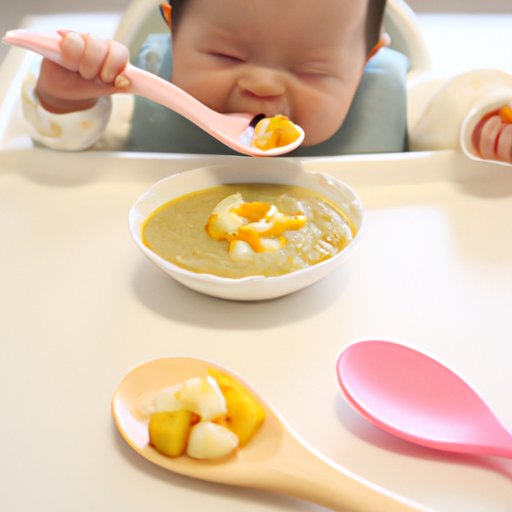
When your baby is ready, give them the opportunity to feed themselves. This can help them become more independent and develop their fine motor skills. Offer finger foods such as pieces of soft fruit or cooked vegetables. You can also give them a spoon and let them practice scooping and transferring food from the bowl to their mouth.
Encourage and Praise Baby
It’s important to show approval when your baby tries new foods. Positive reinforcement can help them establish positive associations with eating. You can smile, clap, and say encouraging words such as “good job” or “yummy!”
Conclusion
Introducing solids to your baby is an important step in establishing healthy eating habits. To ensure a successful transition, start off slowly by offering small amounts of food, providing a variety of flavors and textures, making food look appealing, serving regularly, and letting your baby feed themselves. Most importantly, show approval and praise your baby when they try new foods. With these tips, you can help your baby develop a healthy relationship with food.
(Note: Is this article not meeting your expectations? Do you have knowledge or insights to share? Unlock new opportunities and expand your reach by joining our authors team. Click Registration to join us and share your expertise with our readers.)